
A 4-Step Framework for Acquiring High-Ticket Agency Clients with Paid Ads
Developing a predictable client acquisition system is essential for agency growth. This guide provides a complete four-step framework for using paid advertising to attract and convert high-ticket clients, covering everything from offer creation and messaging to ad scripting and campaign launch.

Sections
Common Reasons Agency Ad Campaigns Fail
Before building a new strategy, it's critical to understand why many agency-focused ad campaigns underperform. Most failures can be traced back to three core issues: a weak offer, ineffective messaging, or insufficient creative volume.
1. A Weak Offer
On paid channels, prospects who are unfamiliar with your brand are not buying your personality; they are buying the strength of your offer. A generic service like 'Facebook Ads management' fails to capture attention. A strong offer solves a specific problem for a specific audience with a unique mechanism and a clear timeframe.
2. Ineffective Messaging
Even a great offer will fail if the messaging doesn't resonate with the target audience. Ads must use the language of the customer, appealing directly to their desires, fears, and circumstances. Without this connection, hook rates will be low, and viewers will scroll past before hearing the core offer and call-to-action.
3. Low Ad Volume
Ad platforms require two inputs to function effectively: budget and creative. Many agencies fail to produce enough ad creatives to feed the algorithm and find winning variations. A general rule is to produce approximately 20 new ad creatives per month for every $1,000 in daily ad spend to maintain performance and avoid ad fatigue.
Step 1: Crafting an Irresistible High-Ticket Offer
The foundation of any successful cold traffic campaign is the offer. Since you have only 60-90 seconds to capture a stranger's attention, the offer must be compelling enough to drive immediate action.
Choosing Your Offer Model
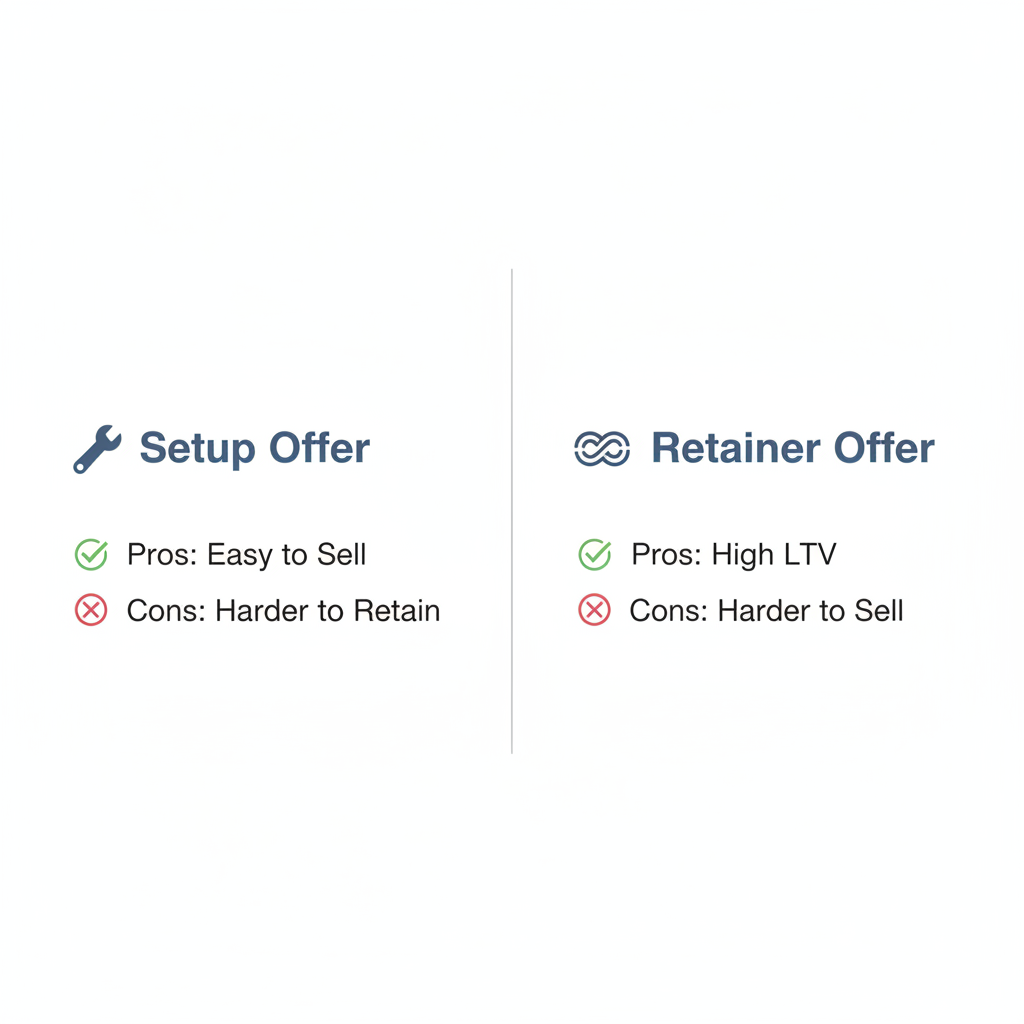
Two primary offer structures work well for agencies selling to cold traffic. The first is a 'Setup Offer,' which is a one-time project to implement a specific system, such as a Google Ads setup. This model is easier to sell due to its one-time payment structure but presents challenges with client retention, as the primary goal is often to convert them to a recurring retainer on the back end. The second model is a 'Straight-to-Retainer Offer,' which signs clients directly onto a recurring service. While harder to sell initially, this model provides better lifetime value (LTV). To make retainers more appealing, consider offering discounts for quarterly or semi-annual commitments to maximize upfront cash collection, which can then be reinvested into ad spend.
Key Components of a Strong Offer
To build a comprehensive offer, define the following elements before launching any ads:
- Target Market: Clearly identify your niche and the ideal revenue range of your clients. This is crucial for creating qualification criteria in your lead forms.
- Deliverables: Create an exhaustive list of everything the client will receive. Stacking value with clear deliverables strengthens the perceived value of the offer.
- Investment: Establish a clear pricing structure. This includes options for one-time payments or discounted longer-term commitments.
- Outcomes: Focus on the measurable results the client can expect. Sell the outcome (e.g., 'get more cases') rather than the service (e.g., 'Google Ads for lawyers') to appeal to a much broader segment of your target market.
- Qualification: Specify who the offer is *not* for. This helps repel unqualified prospects throughout your funnel, from the ad copy to the application form.

Step 2: Developing Compelling Ad Messaging
With a strong offer in place, the next step is to translate its value into messaging that resonates deeply with your target audience.
Defining Your Ideal Client Profile (ICP)
A detailed ICP is the source material for all effective messaging. It should include:
- Demographics: Analyze your existing customer base to identify common traits like age and gender. This data can be used to set targeting parameters in your ad platform.
- Psychographics: Understand the sophistication level of your buyer. Highly sophisticated audiences may require more nuanced language and less direct-response marketing, while less sophisticated buyers may respond better to more direct offers.
- Thermographics: This refers to quantifiable data points like company revenue. It helps in segmenting leads and tailoring sales processes to different tiers of clients.
Mapping Problems, Circumstances, and Outcomes
Create a master document listing the core challenges and goals of your ICP. Start by listing their main problems (e.g., 'rising ad costs,' 'over-reliance on one platform'). Then, reverse those problems to define the desired outcomes (e.g., 'efficient and diversified ad spend'). Finally, list the circumstances they find themselves in (e.g., 'revenue has flatlined'). This list becomes a valuable resource for generating dozens of unique ad angles.
Step 3: Scripting and Producing High-Converting Ad Creatives
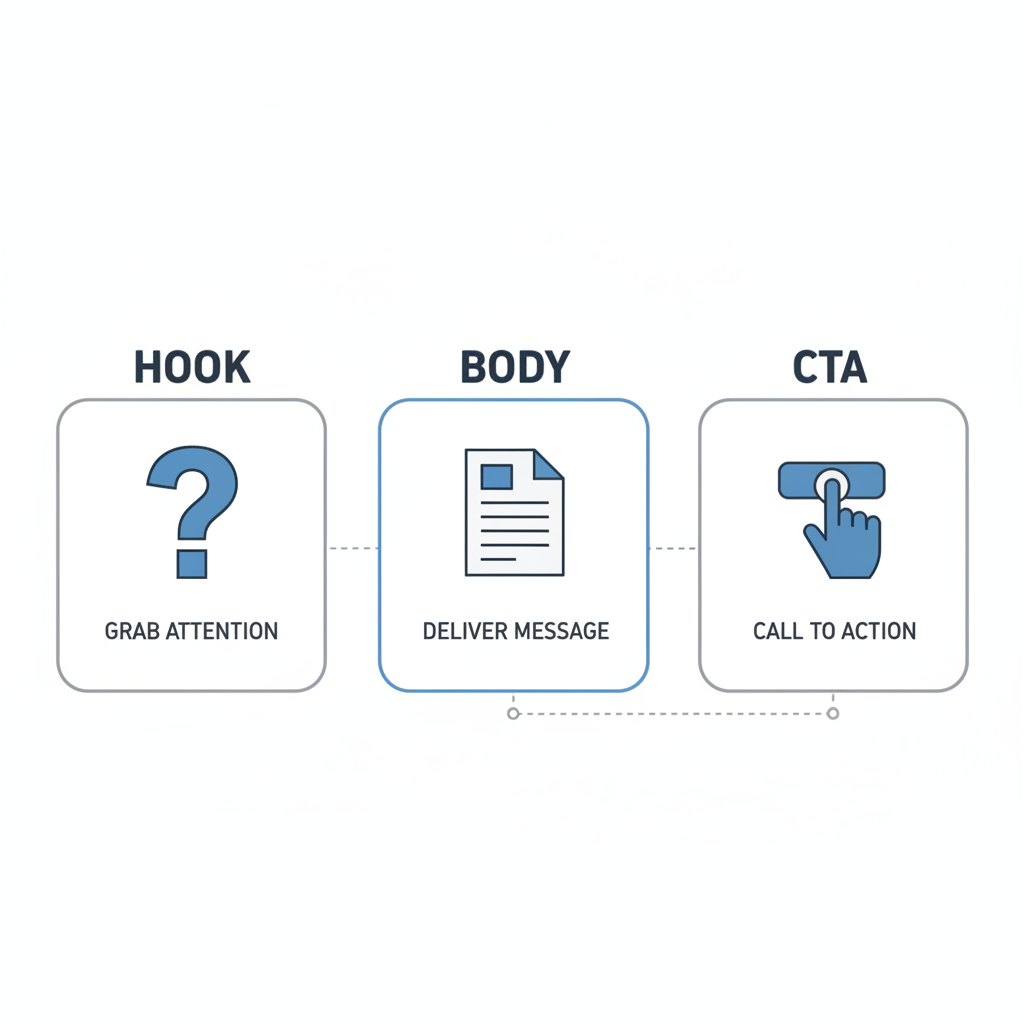
The next step is to transform your messaging angles into structured ad scripts. An effective video ad follows a simple three-part structure: the hook, the body, and the call-to-action (CTA).
The ABC Hook Framework
The first 3-5 seconds of your ad are crucial for stopping the scroll. Use the ABC framework to craft a powerful hook:
- Audience: Call out exactly who the ad is for (e.g., 'If you're a coach doing over $20k/month...'). This attracts relevant viewers and repels irrelevant ones.
- Benefit: State the primary benefit or outcome you provide (e.g., '...I will show you how to book 20-30 qualified calls a month...'). This can also be framed around a problem or circumstance from your list.
- Curiosity: Add a unique twist or mechanism that makes the viewer want to learn more (e.g., '...without relying on organic social media.').
Structuring the Ad Body
The body of the ad expands on the promise made in the hook. While many formats exist, a direct offer body is often effective for bottom-of-funnel audiences who are ready to buy. This structure typically includes stating the offer, explaining the quantifiable outcome, breaking a common false belief, detailing your unique mechanism, providing social proof, and handling common objections.
Crafting a Clear Call-to-Action (CTA)
End the ad with a simple, direct, and low-friction CTA. Clearly state who should click, what they should do next, and what will happen after they click. For example: 'If you're an e-commerce brand owner who wants to scale with a diversified ad strategy, click the link below, watch the video on the next page, and book a free call with our team.'
Step 4: A Technical Guide to Launching Your Ad Campaign
The final step is to correctly set up and launch your ads within the ad platform. Proper technical setup ensures your budget is spent efficiently and your campaigns are optimized for the right conversion events.
Campaign Level Setup
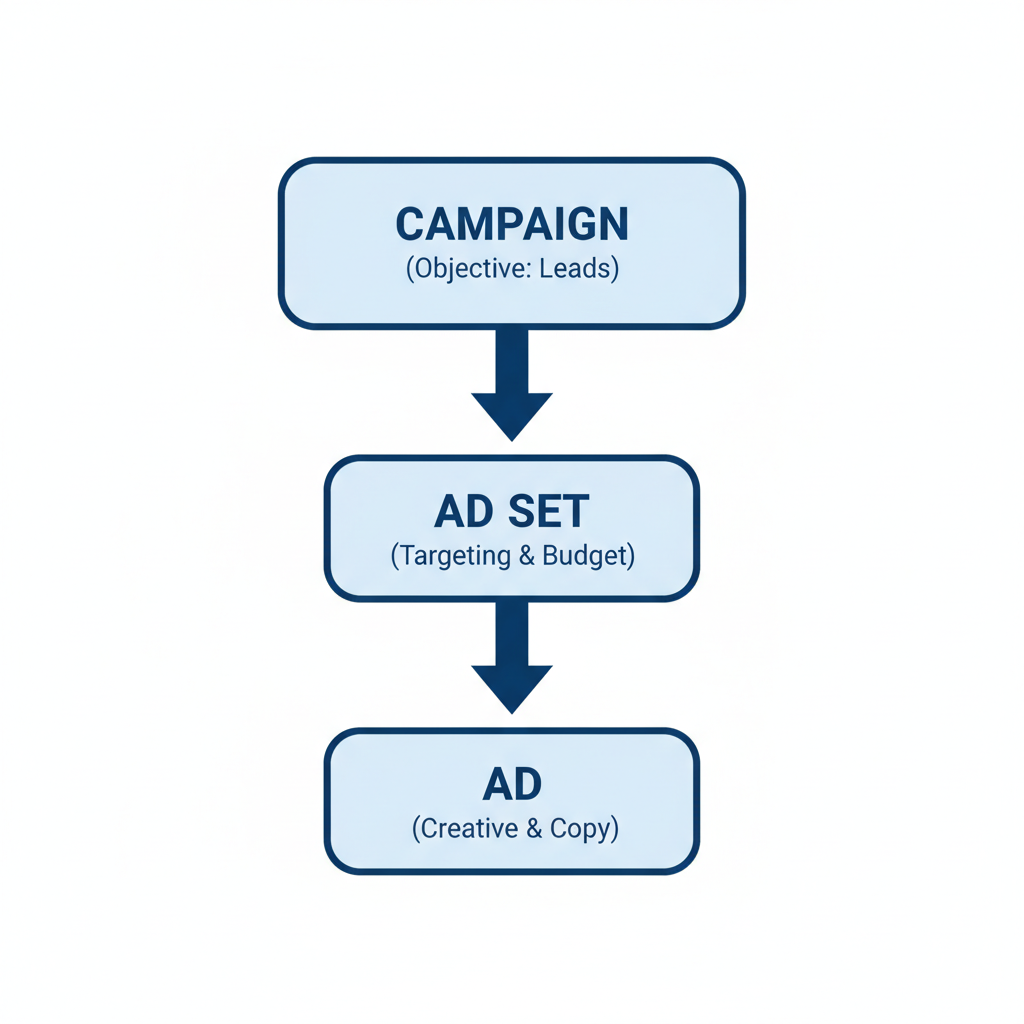
In Meta Ads Manager, start by creating a new campaign. Select 'Leads' as the campaign objective. Use a clear naming convention (e.g., Leads - [Offer Name] - [Date]). For testing new creatives, it is recommended to use Ad Set Budget Optimization (ABO) to ensure budget is distributed evenly across your test variables.
Ad Set Level Configuration
At the ad set level, configure the following:
- Conversion Location: Choose 'Website'.
- Performance Goal: Select 'Maximize number of conversions'.
- Conversion Event: Optimize for 'Schedule'. This tells the algorithm to find people most likely to book a meeting, not just become a lead. Avoid optimizing for intermediate steps.
- Audience: Use broad targeting. Do not layer interests or lookalike audiences, as this can restrict delivery and increase costs. Instead, rely on your ad creative and copy to call out your specific audience.
- Demographics & Placements: Refine the audience by setting an appropriate age range (e.g., 25-55 for B2B) and gender if applicable. Disable all placements except for Facebook and Instagram Feeds and Stories to focus spend on the highest-performing areas.
Ad Level Execution
At the ad level, upload your video creative and write your copy. While the video itself is the most important element, include 2-3 variations of your primary text and headlines. The primary text should lead with a major desire or problem. Ensure the final URL points to the correct landing page and your tracking pixel is active.
Related Tools
Frequently Asked Questions
How many new ad creatives should I produce each month?
A common benchmark is to create 20 new ad creatives per month for every $1,000 of daily ad spend. This ensures you have enough new content to test, find winners, and prevent ad fatigue among your target audience.
Should I use ABO (Ad Set Budget Optimization) or CBO (Campaign Budget Optimization)?
ABO is generally recommended for testing creatives, audiences, or landing pages because it allows you to control the budget at the ad set level, forcing spend on each variable. CBO is better suited for scaling proven campaigns, as it allows the platform's algorithm to distribute the budget to the top-performing ad sets automatically.
What is the ideal length for a video ad for acquiring high-ticket clients?
For cold traffic, video ads that are between 60 and 90 seconds long tend to perform best. This provides enough time to deliver a compelling hook, explain the core offer, and present a clear call-to-action without losing the viewer's attention.
Why is broad targeting recommended over layering specific interests?
Broad targeting allows the ad platform's algorithm to reach the widest possible audience, which can lower costs and speed up the learning phase. The ad creative itself, particularly a strong hook that calls out the specific audience, is used to filter for relevant prospects, letting the algorithm optimize based on who engages.
What is the single most important element of a successful ad campaign?
The offer is consistently cited as the most critical component. A strong, compelling offer that solves a specific problem for a niche audience can succeed even with average ad creative, whereas a weak offer is unlikely to convert no matter how well the ads are produced.
Key Terms
- Offer
- The complete package a potential client is buying, including the core service, deliverables, expected outcomes, timeframe, and price.
- ICP (Ideal Client Profile)
- A detailed description of a perfect customer, including demographic, psychographic (beliefs, sophistication), and thermographic (revenue, company size) data.
- Hook
- The first 3-5 seconds of a video ad designed to capture the viewer's attention and persuade them to continue watching.
- CTR (Click-Through Rate)
- The percentage of people who click the link in an ad after seeing it. It is a key metric for gauging ad creative effectiveness and relevance.
- ABO (Ad Set Budget Optimization)
- A Meta Ads campaign setting where the daily or lifetime budget is set at the individual ad set level, giving advertisers manual control over spend distribution.
- CBO (Campaign Budget Optimization)
- A Meta Ads campaign setting where a single budget is set at the campaign level, and the algorithm automatically distributes spend across ad sets to achieve the best results.
- AOV (Average Order Value)
- In the context of agency sales, this refers to the average upfront cash collected from a new client. Maximizing Day 1 AOV is crucial for funding ad spend.