
How the X Algorithm Works: A Guide to Increasing Your Reach
X has transitioned to an open-source algorithm, offering unprecedented transparency into how content is ranked and distributed. At its core, the system uses an AI model to predict user engagement, scoring every post to determine its visibility. Understanding these mechanics is essential for creators and brands looking to optimize their content strategy and increase their reach on the platform.

Sections
Understanding the Core of the X Algorithm: Predictive AI
The X algorithm is powered by an AI model designed specifically for social media content ranking. This model, known as Phoenix, functions by predicting how each user is likely to engage with every piece of content posted on the platform. It analyzes a wide range of potential interactions to generate a score that determines a post's visibility in user feeds.

 engagement signals." loading="lazy">
Instead of relying on a simple chronological or purely follower-based system, this predictive approach aims to create a more engaging and personalized user experience. The algorithm constantly learns from user behavior to refine its predictions and surface content it deems most relevant or interesting to each individual.
How X Scores Your Content: Key Engagement Signals
The final reach of a post is determined by a score calculated from various positive and negative user actions. The algorithm weighs different types of engagement to decide whether to boost or suppress content.
Positive Signals That Boost Your Reach
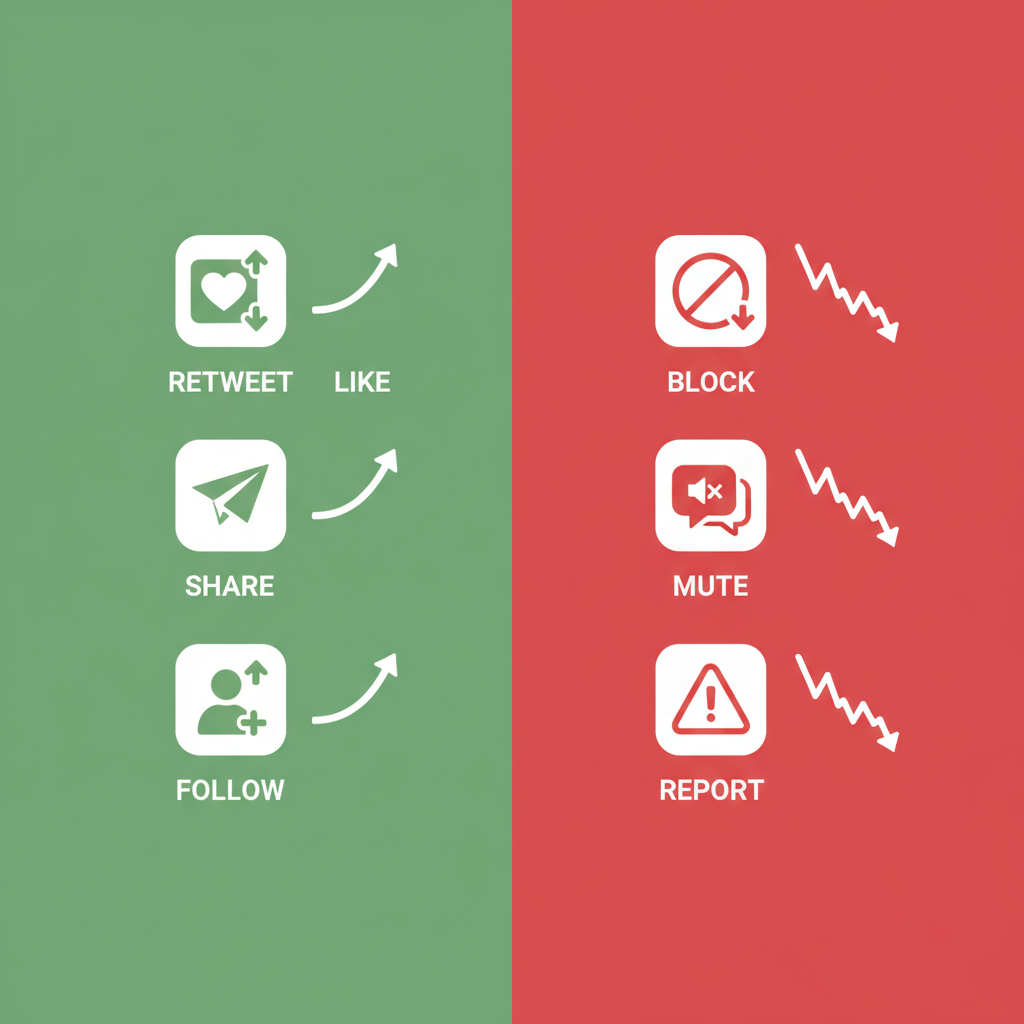
The more a post encourages a variety of positive interactions, the more the algorithm will promote it. Key positive signals include:
- Likes, Replies, Reposts, and Quotes: Standard forms of direct engagement.
- Media Interactions: Clicks on photos, watching videos for more than a few seconds, and time spent dwelling on the post.
- Sharing Actions: Using the share button, sending a post via Direct Message (DM), or copying the link.
- Profile-Related Actions: Clicks on the author's profile and follows originating from the post.
Posts that successfully generate these actions, particularly strong signals like DM shares and significant video watch time, receive a higher score and are shown to a wider audience.
 engagement signals that boost reach and negative signals that reduce it." loading="lazy">
Negative Signals That Decrease Your Reach
Conversely, certain user actions signal to the algorithm that content is low-quality, uninteresting, or harmful. These negative signals will significantly reduce a post's visibility:
- Mute and Block: When a user mutes or blocks an author, it serves as a strong negative indicator against that author's content.
- Report: Reporting a post for violating platform rules heavily penalizes its score.
- "Not Interested": Users explicitly clicking "Not Interested" on a post directly tells the algorithm to de-boost similar content.
An accumulation of these negative signals can cause a post's reach to be severely limited, effectively hiding it from most user timelines.
Critical Factors Influencing Your Visibility
Beyond direct engagement on a single post, the algorithm considers broader patterns related to posting frequency and user interests to curate feeds.
The Author Diversity Penalty
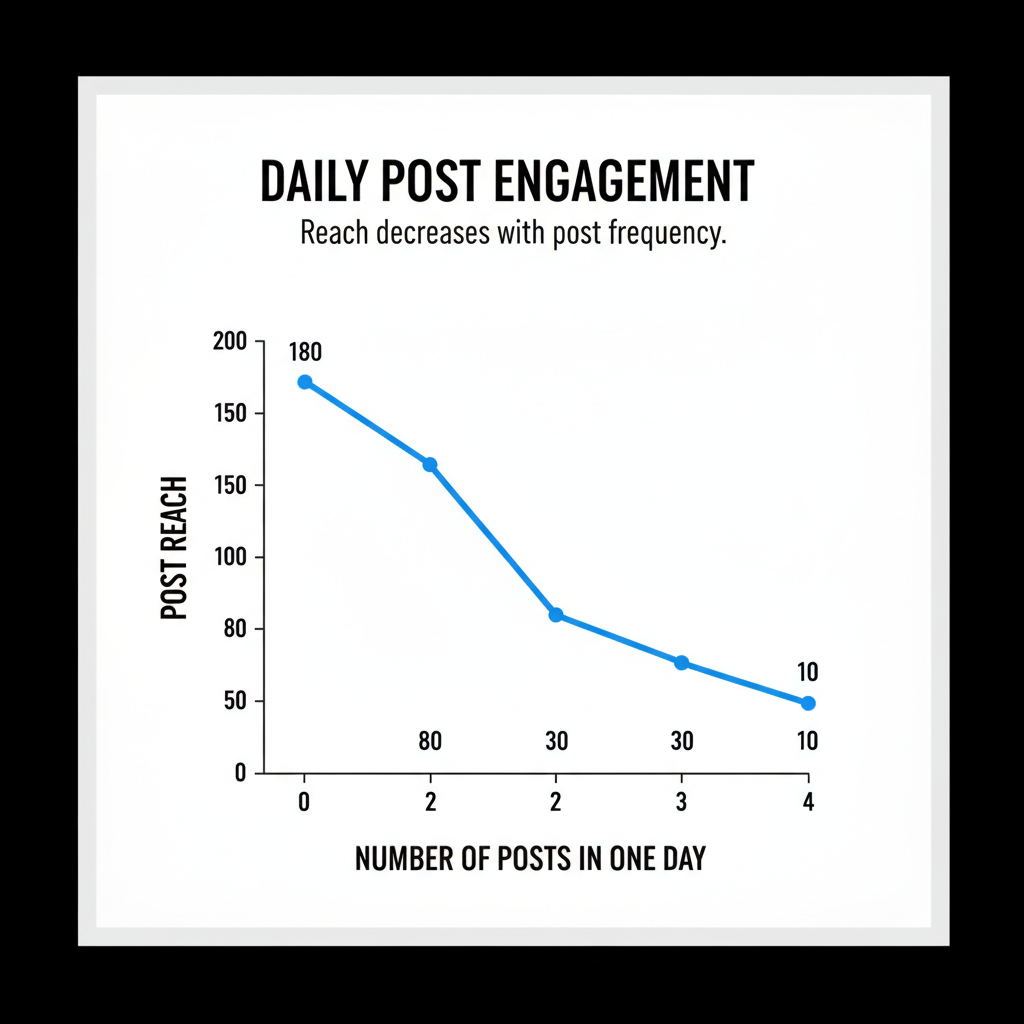
A key feature of the algorithm is a penalty for author diversity. This means that after a user sees a post from a specific author, the likelihood of seeing another post from that same author again that day decreases. Each subsequent post from the same account within a short period has a decaying reach score for that individual user's feed.
This mechanic is designed to prevent single accounts from dominating a user's timeline. It reinforces a strategy of posting high-quality content less frequently, rather than spamming the feed with numerous low-engagement updates.
How Feeds Are Personalized
The algorithm determines a user's interests by analyzing the last 128 posts they have actively engaged with (e.g., liked, replied to, or reposted). This recent activity creates a profile that the AI uses to predict which new content the user will find most engaging.
This has two major implications. For users, the content they interact with directly shapes their future feed. For creators, it means their content is most likely to be shown to users who have recently engaged with similar topics or formats.
A Practical Guide to Maximizing Your Reach on X
Optimizing your content for the X algorithm requires a strategic approach focused on generating positive engagement while avoiding negative signals. This involves prioritizing content quality and posting cadence.
Best Practices to Implement
- Create Highly Engaging Content: Focus on content that naturally encourages likes, replies, and shares. Ask questions, share valuable insights, or post entertaining media.
- Leverage Long-Form Video: Since extended video watch time is a strong positive signal, create videos that hold viewer attention beyond the first few seconds.
- Encourage Profile Visits and Follows: End posts with a call-to-action that encourages users to check out your profile or follow for more content.
- Space Out Your Posts: Avoid the Author Diversity Penalty by scheduling your posts throughout the day instead of publishing them in rapid succession.
- Inspire Private Shares: Content that is valuable or relatable enough for users to share via DM is weighted heavily by the algorithm.
- Build a Follower Base: Content shown to your own followers (in-network) does not receive the same penalties as content shown to non-followers (out-of-network).
Common Mistakes to Avoid
- Posting Controversial or Spammy Content: This increases the risk of being muted, blocked, or reported, all of which severely damage your reach. Safety filters may also remove controversial content entirely.
- Rapid-Fire Posting: Publishing multiple posts in a short time frame will trigger the author diversity penalty, diminishing the reach of each subsequent post.
- Ignoring Negative Feedback: If your content consistently attracts "Not Interested" clicks, the algorithm will learn to suppress your future posts.
- Using Muted Keywords: Your content will be automatically filtered from the feeds of users who have muted specific keywords or phrases included in your post.
 engagement." loading="lazy">
The Broader Impact of an Open-Source Algorithm
Making the X algorithm open source is a significant move toward platform transparency. It allows researchers, developers, and the public to scrutinize the code for biases or manipulation. If any government-mandated censorship or specific content suppression is coded into the algorithm, it becomes publicly visible.
Furthermore, this approach invites a global community of developers to contribute to its improvement. By allowing external experts to analyze the code, find flaws, and suggest enhancements, the platform can accelerate its development cycle and potentially create a more robust and fair system for content distribution.
Key Metrics
- Impressions — How many times content is shown
- CTR — Click-through rate
Frequently Asked Questions
What is the X algorithm's main goal?
Its primary goal is to predict user engagement. The algorithm scores every post based on the probability that a user will interact with it positively, aiming to create a more personalized and engaging feed.
Why is posting too frequently bad for my reach?
The algorithm includes an "Author Diversity Penalty," which reduces the visibility of your subsequent posts to a user who has already seen your content that day. This encourages a content strategy focused on quality over quantity.
How does X decide what to show in my feed?
Your feed is primarily determined by the last 128 posts you have engaged with (liked, replied, etc.). This recent activity profile is used by the platform's AI to predict what other content you will enjoy.
What are the strongest signals for boosting a post?
While all positive engagements help, strong signals include significant video watch time, users sharing your post via Direct Message (DM), and actions that lead to a new follow.
Can the open-source algorithm be "gamed"?
While transparency allows people to understand the rules, the system is complex and dynamic. Any successful attempt to manipulate the algorithm would likely be visible to developers, allowing for countermeasures to be implemented in future updates.
Key Terms
- Open Source
- A model where the source code of a software is made publicly available for anyone to view, modify, and distribute, promoting transparency and collaborative development.
- Algorithm
- A set of rules or processes used by a computer to solve problems or perform calculations, in this case, to rank and display content on a social media feed.
- Engagement Signals
- Specific user actions (e.g., likes, shares, mutes, blocks) that the algorithm interprets as positive or negative indicators of content quality and relevance.
- Author Diversity Penalty
- An algorithmic feature that reduces the reach of an author's subsequent posts to a user who has already seen one of their posts recently, designed to diversify content feeds.
- Dwell Time
- The amount of time a user spends looking at a post without scrolling past it. Longer dwell times are a positive engagement signal.
- Reach Score
- A calculated value assigned to a post by the algorithm, based on predicted positive and negative engagement, which determines its overall visibility on the platform.