
AI UGC Video Ads: Strategies for Realism and Trust
While many brands utilize AI to generate user-generated content for speed, the most successful campaigns prioritize psychological trust signals over automation.
Sections
Artificial Intelligence User-Generated Content (AI UGC) ads have become a dominant format across social platforms like TikTok, Instagram, and YouTube Shorts. However, simply using AI to generate avatars and voices does not guarantee performance; the most effective campaigns treat these assets as a system for building trust rather than merely a shortcut for content volume. Success relies on simulating the imperfections and behavioral nuances of a genuine creator recommendation.
The Mechanics of AI UGC and Trust Signals
AI UGC ads are designed to replicate the aesthetic and delivery of creator-led content without requiring a physical shoot. While traditional UGC leverages the inherent trust of a real human endorsement, AI-generated variants often fail because they mimic the format but miss the psychological cues that signal authenticity.
High-performing creative research indicates that believability drives conversion. When an ad feels too polished, scripted, or visually generic, viewers categorize it as "content" rather than a "recommendation." Effective AI UGC replicates the specific behaviors of human creators, including imperfect speech patterns, incidental product placement, and consistent personality traits.
Optimizing for Realism: Voice and Visuals
The primary point of failure for many AI video ads is the "uncanny valley" effect created by generic avatars and robotic delivery. Audiences evaluate the trustworthiness of the speaker before they process the marketing message. Therefore, defining a specific, custom persona—rather than using a stock avatar—is critical.
Audience Alignment
Ad intelligence data suggests that ads where the avatar's demographics match the target audience tend to have higher watch durations. This alignment is behavioral, not just aesthetic. The avatar must look and sound like someone who would naturally use the product.
Voice Imperfection
Visual minor glitches are often forgiven, but unnatural speech patterns are not. Human speech is characterized by pauses, uneven pacing, and "thinking out loud." AI voiceovers that are perfectly timed often sound synthetic. Including slight irregularities in the audio track can significantly improve perceived realism.
Scripting for Plausibility Over Persuasion
Traditional copywriting frameworks often hurt UGC performance because they sound like sales pitches. A "user-generated" ad is evaluated as a conversation. If the opening line sounds written by a marketer, trust evaporates immediately.
Conversational Structure
Scripts should simulate a stream of consciousness. Instead of delivering a structured value proposition, the avatar should appear to be discovering the point mid-sentence or speaking casually to the viewer. Fragmented sentence structures often outperform polished grammar in retention metrics.

Tone Matching
Context matters. Younger demographics on fast-paced platforms often respond to quicker, informal delivery, while professional or older audiences may trust slower, more reflective pacing. Mismatching the vocal tone to the visual context can cause sharp drop-offs in engagement.
Scaling with Consistency: The Lock and Test Method
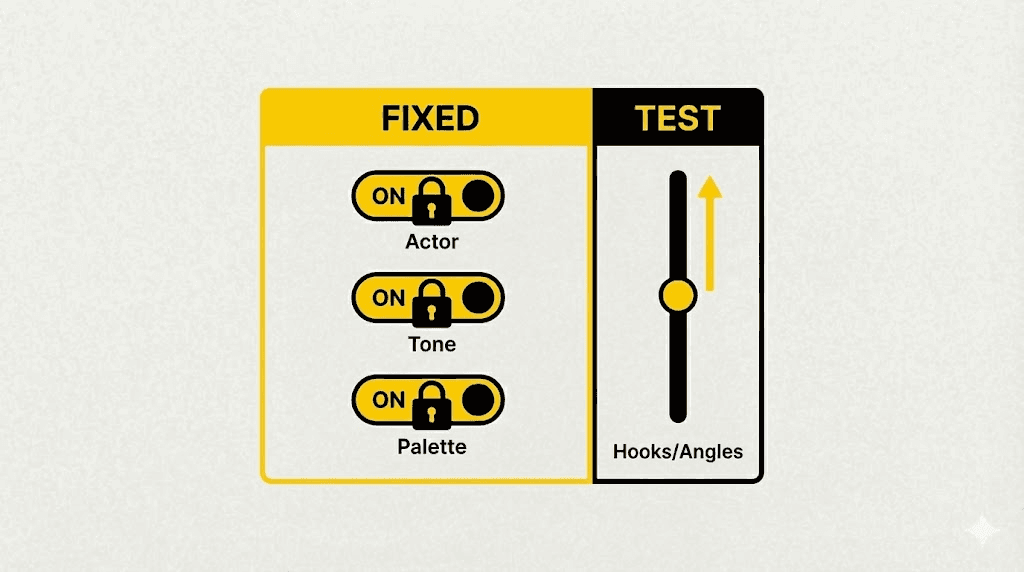
A common error in creative testing is changing too many variables at once. When scaling AI UGC, preserving the "identity" of the ad is crucial for building memory and trust. If the actor, voice, and style change with every variation, the brand effectively starts from zero with each impression.
Elements to Lock
To maintain trust, keep the actor's identity, core vocal tone, and visual framing consistent. This allows the audience to build familiarity with the persona over time.
Elements to Test
Variations should focus on the message, not the messenger. Testing different hooks, environmental contexts, or the "softness" of the Call to Action (CTA) allows for performance optimization without breaking the established trust.
 UGC campaigns"
data-placeholder="lock-vs-test-matrix.webp"
loading="lazy"
/>
UGC campaigns"
data-placeholder="lock-vs-test-matrix.webp"
loading="lazy"
/>
Practical Workflow for AI UGC Production
Building a scalable AI UGC engine requires a structured approach to ensure quality control and performance.
- Step 1: Define the Persona
Before scripting, determine exactly who the avatar is, their demographic, and why they would realistically use the product. - Step 2: Draft Conversational Scripts
Write scripts that sound like thoughts, using casual language, incomplete sentences, and natural pauses rather than marketing jargon. - Step 3: Establish Visual Constants
Select a framing style and subtle brand color cues that will remain consistent across all variations to aid recall. - Step 4: Generate and Review Voice
Prioritize voice realism over visual perfection; ensure the pacing feels human and matches the target audience's listening habits. - Step 5: Execute Incremental Refreshes
When performance dips, refresh the hook or angle rather than swapping the avatar entirely, preserving the trust equity built with the specific face.
Common Mistakes in AI Ad Generation
Even with advanced tools, fundamental strategic errors can undermine campaign performance.
- Mistake 1: Aggressive Actor Rotation
constantly changing faces prevents the audience from building familiarity. Correction: Stick to a consistent "custom influencer" for specific campaign lines. - Mistake 2: Over-Polished Scripting
Perfect grammar and structured arguments sound like ads. Correction: Use conversational phrasing that sounds like a peer recommendation. - Mistake 3: Forced Branding Early On
Displaying logos or heavy brand colors in the first few seconds breaks the UGC illusion. Correction: Integrate brand cues subtly through background elements or incidental product handling. - Mistake 4: Randomizing for Speed
Generating random variations without intent creates "slop." Correction: Ensure every variation has a specific hypothesis (e.g., testing a new hook) while keeping the core identity stable. - Mistake 5: Neglecting Refresh Cycles
Running the same creative until it burns out. Correction: Use AI to iterate on the successful persona with new contexts or messages before fatigue sets in.
Frequently Asked Questions
Do AI UGC ads actually convert?
Yes, provided they prioritize realism and conversational delivery. Performance issues usually stem from a lack of trust due to robotic acting or scripted language, rather than the use of AI technology itself.
How does AI UGC compare to human creators?
AI UGC excels at speed, iterative testing, and scaling creative volume without bottlenecking production. Human creators are typically better suited for deep emotional storytelling or when a brand narrative relies heavily on specific lived experiences.
What is the most important factor for realism?
Voice realism is often more critical than visual perfection. Viewers may forgive slight visual glitches, but unnatural speech pacing or tone immediately signals that the content is synthetic.
How often should creative be refreshed?
Refresh cycles should be data-driven, typically initiated when hook retention slows or conversion rates decline. Incremental changes to hooks or angles often sustain performance better than completely replacing the ad concept.