
How to Turn Ad Performance Data into Winning Creative Ideas
Bridging the gap between performance metrics and creative development is a common challenge for marketing teams. This guide provides a structured framework for transforming raw ad data into actionable insights, leading to more effective and efficient creative production cycles.

Sections
Understanding the Disconnect Between Ad Data and Creative
Many organizations struggle to align their media buying and creative teams. Performance marketers focus on metrics like cost per acquisition and return on ad spend, while creative teams focus on concepts, visuals, and messaging. This often leads to guesswork in creative development, inefficient budget allocation, and inconsistent campaign outcomes.
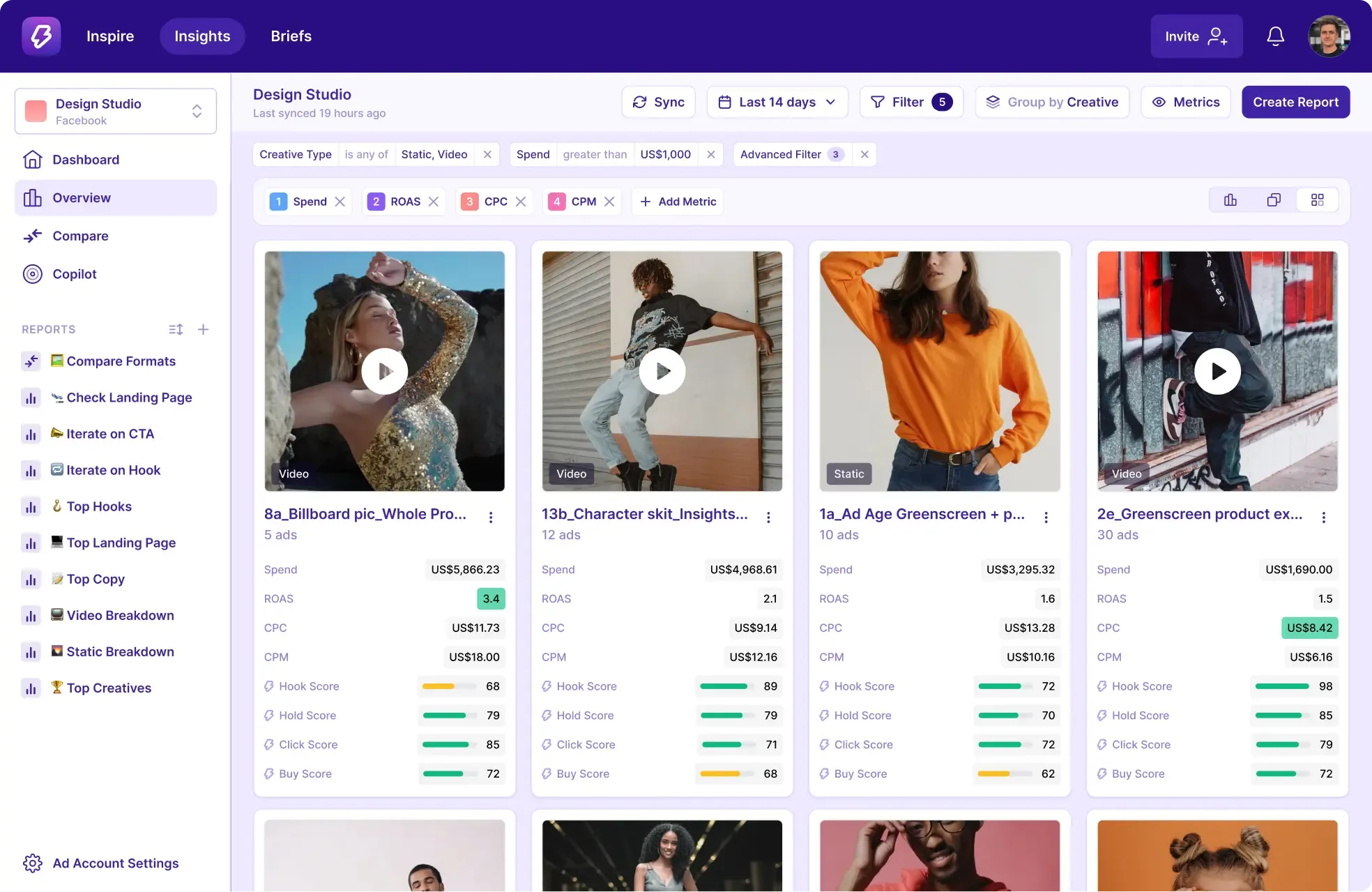
A systematic approach is needed to translate complex performance data into clear, specific direction that creatives can use. By establishing a shared language and workflow, teams can move beyond siloed operations and create a continuous cycle of improvement fueled by data.
A 4-Phase Framework for Data-Driven Creative Strategy
Adopting a cyclical process ensures that every new ad is informed by past learnings, increasing the probability of success. This framework breaks the process into four distinct, repeatable phases that connect analysis with execution.

Phase 1: Analyze Internal Performance Data
The first step is to understand what is already working within your own ad accounts. Go beyond surface-level metrics to identify the specific creative elements driving performance. Analyze data from all relevant platforms, such as Meta, TikTok, and YouTube, to find patterns in winning ad formats, creative angles, hooks, and calls to action.
Phase 2: Conduct External Creative Research
Once you understand your own top performers, broaden your scope to the wider market. Researching competitor advertising strategies provides crucial context and inspiration. Track the ads your competitors are running to see which themes, hooks, and copy they are testing. This helps you learn from their experiments without wasting your own budget and stay ahead of evolving market trends.
Phase 3: Develop Actionable Creative Briefs
This phase synthesizes all the insights gathered from internal analysis and external research into a clear set of instructions for the creative team. A great brief unifies performance data, creative references, and specific recommendations. This ensures that everyone is aligned on the vision and objectives before production begins, reducing back-and-forth and accelerating approval cycles.
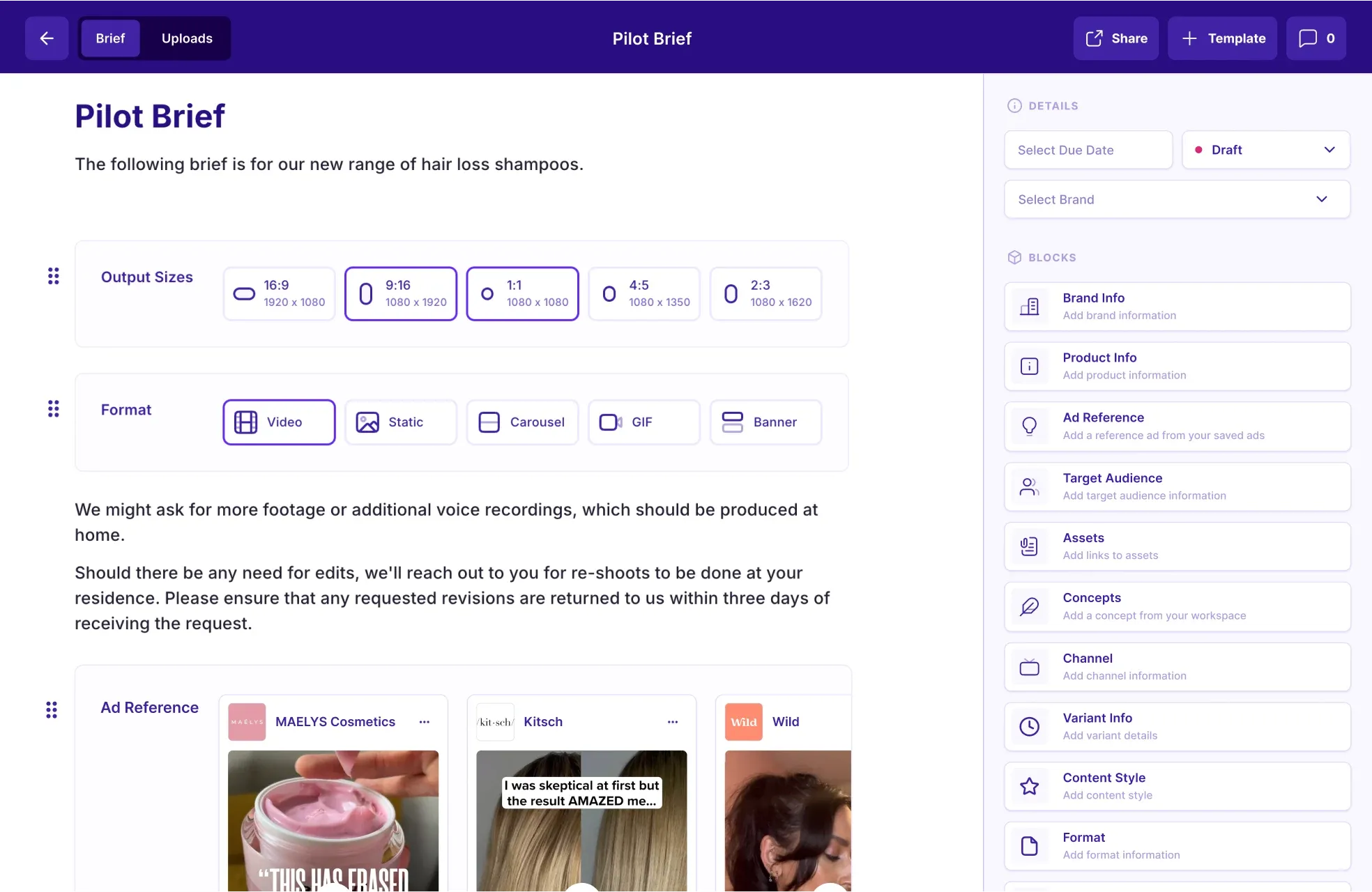
Phase 4: Execute, Test, and Iterate
With a data-informed brief, the creative team can produce new assets with a higher likelihood of success. After launching the new ads, the cycle begins again. The performance data from these new campaigns becomes the input for the next round of analysis, creating a continuous feedback loop that improves creative output over time.
Best Practices for Aligning Media and Creative Teams
Successful implementation of this framework depends on strong collaboration between media buyers and creative professionals. The following practices can help foster alignment and create a shared understanding.
- Use Visual Reports: Present performance data in a visual format that is easy for everyone to understand. Comparing the performance of different ad formats, creators, or angles side-by-side makes insights more tangible.
- Establish a Shared Language: Unify teams by standardizing how you discuss creative elements and performance. This avoids miscommunication and ensures everyone is working toward the same goals.
- Automate Reporting: Implement automated summaries of your performance and competitor activity. This keeps all stakeholders informed in real-time without adding manual reporting work.
Related Tools
Frequently Asked Questions
What is creative analytics?
Creative analytics is the process of analyzing ad performance data to understand which specific creative elements—such as hooks, visuals, copy, or formats—are driving results. It moves beyond high-level metrics to provide actionable insights for future creative development.
Why is competitor ad research important?
Competitor ad research allows you to learn from the experiments others have already run, saving you time and budget. By tracking competitors' strategies, you can identify emerging trends, successful themes, and effective messaging angles to inform your own campaigns.
What makes a creative brief effective?
An effective creative brief is data-informed, specific, and visual. It should combine quantitative insights from ad performance with qualitative examples from market research to give the creative team a clear and complete picture of the task, goals, and strategic reasoning.
How can data help align media and creative teams?
Data provides an objective foundation for decision-making, creating a common language that both media buyers and creatives can understand. Visual reports and shared insights from platforms like an ad library ensure that creative direction is based on evidence, not just intuition, fostering collaboration and unified goals.
Key Terms
- Creative Analytics
- The practice of examining ad performance data to identify which creative components (e.g., visuals, copy, hooks) contribute most to campaign success.
- Creative Brief
- A document that provides direction for a creative project, outlining objectives, target audience, key messages, and insights from performance data and research.
- Creative Iteration
- The process of making incremental changes and improvements to ad creatives based on performance data and testing. It is a key part of a continuous optimization cycle.
- Hook
- The first few seconds of an ad (especially video) designed to capture the viewer's attention and persuade them to keep watching.
- Ad Spend
- The total amount of money spent on advertising over a specific period. Analyzing creative performance against ad spend helps measure efficiency and return on investment.