
What Are the Pros and Cons of Using Ad Spy Tools?
Ad intelligence tools provide a significant competitive advantage by offering insights into competitors' advertising strategies. However, they also present challenges related to cost, data reliability, and complexity. This guide explores the key advantages and potential disadvantages to help you determine if these platforms are right for your business needs.

Sections
Key Advantages of <a href="/glossary/ad-intelligence">Ad Intelligence</a> Platforms
Using an ad intelligence tool offers several strategic benefits for marketers and e-commerce businesses. These platforms provide access to a wealth of advertising data, which can be used to inform campaign decisions, identify market trends, and understand audience preferences.
Accelerate Market and Product Research
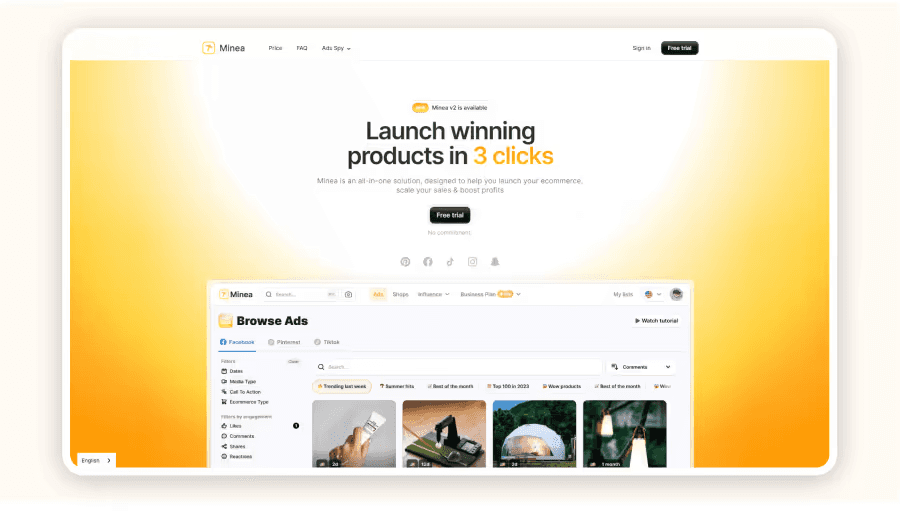
One of the primary benefits is the significant time savings in research. Instead of manually searching social media platforms, these tools aggregate ads into a searchable database. With advanced filters, users can quickly narrow down results by country, platform, or engagement to identify high-performing ads and potentially successful products, reducing the time spent on trial-and-error .
Enhance Campaign Strategy and Optimization
By analyzing competitor ads, you can identify emerging trends, effective ad formats, and successful messaging. This insight allows for faster campaign optimization. For example, noticing that video ads consistently outperform static images for similar products can prompt a pivot in creative strategy. This process helps in refining targeting and avoiding costly mistakes by learning from the successes and failures of others in the market.
Understand Audience Behavior and Psychology
Ad intelligence tools offer a window into consumer psychology. By examining ads with high engagement rates, such as likes, comments, and shares, you can discern what resonates with specific audiences. Analyzing user comments on ads can also reveal consumer objections, questions, and preferences, providing valuable feedback for improving advertising copy and product positioning.
Potential Challenges and Disadvantages
While powerful, ad intelligence platforms are not without their drawbacks. It is essential to understand these challenges to use the tools effectively and manage expectations.
Subscription Costs and Investment
A significant consideration is the cost. Many ad intelligence tools operate on a subscription model, and premium features often require a higher-tier plan. While free or limited versions may be available, they typically lack the full range of functionality. This cost should be viewed as a long-term investment, as the insights gained can lead to increased revenue that offsets the initial expense.
Dependence on Data Quality and Context
The effectiveness of any tool is contingent on the quality of its underlying data. Information in ad libraries can sometimes be outdated or incomplete, as market trends change rapidly. Furthermore, data requires context. An ad that performs well for one brand may not succeed for another due to differences in audience, branding, or market position. Users must critically analyze the data rather than simply copying successful campaigns.
Complexity and Learning Curve
Some platforms can be complex, with an abundance of features, filters, and metrics that may be overwhelming for new users. Mastering the tool requires time and a solid understanding of advertising <a href="/glossary/key-performance-indicator">KPI</a>s. To get the most value, users must commit to learning the platform's features and staying updated on the evolving landscape of online advertising.
Decision Framework: Is an Ad Spy Tool Right for You?
To decide whether to invest in an ad intelligence tool, consider the following points:
- Research Efficiency: Will the time saved on manual research justify the subscription cost for your team?
- Competitive Landscape: Is your market highly competitive, requiring constant monitoring of competitor strategies?
- Data Analysis Skills: Does your team have the expertise to interpret advertising data and translate insights into actionable campaign adjustments?
- Testing Budget: Can you use the insights to reduce spending on ineffective ad tests and reallocate budget more efficiently?
Related Tools
Frequently Asked Questions
What are ad spy tools used for?
Ad spy tools, or ad intelligence platforms, are used to monitor and analyze competitor advertising campaigns across various social networks. They help users identify market trends, discover high-performing products, and refine their own advertising strategies based on competitor data.
How can ad intelligence tools help find new product ideas?
These tools can effectively identify trending or "winning" products by highlighting ads that receive high levels of engagement. By analyzing which products are being successfully advertised by competitors, users can gain inspiration and validation for new product ideas to test in their own stores.
What are the main benefits of using ad spy tools for an online business?
The primary benefits include gaining a competitive advantage through detailed campaign analysis, saving significant time on market research, and detecting popular product trends early. They allow businesses to make data-informed decisions rather than relying on guesswork.
Are there risks to relying on ad intelligence data?
Yes, a key risk is dependence on data that may be outdated or lack context. Simply copying a competitor's successful ad does not guarantee success, as factors like brand, audience, and timing differ. It is crucial to use the data for inspiration and strategic guidance, not as a direct blueprint.
Key Terms
- Ad Intelligence
- The process of gathering, analyzing, and using data about advertising campaigns to inform marketing strategies. It involves monitoring competitor ads, creative performance, and market trends.
- Competitive Intelligence
- The ethical collection and analysis of information about competitors and the business environment to support strategic decision-making. In advertising, this focuses on understanding rival ad strategies.
- Winning Product
- A term, particularly in e-commerce and dropshipping, for a product that has been proven to sell well and generate significant profit, often identified by its successful advertising campaigns.
- Advertising Copy
- The text-based content within an advertisement, including headlines, descriptions, and calls-to-action. Effective copy is designed to persuade the target audience to take a specific action.
- Engagement Metrics
- Key performance indicators (KPIs) that measure how an audience interacts with an advertisement. Common examples include likes, shares, comments, and clicks.