
Ads Library Guide: Competitor Research & Creative Analysis
Ad libraries provide critical transparency into competitor advertising strategies. Marketers can use these tools to analyze messaging, deconstruct creative formats, and build data-informed campaign hypotheses.

Sections
Analyzing competitor advertising is essential for optimizing campaign performance. Ad libraries, originally created to promote advertising transparency, have become powerful resources for marketers to deconstruct successful strategies, identify market trends, and refine their own creative approach.

What an Ad Library Is and Why It Matters for Marketers
An ad library is a searchable database of advertisements running on a specific platform or network. Initially developed to provide public transparency, these tools have evolved into strategic assets for competitive intelligence.
By using an ad library, marketers can gain visibility into which ads their competitors are running, what messaging they are using, and how they are positioning their products. This insight is critical for understanding the competitive landscape and improving campaign return on investment (ROI).
How Modern Ad Research Platforms Work
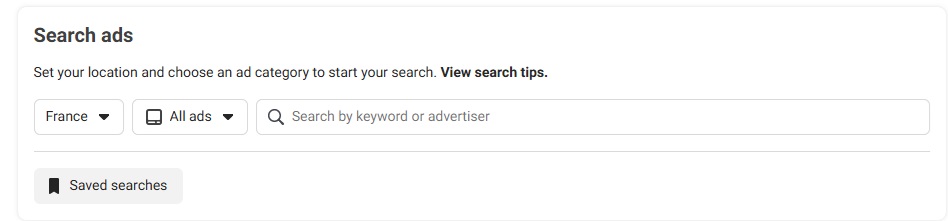 ad library search interface with fields for location, ad category, and advertiser."
data-placeholder="ad-library-search-interface.webp"
loading="lazy"
/>
ad library search interface with fields for location, ad category, and advertiser."
data-placeholder="ad-library-search-interface.webp"
loading="lazy"
/>
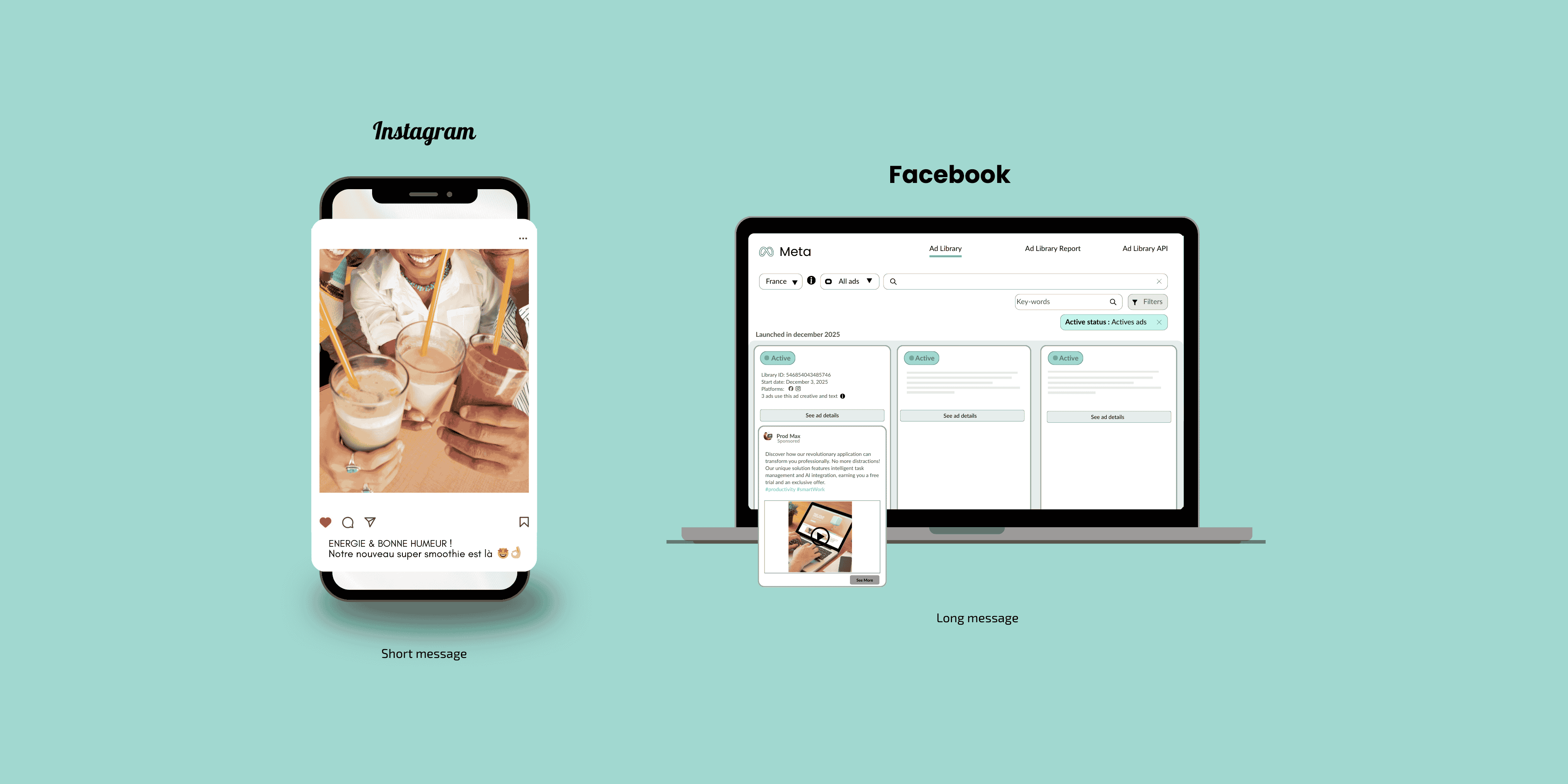
Accessing ad research tools is typically straightforward, often without requiring an account for basic searches. The core functionality revolves around two primary search methods: by advertiser name or by keyword.
Searching by an advertiser's brand name reveals all active ads count and historical ads associated with that page. A keyword search finds all ads that contain a specific term in their copy, which is useful for researching topics or product categories.
Advanced ad intelligence platforms expand these capabilities significantly. They often aggregate ads from multiple networks, including Meta platforms (Facebook, Instagram), TikTok, Google, YouTube Ad Library, and X (formerly Twitter), into a single interface.
These platforms also provide sophisticated filtering options. Users can narrow down results by country, platform, media type, or ad run date to conduct more precise analysis. Some systems also allow users to save compelling ads to personal libraries for future reference or organize them into folders for specific projects.
Creative Analysis: Key Elements to Compare and Deconstruct
Effective ad research goes beyond simply viewing competitor ads. It involves a systematic deconstruction of creative elements to understand what drives performance and resonates with the target audience.
Ad Formats and Visual Trends
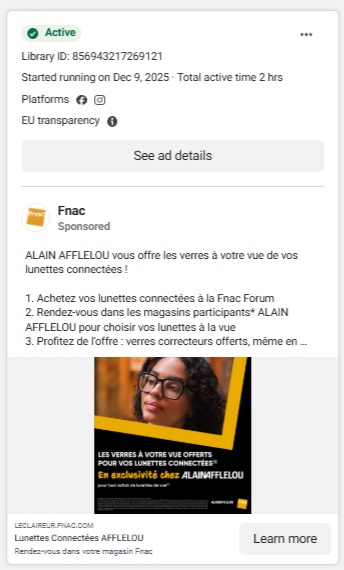
Pay close attention to the ad formats competitors use consistently. The prevalence of formats like short-form video, user-generated content (UGC), or carousels can signal which approaches are most effective for a given market or product.
Analyze how visuals are used. Observe whether they focus on highlighting a problem to capture attention or showcasing a desired outcome to build aspiration.
Copywriting Frameworks
Successful ad copy often follows structured persuasion frameworks. Two common models to look for are AIDA (Attention, Interest, Desire, Action) and PAS (Problem, Agitate, Solution).
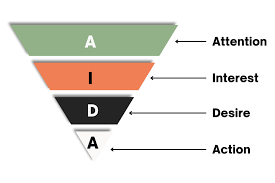
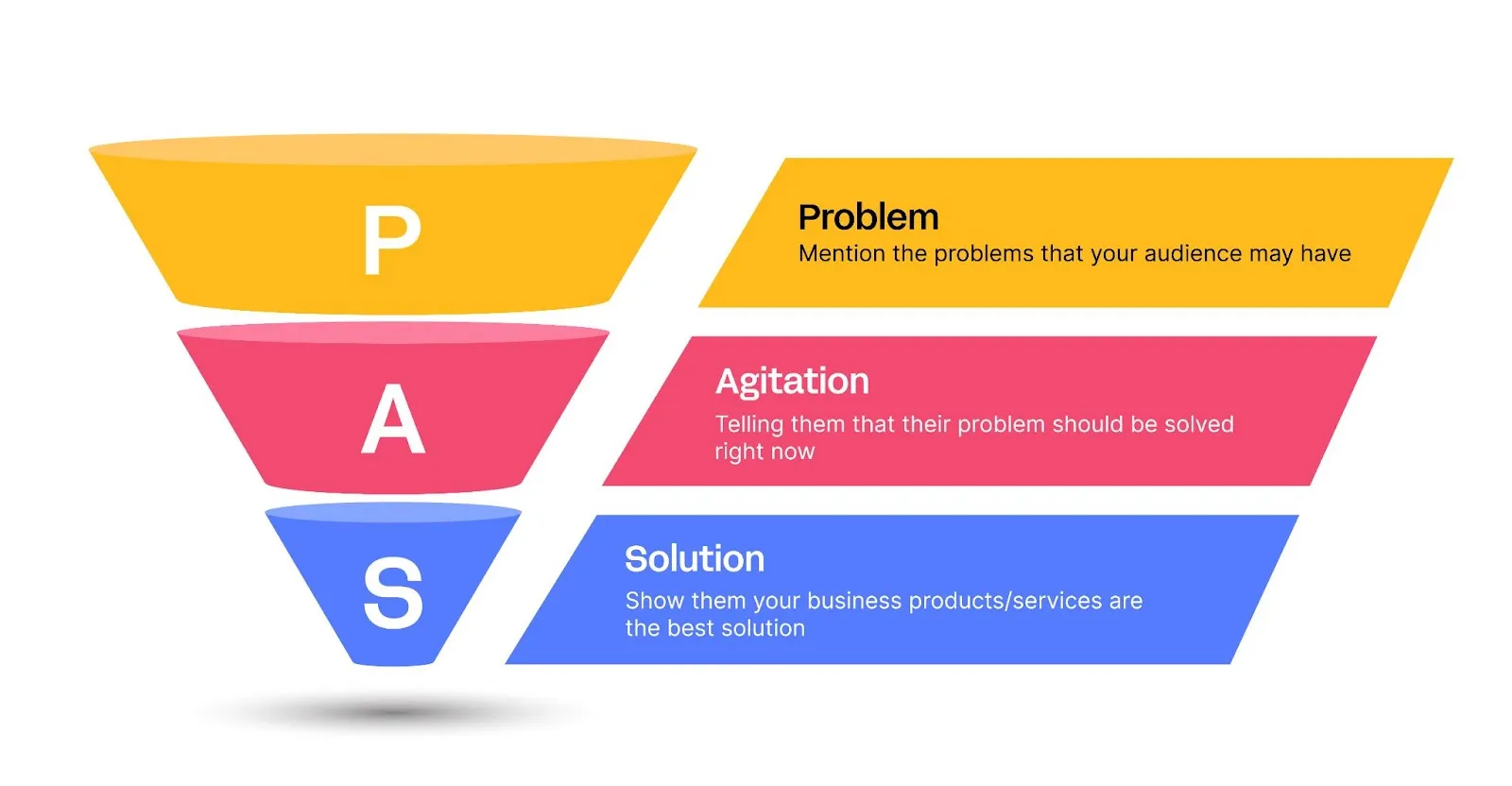
The AIDA model guides a user through a linear journey from awareness to conversion. The PAS model focuses on highlighting a customer's pain point and positioning the product as the ideal resolution.
Turning Insights into Actionable Campaign Hypotheses
The goal of ad research is not to copy competitors but to develop informed hypotheses for your own creative tests. Analysis of ad longevity, messaging, and calls-to-action can reveal a competitor's underlying strategy.
Identify Proven Concepts
An ad that has been running for an extended period, such as 90 days or more, is a strong indicator of profitability. Advertisers do not continue to spend on campaigns that fail to deliver a positive return. These long-running ads serve as blueprints for successful messaging and offers.
Decode Funnel Strategy via CTAs
The call-to-action (CTA) button provides clues about an ad's objective within the marketing funnel. CTAs like "Shop Now" target immediate conversion, while "Learn More" or "Sign Up" suggest a lead generation or awareness strategy.
Infer Audience Targeting
 ad spend breakdown by country and demographics, showing targeting insights."
data-placeholder="geographical-spend-targeting-data.webp"
loading="lazy"
/>
ad spend breakdown by country and demographics, showing targeting insights."
data-placeholder="geographical-spend-targeting-data.webp"
loading="lazy"
/>
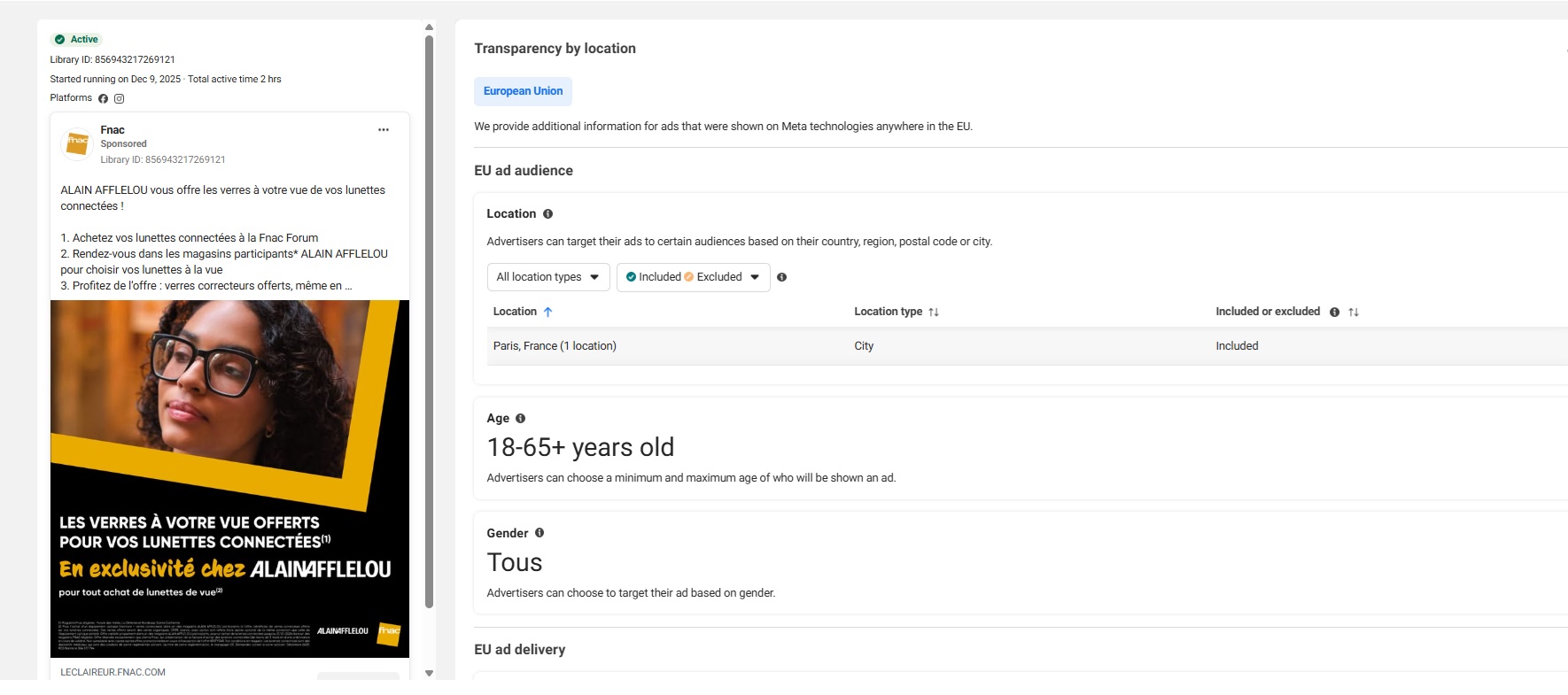
While granular targeting data is private, you can infer audience profiles from the ad's language, tone, and imagery. Technical jargon suggests a B2B audience, while emojis and casual language often target a broader consumer market. Some platforms also show budget allocation by country, revealing priority markets.
A Practical Workflow for Competitor Ad Research
A structured process ensures that ad analysis is efficient and yields actionable insights. Follow these steps to guide your research.
- Step 1: Define Your Objective. Clearly state what you want to learn. Are you researching messaging angles for a new product, looking for high-performing ad formats, or analyzing a competitor's launch strategy?
- Step 2: Conduct Broad Searches. Start by searching for your primary competitors by name and relevant keywords. This provides a high-level overview of the competitive landscape.
- Step 3: Apply Strategic Filters. Use filters to narrow your focus. Filter by country to see market-specific ads, by platform like Facebook or Instagram to compare formats, and by date to identify long-running campaigns.
- Step 4: Analyze Winning Ads. Isolate ads that have been active for several months. Deconstruct their creative, copy, CTA, and inferred targeting to understand the formula for their success.
- Step 5: Synthesize and Hypothesize. Document your findings and formulate hypotheses for your own campaigns. For example, "A UGC-style video focusing on a specific problem with a 'Shop Now' CTA may increase conversion rates."
Common Mistakes in Ad Library Analysis
Ignoring Ad Longevity
Failure Pattern: Treating all ads as equally important. Corrective Principle: Prioritize analysis of ads that have been running the longest, as their duration is a strong proxy for profitability.
Copying Instead of Adapting
Failure Pattern: Directly replicating a competitor's ad creative and copy. Corrective Principle: Use competitor ads for inspiration, but adapt the core concepts to your own brand voice, offer, and audience.
Analyzing Ads Without Platform Context
Failure Pattern: Assuming an ad performs the same on all platforms. Corrective Principle: Use platform-specific filters to understand how creative strategies are adapted for different user behaviors, such as short copy on Instagram versus long copy on Facebook.
Overlooking the Call-to-Action
Failure Pattern: Focusing only on the visual and copy, while ignoring the CTA button. Corrective Principle: Analyze the CTA to understand the ad's strategic goal, whether it's immediate sales, lead capture, or brand awareness.
Assuming Access to All Data
Failure Pattern: Believing the ad library reveals everything about a competitor's strategy. Corrective Principle: Understand the inherent limitations, such as hidden financial data like exact spend or ROI and granular audience targeting details.
Frequently Asked Questions About Ad Libraries
Can you see a competitor's exact ad spend or ROI?
No. Ad libraries do not disclose precise financial data. While some may provide a wide spending range, the exact budget and return on investment (ROI) for any given ad or campaign remain confidential.
Does an ad library show detailed audience targeting?
No. Specific targeting criteria like detailed interests, user behaviors, or the use of custom audiences are not public information. You can only infer the target audience based on the ad's content and high-level demographic data where available.
Can ad libraries be used to protect a brand?
Yes. By searching for your own brand name, logo, or product names, you can monitor for unauthorized use, counterfeits, or misleading ads from third parties, helping to protect your brand's reputation.
How to Research Competitor Ads: A Step-by-Step Search Workflow
Most marketers open an ad library, type a competitor name, and scroll. That's browsing, not research. A structured search workflow extracts signal instead of noise.
Step 1: Anchor to a specific question. Before touching any search field, define the question. "What messaging is [Competitor X] using for cold audiences?" is a research question. "Let's see what they're running" is a time sink. The question determines which filters matter.
Step 2: Run three search passes. First, search by advertiser name to capture their full active inventory. Second, run keyword searches on the terms you expect them to use — product category, pain points, core benefits. Third, search your own brand name to catch any comparative or conquest campaigns they're running against you.
Step 3: Filter for longevity, not recency. Sort by oldest active date and filter to ads running 60+ days. These are the ads that survived budget review meetings. Short-form video ads from 90+ days ago that are still live are the most valuable creative intelligence available without a budget.
Step 4: Cross-reference platforms. A competitor running the same concept as a carousel on Facebook and a Reels format on Instagram signals high confidence in that message — they've validated it enough to adapt production. Single-platform ads are experiments; multi-platform adaptations are proven plays.
Step 5: Save and tag systematically. Ad libraries with save-to-library features let you build a reference corpus. Tag by message angle, format type, and CTA. Over time this becomes a competitive intelligence database, not a scroll session you'll forget by Monday.
Step 6: Build a hypothesis card. For each insight, write one sentence: what did the competitor do, why does it likely work, and how will you adapt it. This converts observation into a testable paid social hypothesis rather than a vague creative direction.
The difference between a researcher and a scroller is the written hypothesis at the end. If you close an ad library session without writing one, you were browsing.
Competitor Research for Creative Strategists
Creative strategists use ad libraries differently from media buyers. A media buyer wants signal on audience and budget. A creative strategist wants signal on what is resonating and why — the underlying persuasion mechanics.
The Strategist's Lens: Hook, Frame, Proof, CTA
Break every competitor ad into four layers:
- Hook — what's the first 3 seconds doing? Is it pattern-interrupt, problem-acknowledgment, or social proof? The hook archetype tells you the emotional entry point the competitor has validated.
- Frame — what's the underlying positioning? "Our product vs. your problem" (PAS), "before/after transformation" (aspirational), or "social proof cascade" (trust-first). Most winners stay in one frame throughout.
- Proof type — testimonials, statistics, demonstrations, or authority signals? The proof type reveals what the market requires before it converts. If every competitor leans on UGC testimonials, the category is trust-starved.
- CTA — the strategist asks why this CTA fits this frame. "Try Free" after a demo hook is coherent. "Shop Now" after a long testimonial is a disconnect. Ad headline and CTA alignment is one of the most copyable insights from a library session.
Run this analysis across 10-15 competitor ads and you'll see patterns. Those patterns are the category's creative grammar — the implicit rules the audience has been trained to respond to by repeated exposure.
Where AI Enrichment Changes the Workflow
Manual deconstruction is slow. Ad creative reuse analysis gets faster when AI enrichment surfaces the hook type, persuasion framework, and CTA category automatically. Instead of watching 30 competitor videos to find the dominant hook archetype, you filter by enriched hook type across the entire category.
This is the operational difference between a strategist using raw ad libraries and one using enriched ad intelligence. The former builds intuition slowly. The latter builds a testable hypothesis in a single session.
Pattern-Break vs. Pattern-Match Strategy
Once you've mapped the category's creative grammar, you face a choice: match the pattern (less risk, less upside) or break it deliberately (higher variance, potential category differentiation). Dynamic creative testing gives you a systematic way to run both simultaneously — pattern-match variants as control, pattern-break variants as experiments.
The best creative strategists use ad library research to answer both questions in parallel: what does the category expect, and what has no one tried yet? The second question is what produces breakout creative. The first keeps the account stable while you find out. Media buying and creative strategy are converging — the strategist who understands distribution mechanics can write hooks calibrated to context.
How do you research competitor ads without a paid tool?
Every major platform offers a free native ad library. Meta's Ad Library covers Facebook, Instagram, Messenger, and Audience Network. Google's Ads Transparency Center covers Search, Display, and YouTube. TikTok has its Creative Center. LinkedIn's Ad Library is accessible from any company page. The limitation of native libraries is fragmentation — you need four separate searches across four interfaces. A structured workflow (search by brand, then by keyword, then filter by longevity) maximizes what you can extract from free tools before needing to invest in a unified retargeting-and-research platform.
What do creative strategists look for in an ad library?
Creative strategists focus on persuasion mechanics rather than visual style. The most valuable signals are hook archetype (what's happening in the first 3 seconds), persuasion frame (PAS, AIDA, social proof, before/after), proof type (testimonial, stat, demo), and CTA coherence. Running this analysis across 10-15 competitor ads reveals the category's creative grammar — the implicit conventions the market has been trained to respond to. Strategists also track longevity: an ad running 90+ days is a market-validated persuasion sequence, not just a design choice.
How often should you audit competitor ads?
Monthly for stable categories, bi-weekly for fast-moving DTC or seasonal markets. The most efficient approach is trigger-based: audit when launching a new campaign (calibrate against current competitive creative), when performance drops unexpectedly (check if a competitor changed messaging), and before major creative production cycles (inform brief development). Save competitor ads continuously to a tagged library so each audit has a baseline to compare against. Performance marketing teams that run structured competitor audits on a trigger-based cadence consistently outperform teams that browse ad libraries reactively.