
Advanced Retargeting Strategies: Segmenting Audiences by Market Awareness
Effective retargeting campaigns move beyond simple website visitor lists by addressing prospects at every stage of their purchasing journey. This structured approach ensures that every segment of the audience receives relevant, personalized advertising creatives designed to drive conversion.

Sections
Standard retargeting often focuses exclusively on users who have already shown high intent, such as recent website visitors. While these product-aware customers are important, relying only on this segment overlooks the vast majority of potential buyers who are earlier in their decision process. By segmenting campaigns according to specific awareness levels, marketers can cultivate leads efficiently.
The Foundation of Effective Retargeting: Market Awareness
Understanding where a potential customer stands on the spectrum of market awareness is the primary input for designing effective ad creatives and campaign structures. A single ad message cannot resonate with a person who is unaware of a problem and a person who is ready to purchase a solution.
Defining the Four Audience Segments
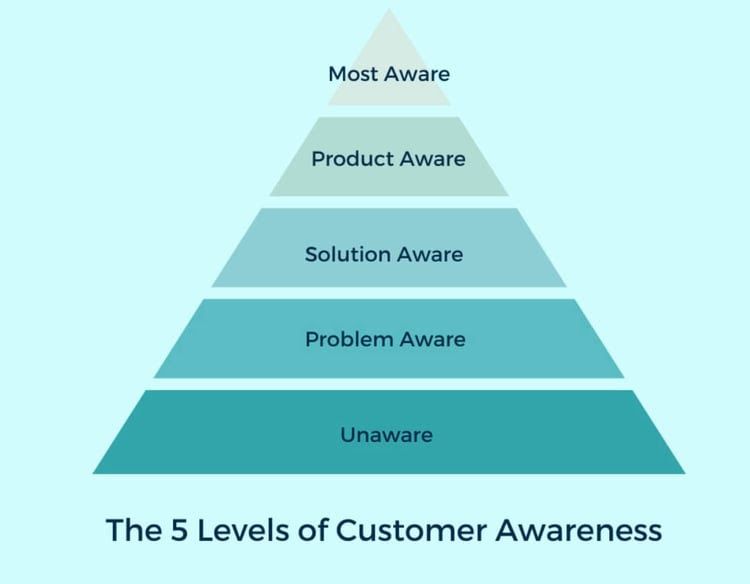
To implement sophisticated retargeting, it is necessary to identify and target four distinct psychological states. Mapping users to these segments allows for precise messaging and creative selection across multi-platform ad coverage, including Facebook, Instagram, TikTok, and YouTube.
- Problem Unaware: This audience segment does not yet realize they have a pain point or inefficiency that a solution can resolve.
- Problem Aware: Individuals in this group recognize they have an issue but are not yet searching for specific product solutions to address it.
- Solution Aware: Customers here understand that various products or services exist to solve their problem, but they are unfamiliar with specific brands or providers.
- Product Aware: This segment knows about the specific offering but has not yet committed to a purchase. This is often the segment targeted by standard discount campaigns.
Strategic Creative Mapping to Awareness Levels
Ad intelligence and creative research platforms assist marketers in translating audience segment definitions into tangible messaging and creative formats. The messaging angles and hooks must evolve sequentially as the customer moves down the funnel.
Creative Strategies for Early-Stage Awareness
For the Problem Unaware segment, creatives should use storytelling or educational content to introduce the problem indirectly. The goal is simple recognition, not immediate sales. The Problem Aware audience requires content that validates their issue and broadly introduces the concept of a resolution, hinting at a superior outcome.
Creative Strategies for Late-Stage Awareness
The Solution Aware segment is highly engaged and requires detailed, comparative content. Messaging must highlight unique value propositions, using evidence such as testimonials or case studies to demonstrate superiority. Finally, the Product Aware audience should receive clear purchase incentives, such as limited-time offers or bonuses, providing the final push toward conversion.
Practical Workflow: Building the Sequential Retargeting Funnel
Implementing a segmented retargeting strategy requires setting up dedicated campaigns rather than consolidating all efforts into a single bucket. This structure ensures budget allocation and creative rotation align with audience readiness.
- Step 1: Define Audience Pools: Create custom audience lists for each of the four awareness segments based on user behavior (e.g., video views for Problem Unaware, specific product page views for Product Aware).
- Step 2: Assign Campaign Objectives: Launch separate campaigns tailored to each pool. Early-stage segments (Problem Unaware, Problem Aware) focus on awareness and engagement metrics, while late-stage campaigns focus on conversion.
- Step 3: Develop Targeted Creatives: Utilize creative research to identify the best formats (e.g., short-form video, static comparison ads) and write messaging customized to the awareness level, ensuring content is highly relevant.
- Step 4: Implement Sequential Ad Delivery: Configure ad sequences so that users move systematically through the stages. For example, a user seeing a Problem Aware ad should only graduate to a Solution Aware ad after specific engagement.
- Step 5: Integrate Exclusion Lists: Ensure that audiences who have completed a purchase are immediately removed from all retargeting campaigns to prevent wasted spend and ad fatigue.

Maximizing Performance: Advanced Optimization Techniques
Once the core sequential funnel is established, several optimization techniques can be layered on to fine-tune performance and return on investment (ROI).
Sequential Retargeting
This method involves creating a narrative flow where a customer sees a series of ads that guide them through the journey, starting with high-level education and culminating in a specific product offer. This structured guidance improves message absorption and reduces creative burnout.
Dynamic Retargeting
Dynamic ads automatically adjust the creative content shown to a user based on their specific historical interactions with a website, such as products viewed or items left in a cart. This personalization capability is essential for Product Aware audiences across platforms like Facebook and Google Display Network.
Frequency Control and Bid Adjustments
Frequency capping limits how often an individual sees an advertisement within a specific time frame, preserving positive brand perception. Simultaneously, bid adjustments should prioritize audiences closer to conversion (Product Aware) by allocating higher bids, while earlier stage segments can sustain lower, awareness-focused bids.
Common Mistakes in Retargeting Campaign Management
Sophisticated retargeting requires attention to detail. Avoiding common errors helps maintain budget efficiency and campaign effectiveness across various ad networks.
- Failure Pattern: Targeting all segments with a single discount or promotional message. Corrective Principle: Utilize multiple campaigns, each with distinct messaging tailored to the specific level of market awareness.
- Failure Pattern: Neglecting to implement frequency caps across all active campaigns. Corrective Principle: Limit ad exposure to prevent audience burnout and negative sentiment toward the brand.
- Failure Pattern: Retargeting previous purchasers or converted customers indefinitely. Corrective Principle: Maintain rigorous exclusion lists to conserve budget and focus spend on active prospects.
- Failure Pattern: Using static creatives universally without adjusting format or size. Corrective Principle: Employ responsive ad formats that automatically adapt to various platforms (e.g., Pinterest, Unity Ads) and placements.
- Failure Pattern: Allocating budget uniformly across all audience segments. Corrective Principle: Adjust bids based on intent; invest more heavily in Product Aware and Solution Aware segments.