
5 Classic Sales Letters That Defined Direct Response Copywriting
Analyzing historical advertising benchmarks provides a blueprint for modern ad creatives. These five examples demonstrate foundational principles of narrative, curiosity, and emotional resonance.

Sections
Direct response copywriting relies on fundamental psychological triggers that remain effective across decades. By studying the structural and narrative elements of historically successful sales letters, marketers can extract principles applicable to modern digital campaigns, video sales letters (VSLs), and social media creative.
The Narrative of Social Transformation
John Caples’ headline, “They Laughed When I Sat Down At The Piano,” remains a seminal example of narrative-driven advertising. Written in 1926, the letter utilizes a clear story arc involving initial skepticism, a dramatic demonstration of skill, and eventual social validation.
The core mechanism here is the transformation from underdog to hero. The copy taps into universal fears of embarrassment and the desire for respect. In modern creative testing, this structure mirrors the “Before and After” format or user-generated content (UGC) scripts that document a personal journey from struggle to success.
The Comparative Knowledge Gap
The Wall Street Journal’s “Two Young Men” letter, written by Martin Conroy, ran for decades and is estimated to have generated significant revenue. The narrative contrasts two individuals with identical backgrounds—same college, same graduation year—who end up in vastly different career positions twenty-five years later.
This letter establishes a “knowledge gap.” It positions the product not just as a commodity, but as the decisive factor between mediocrity and executive success. This technique effectively highlights the cost of inaction and the value of superior information, a strategy often seen today in B2B advertising and educational course marketing.

Relatability and the Origin Story
Gary Halbert’s “Desperate Nerd From Ohio” letter leverages extreme vulnerability and conversational tone. By describing a personal low point—being broke and desperate—the copy builds immediate rapport and trust with the reader. This is often referred to as the “reluctant hero” archetype.
The effectiveness lies in the authenticity of the voice. It dismantles skepticism by admitting flaws before pivoting to the solution. Modern influencer marketing and founder-led brand stories often utilize this exact framework to humanize a business and lower resistance to the sales message.
Sensory Immersion and Logic
Joseph Sugarman’s “Vision Breakthrough” for BluBlocker sunglasses moves beyond simple feature listing to describe the sensory experience of using the product. The copy explains the technical reason for the benefit—blocking blue light waves—while using vivid descriptors to paint a picture of “sharper, more defined” vision.
This approach combines emotional sensory language with logical justification. It validates the purchase decision with science while selling the feeling of the experience. This dual-track persuasion is critical for physical products where the user cannot touch or try the item before purchasing.
Visual Pattern Interrupts and Curiosity
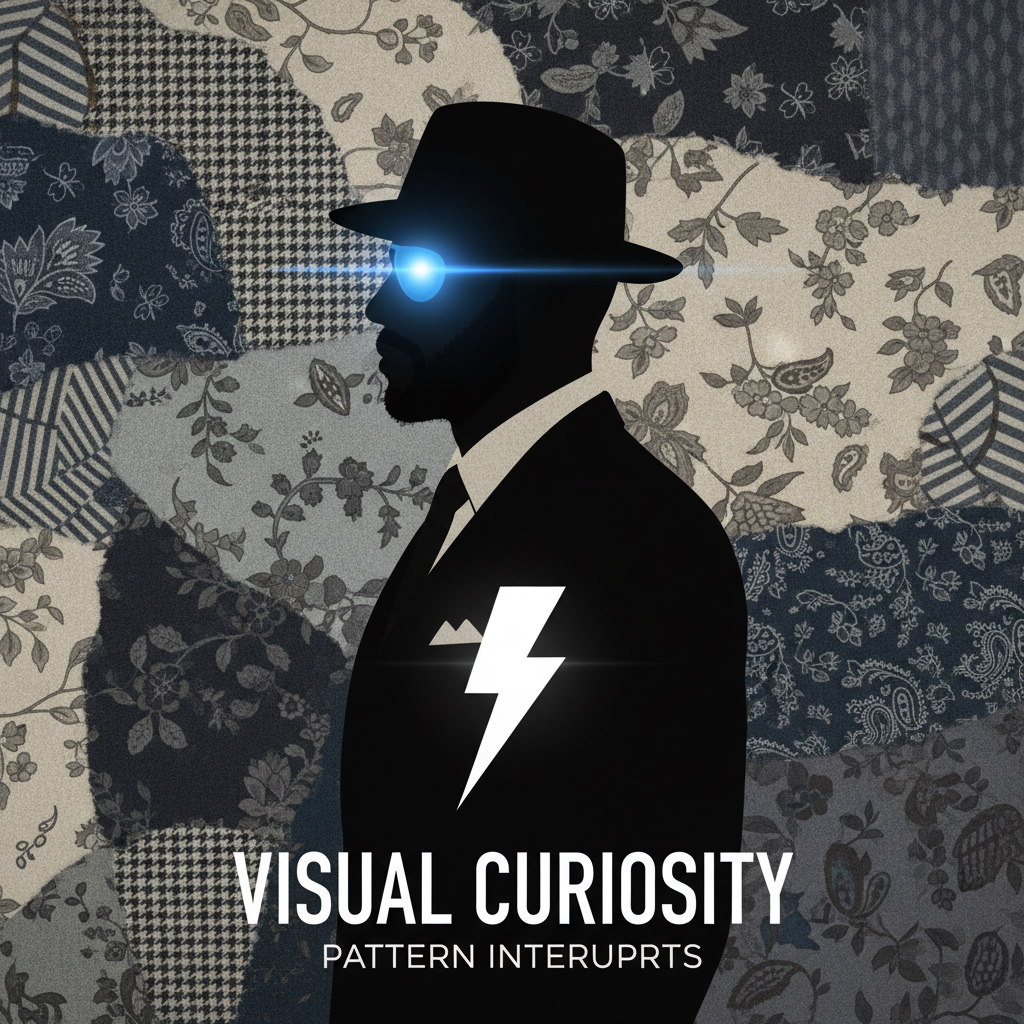
David Ogilvy’s campaign for Hathaway shirts introduced the “Man in the Hathaway Shirt,” distinguished by a mysterious eyepatch. The eyepatch had no relation to the shirt itself; it served solely as a visual hook to generate intrigue and differentiate the brand from competitors.
This concept is the precursor to the modern “scroll stopper” or pattern interrupt in social feeds. By introducing an unexplained or unusual visual element, the creative forces the audience to pause and engage to satisfy their curiosity.
Practical Workflow: Analyzing Copy for Modern Channels
To apply these historical lessons to current campaign workflows, follow this analysis process:
- Step 1: Identify the Primary Hook. Determine if the lead is based on a story, a promise, a secret, or a visual interruption.
- Step 2: Map the Emotional Arc. Trace the journey from the problem state (fear, lack of status, poor vision) to the resolved state (validation, success, clarity).
- Step 3: Extract the Mechanism. Isolate the specific argument used to justify the result (e.g., "superior knowledge" or "blue light filtration").
- Step 4: Adapt to Format. Translate long-form text blocks into short video scripts or carousel slides, maintaining the core psychological triggers.
Common Mistakes in Copy Adaptation
When referencing classic sales letters, marketers often encounter specific pitfalls:
- Mistaking Tone for Strategy. Copying the vintage style of writing rather than the underlying psychological structure makes ads feel dated.
- Burying the Lede. Modern attention spans are shorter; narrative buildups must move faster than print era letters.
- Over-Hype without Proof. Using aggressive claims (like Halbert's style) without the accompanying authenticity or proof elements leads to ad rejection.
- Neglecting Visual Context. Failing to pair strong copy with equally compelling visual signals, as seen in the Hathaway example.
- Ignoring the Call to Action. Classic letters always had clear instructions on how to order; digital adaptations sometimes obscure the next step.
Ad intelligence platforms can further support this process by allowing marketers to search for modern ads that utilize these specific narrative structures, validating which historical principles are currently performing across different ad networks.