
Meta Ads Campaign Structure 2026: The Andromeda Update and Account Consolidation
As Meta upgrades its ad retrieval infrastructure with the Andromeda update, advertisers must pivot toward consolidated account structures and high-volume creative testing to maintain performance.
Sections
The landscape of performance advertising on Meta platforms is shifting fundamentally as 2026 approaches. Driven by advancements in artificial intelligence, privacy constraints, and Meta’s internal infrastructure upgrades—specifically the Andromeda update—the complex account structures of the past are becoming obsolete. Advertisers are now moving toward simplified, consolidated setups that leverage algorithmic machine learning rather than manual hyper-segmentation.

The Shift to Account Consolidation
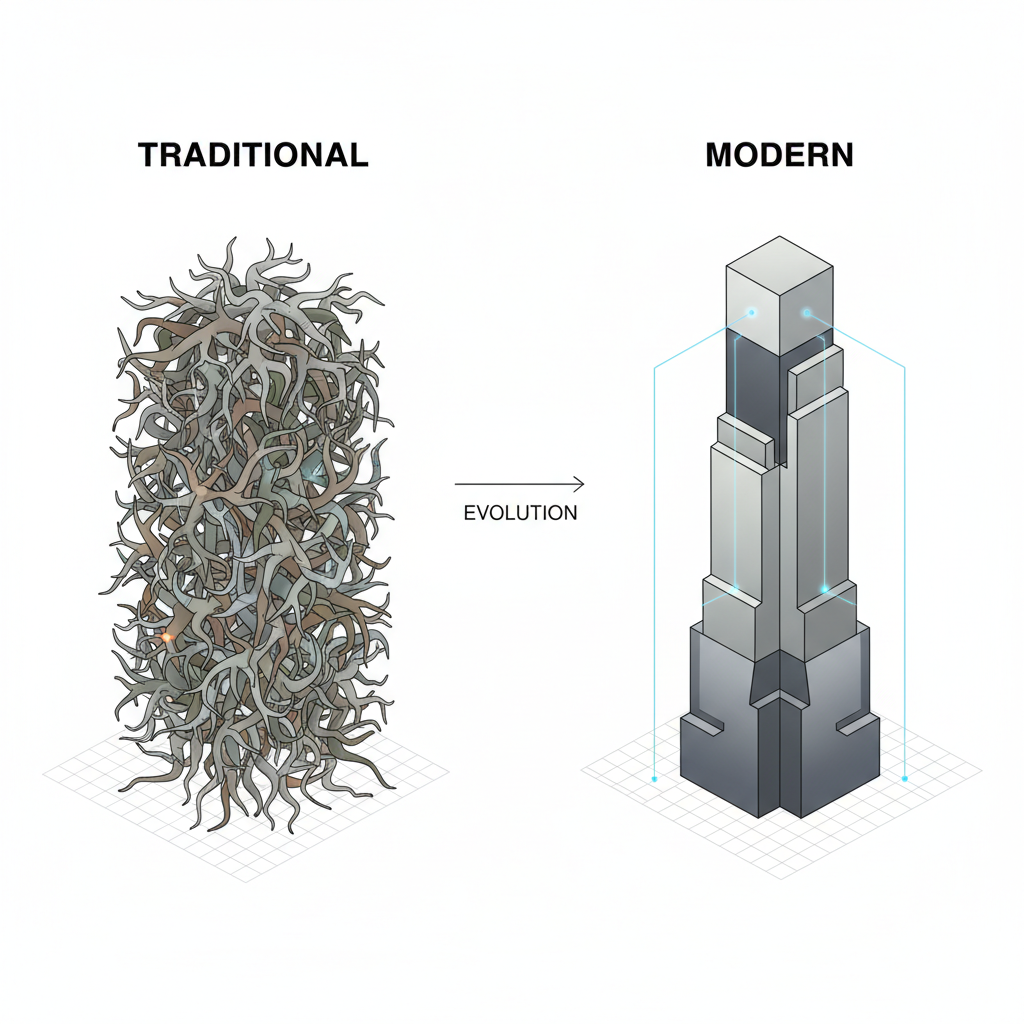
Historically, advertisers often managed ad accounts with five, ten, or more campaigns running simultaneously. Each campaign might contain multiple ad sets, which in turn housed a few ads. While this provided a sense of control, it often led to budget fragmentation. When a daily budget is split across too many variables, the machine learning algorithms receive diluted data signals, making optimization difficult and error-prone.
Modern best practices dictate a "less is more" approach. Consolidating budget into fewer campaigns allows the algorithm to gather data signals more densely. This stability helps the system learn faster and deliver more consistent results. For many accounts, a single acquisition campaign is sufficient to drive performance, provided the underlying creative strategy is robust.
Understanding the Andromeda Update
The driving force behind recent structural changes is the Andromeda update, a massive upgrade to Meta’s ad retrieval system. This system is responsible for deciding, within milliseconds, which ad is shown to which user. Meta claims this upgrade has made the system significantly more powerful, utilizing advanced hardware to process ad delivery with greater precision.
The long-term vision of this update is 1:1 personalization—where every user sees a uniquely tailored version of an ad perfectly suited to their preferences, mood, and demographic profile. One user might respond better to a video with a blue background, while another prefers a static image with green tones. The Andromeda system is designed to match these specific creative variables to the individual user more effectively than ever before.
The Impact on Creative Volume
Because the system can now match highly specific ad variations to specific users, the limitation on the number of active ads per ad set has effectively been removed. Previously, advertisers ran 3–5 ads per ad set. Under the new paradigm, ad sets may require 20, 50, or even 100+ creative variations to fully leverage the algorithm's matching capabilities.

Recommended Campaign Architecture
A streamlined account structure typically consists of two primary components:
- The Scaling Campaign: A single campaign dedicated to new customer acquisition. This houses the majority of the budget and the top-performing creative assets.
- The Testing Campaign (Optional): A separate environment for testing new concepts. Keeping tests separate ensures that unproven ads do not disrupt the performance of the scaling campaign and guarantees that new assets receive adequate spend for evaluation.
Exceptions for Complexity
While simplicity is the goal, certain business requirements justify additional campaigns:
- Seasonal Events: Distinct campaigns for launches, Black Friday, or holiday promotions prevent short-term volatility from affecting evergreen performance.
- International Markets: Separate campaigns are often necessary when targeting different countries or languages (e.g., separating DACH regions from France).
- Catalog Sales: E-commerce brands with large SKUs should maintain a dedicated Dynamic Product Ad (DPA) campaign to nurture the entire product catalog.
Budget and Ad Set Strategy
At the ad set level, over-segmentation remains a critical error. For smaller daily budgets (e.g., 100–200€), a single broad ad set is often optimal. Splitting a small budget across multiple targeting options dilutes the data required for the algorithm to exit the learning phase.
Larger budgets allow for slight segmentation, such as separating Broad, Interest-based, and Lookalike audiences to manage spend distribution. However, the trend is moving away from granular targeting restrictions. The algorithm is increasingly proficient at finding the right audience within a broad parameter, provided it is fed enough distinct creative angles.
Practical Workflow: Transitioning to the New Standard
Implementing this structure requires a disciplined approach to account management and creative production.
- Step 1: Audit Current Structure. Review the ad account to identify fragmentation. Look for multiple campaigns optimizing for the same objective that can be merged.
- Step 2: Consolidate Campaigns. Move winning ad sets and ads into a single "Scaling" campaign. Pause underperforming legacy campaigns to redirect budget into the consolidated flow.
- Step 3: Simplify Targeting. Remove narrow audience constraints. If budget is limited, combine interest and lookalike audiences into broader definitions or move to open targeting.
- Step 4: Establish a Testing Sandbox. Create a separate campaign specifically for validating new assets. Only move winners from here to the Scaling campaign.
- Step 5: Scale Creative Production. diverse creative assets are the new targeting method. Use AI tools to generate significantly higher volumes of visual and copy variations to feed the Andromeda system.
Common Mistakes to Avoid
Even with a consolidated structure, performance can suffer if foundational principles are ignored.
- Broad Retargeting: Leaving targeting settings "wide open" in a retargeting campaign, effectively turning it into an inefficient prospecting campaign.
- Testing in Scaling Campaigns: Adding new, unproven ads directly into a high-performing ad set often results in the new ads receiving zero reach because the algorithm favors the incumbent winners.
- Insufficient Creative Volume: Running only 3–5 ads in an Andromeda-optimized environment limits the system's ability to find 1:1 matches.
- Fake Variance: Creating 20 variations that only change the headline. True variance requires distinct visual hooks, formats (static vs. video), and conceptual angles.
- Premature Segmentation: Splitting ad sets by detailed interests before the account has enough spend to support split data streams.
In this high-volume creative environment, the ability to source diverse concepts becomes a competitive advantage. Marketers can utilize ad intelligence platforms to research active competitor formats and uncover distinct visual hooks, ensuring their testing pipeline is filled with genuinely varied hypotheses rather than repetitive iterations.