
Modern Meta Ads Strategy: The 2026 Playbook for Creative and Consolidation
As the Meta advertising ecosystem matures in 2026, success depends on mastering two diverging forces: AI-driven account consolidation and high-fidelity creative diversification.
Sections
The landscape of Meta advertising has shifted fundamentally, driven by the dual engines of algorithmic automation and creative necessity. Advertisers can no longer rely on granular manual controls or sheer volume of ad variations to secure performance. Instead, the ecosystem now favors broad AI-driven targeting paired with radically diverse creative assets.

The Shift to AI-Driven Account Structures
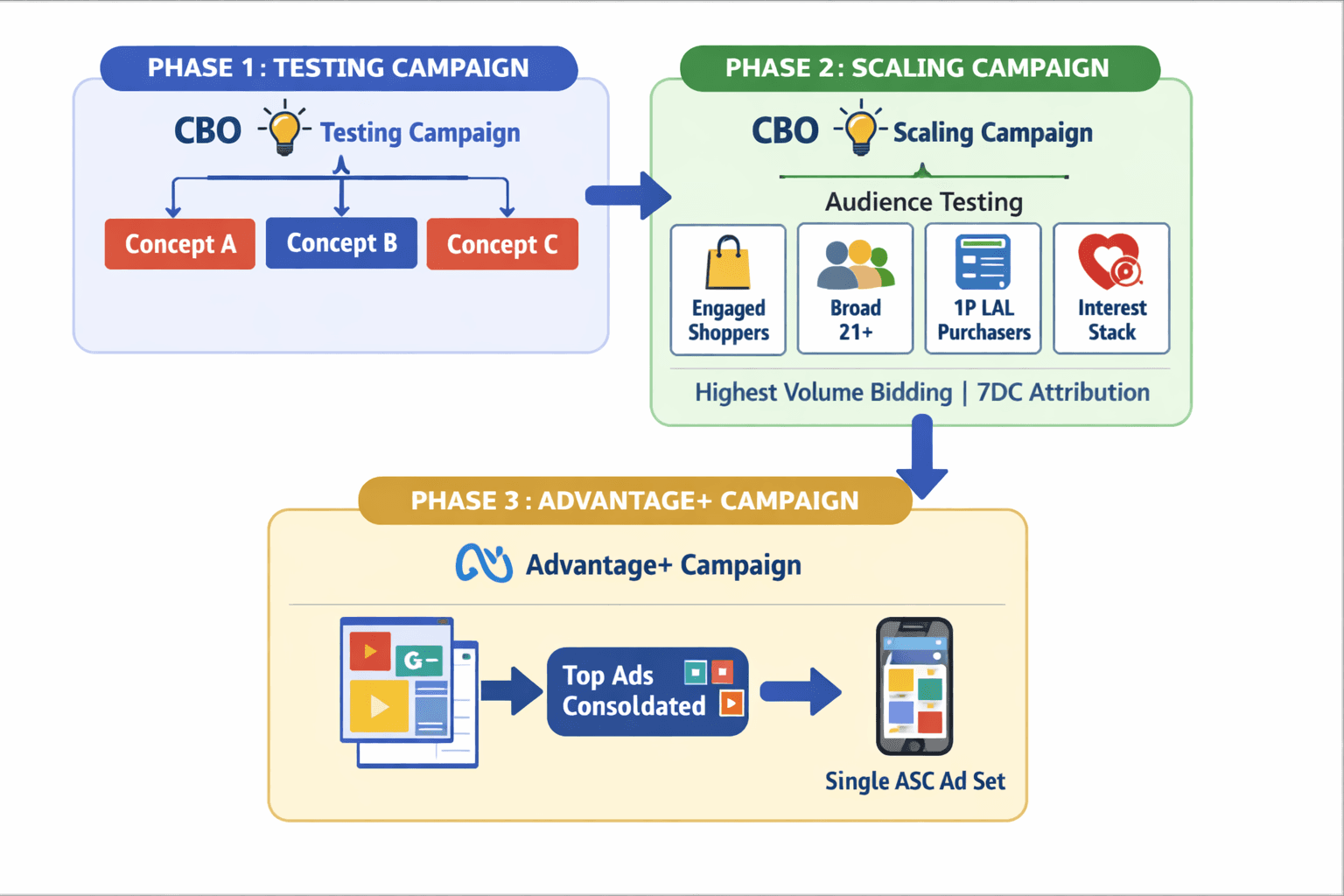
The traditional method of isolating creative tests in dedicated campaigns before moving them to scale has evolved. Modern algorithms, specifically Meta's Advantage+ Shopping Campaigns (ASC), handle high volumes of data more efficiently within consolidated structures. The separation between testing and scaling has become less rigid, requiring a new architectural approach to campaign management.
Effective account structures in 2026 often utilize a three-stage progression to filter and amplify creative winners.
1. Consolidated Testing Environments
Testing now occurs in broader environments. Rather than fragmenting budgets across many ad sets, multiple batches of concepts run within a single campaign and ad set. This provides the algorithm with aggregated data, allowing it to identify potential winners faster without diluting budget efficiency.
2. The Intermediate "Challenger" Layer
Not all winning creatives scale immediately in a primary campaign. An intermediate layer—often a dedicated Advantage+ campaign—serves as a proving ground for variations that showed promise in testing but failed to dominate the primary allocation. This "challenger" environment allows top variations to compete for budget in a slightly less competitive setting before graduation.
3. Evergreen Core Campaigns
Only creative assets that have proven their efficiency in both testing and the intermediate layer move to the permanent, high-budget core campaigns. This strict filtering process stabilizes performance and ensures that the primary budget is focused solely on the highest-confidence assets.
Prioritizing Social-Native Creative
Ad content that mimics the native behavior of social platforms continues to outperform polished, studio-quality commercial assets. The algorithm explicitly rewards content that aligns with the user experience of Instagram Reels and Stories. High-performing assets often feature handheld camera work, quick editing cuts, and authentic, "lo-fi" storytelling.
Furthermore, there is a distinct advantage to boosting organic social posts rather than creating "dark posts" exclusively for ads. When an advertiser promotes an existing organic post using its unique ID, the ad enters the auction with pre-existing social proof signals. This method often results in higher estimated action rates compared to identical content uploaded purely as an ad.
Strategic Economics: Diversity and AOV
Algorithmic updates have shifted the focus from creative volume to creative diversity. Generating dozens of minor iterations of a single winner yields diminishing returns. True diversification involves repurposing a winning angle into entirely new formats, such as transforming a video hook into a static headline or converting a static image into a short-form animation.
 ROAS and profitability metrics"
data-placeholder="roas-analysis-monitor.webp"
loading="lazy"
/>
ROAS and profitability metrics"
data-placeholder="roas-analysis-monitor.webp"
loading="lazy"
/>
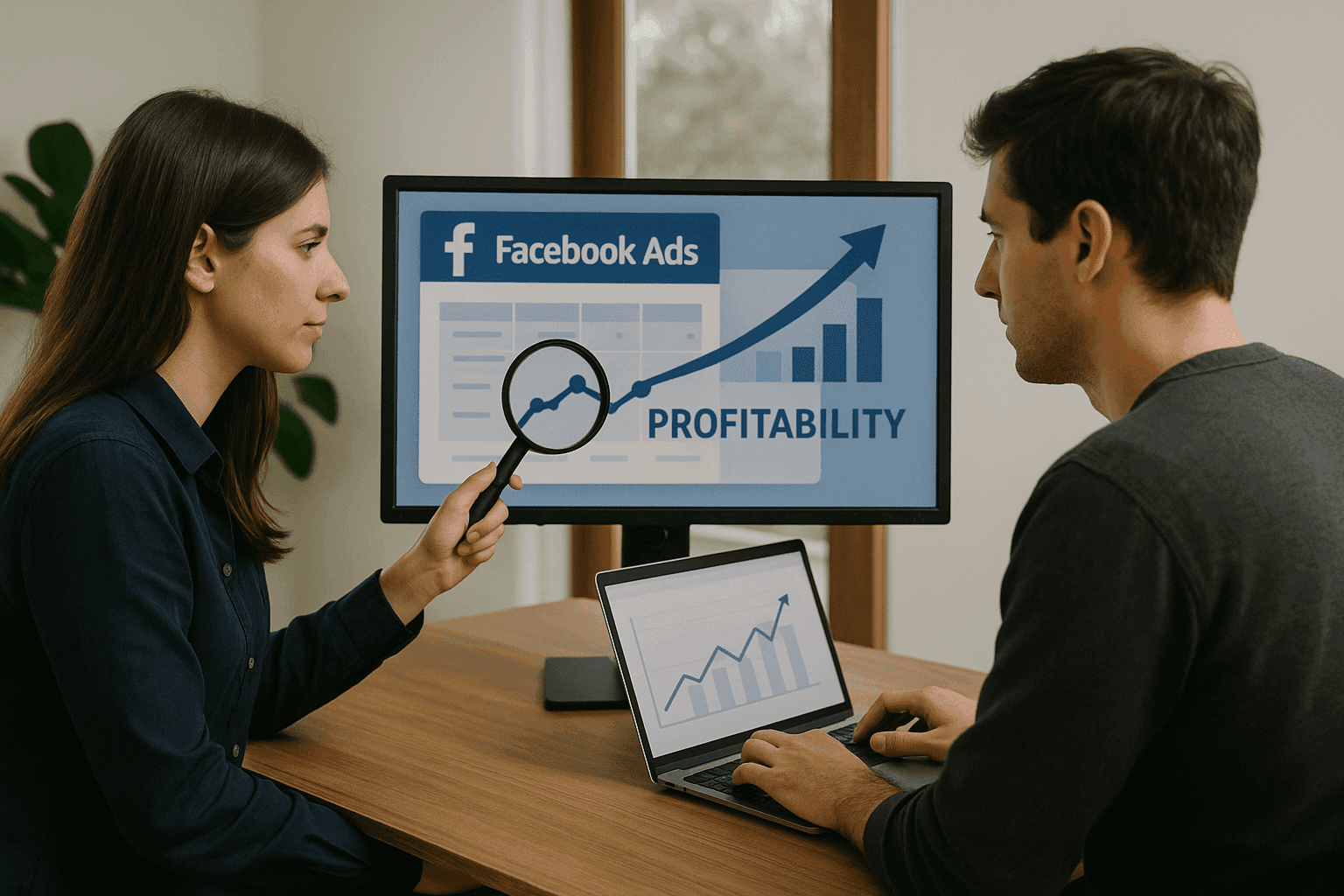
Additionally, rising cost-per-acquisition (CPA) baselines require a defensive economic strategy. Advertisers must focus on increasing Average Order Value (AOV) to maintain profitability. By implementing in-cart upsells, bundles, and post-purchase sequences, brands can raise their tolerable CPA ceiling, allowing them to bid more aggressively in competitive auctions.
Quarterly Promotional Cycles
Consistent growth often requires orchestrated demand spikes. Data suggests that running sitewide promotions on a quarterly basis creates predictable revenue injections that improve blended Return on Ad Spend (ROAS). These periodic resets provide fresh signals to the ad platform and train the customer base to convert during key windows.
Practical Workflow: implementing the Modern Structure
Implementing this strategy requires a disciplined cadence of testing and promotion.
- Step 1: establish a unified testing cadence. Launch batches of new creative concepts weekly within a single, consolidated ad set rather than splitting them across multiple granular audiences.
- Step 2: Identifying organic signals. Review organic social performance weekly to identify high-engagement posts, then promote these specific Post IDs within ad campaigns to leverage existing traction.
- Step 3: Deploying the intermediate layer. Move creative winners that struggle to scale immediately into a dedicated "Challenger" Advantage+ campaign to incubate them with a separate budget.
- Step 4: Executing format diversification. For every verified winner, produce three distinct format variations (e.g., static, carousel, video) rather than minor text tweaks.
- Step 5: Scheduling quarterly spikes. Plan and execute a major sitewide offer every 90 days to reset performance baselines and acquire customers at higher volume.

Common Mistakes in Meta Advertising
Over-segmenting audiences.
Splitting budgets across too many ad sets prevents the algorithm from exiting the learning phase. Consolidate audiences to maximize signal density.
Ignoring organic synergy.
Treating paid and organic strategies as silos misses the algorithmic boost provided by promoting content with existing engagement history.
Confusing volume with diversity.
Testing 50 slight variations of the same image is less effective than testing 5 distinct visual concepts. The algorithm rewards fundamentally different inputs.
Neglecting the "Challenger" phase.
Pushing every test winner directly to a massive scale campaign often breaks efficiency. An intermediate incubation step stabilizes the primary campaign.
Relying solely on platform ROAS.
Ignoring off-platform metrics like AOV and Lifetime Value (LTV) limits the ability to scale. Higher basket sizes allow for more competitive bidding.

Frequently Asked Questions
Why is creative diversity more important than volume?
Modern ad algorithms, such as Meta's automated retrieval systems, prioritize delivering the right message format to the right user. A diverse library of formats (video, static, carousel) allows the system to serve the preferred type to each individual, whereas volume of similar ads competes for the same user subset.
What is the primary benefit of Advantage+ campaigns?
Advantage+ campaigns reduce manual friction and leverage machine learning to test creative combinations against broad audiences. This allows the system to allocate budget dynamically to the highest-performing assets faster than manual media buying allows.
How do quarterly sales affect long-term performance?
Periodic sales create high-conversion windows that drastically lower customer acquisition costs (CAC) for a short period. This influx of purchase data provides the ad pixel with fresh, high-intent signals that can improve optimization even after the sale period ends.
Related Resources
Further Reading
Related Articles
Adapting to Predictive Advertising and Creative Strategy in 2026
The Facebook Ads playbook has changed. Learn strategies around Andromeda AI, creative-first targeting, and the shift from manual bidding to signal-based.

Modern Facebook Ads Strategy: Creative-First Campaigns and Algorithmic Scaling
Learn the 2026 approach to Facebook Ads: creative-centric testing, simplified CBO structures, and data-driven scaling logic.