
Modern Facebook Ads Strategy: Creative-First Campaigns and Algorithmic Scaling
Modern Meta advertising relies less on manual targeting hacks and more on feeding the algorithm high-quality creative signals. Success in the current landscape requires a simplified account structure combined with rigorous creative testing.
Sections
Contemporary advertising on Meta platforms has shifted away from complex technical targeting toward a broad, creative-first approach. Algorithms have evolved to interpret ad creative as the primary targeting signal, meaning the quality and authenticity of the video content determine which audiences are reached. Advertisers succeeding in this environment focus on testing distinct visual hooks rather than manipulating hidden settings.

The Shift to Creative-Centric Advertising
Consumer behavior has fundamentally changed regarding how ads are consumed in feeds. Users have developed "banner blindness" for highly polished, professional-looking commercials that feel distinct from organic content. Consequently, performance has migrated toward assets that feel native to the platform, such as User Generated Content (UGC), quick demonstrations, and simple storytelling formats often seen on TikTok or Instagram Reels.
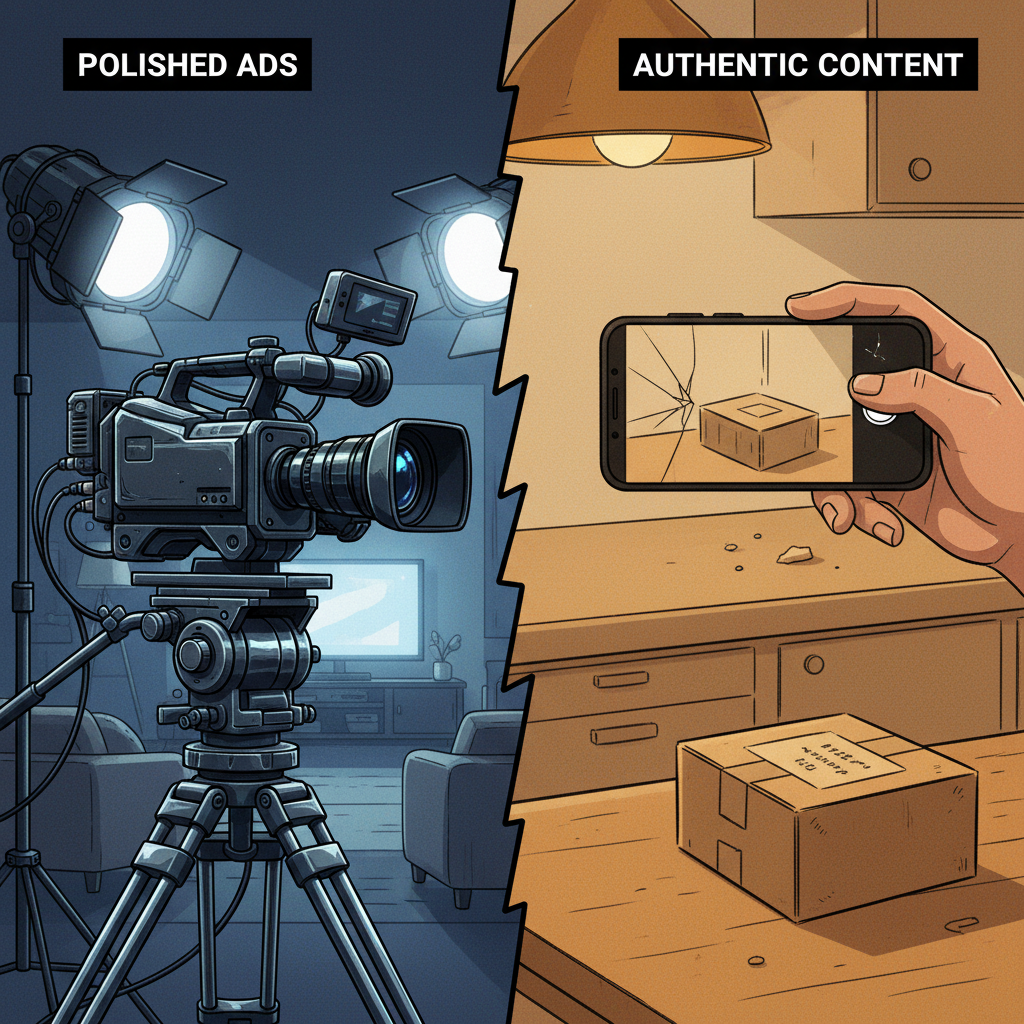
When the content feels real and unscripted, engagement rates typically rise. This engagement signals the algorithm to serve the ad to similar users, effectively allowing the creative to handle the targeting work. The technical setup acts merely as a vessel to deliver these assets efficiently.
Technical Foundation and Asset Connectivity
Before launching campaigns, a robust technical foundation is required to ensure data passes correctly between the commerce platform and Meta. This involves installing the sales channel integration and ensuring the Business Manager is correctly structured. Key assets—including the Facebook Page, Ad Account, and Pixel (Data Set)—must be interlinked with full admin permissions granted to the relevant users.
Domain verification is a critical step often overlooked. This process involves adding a meta-tag to the website’s theme code to verify ownership within Brand Safety settings. Without this verification, the ability to optimize for conversion events may be compromised.
Campaign Structure for Algorithmic Learning
The recommended campaign structure leverages Meta’s machine learning through Campaign Budget Optimization (CBO). Instead of setting budgets at the ad set level, the budget is placed at the campaign level (e.g., a $50 daily baseline). This allows the algorithm to dynamically distribute spend to the best-performing creative asset in real-time.
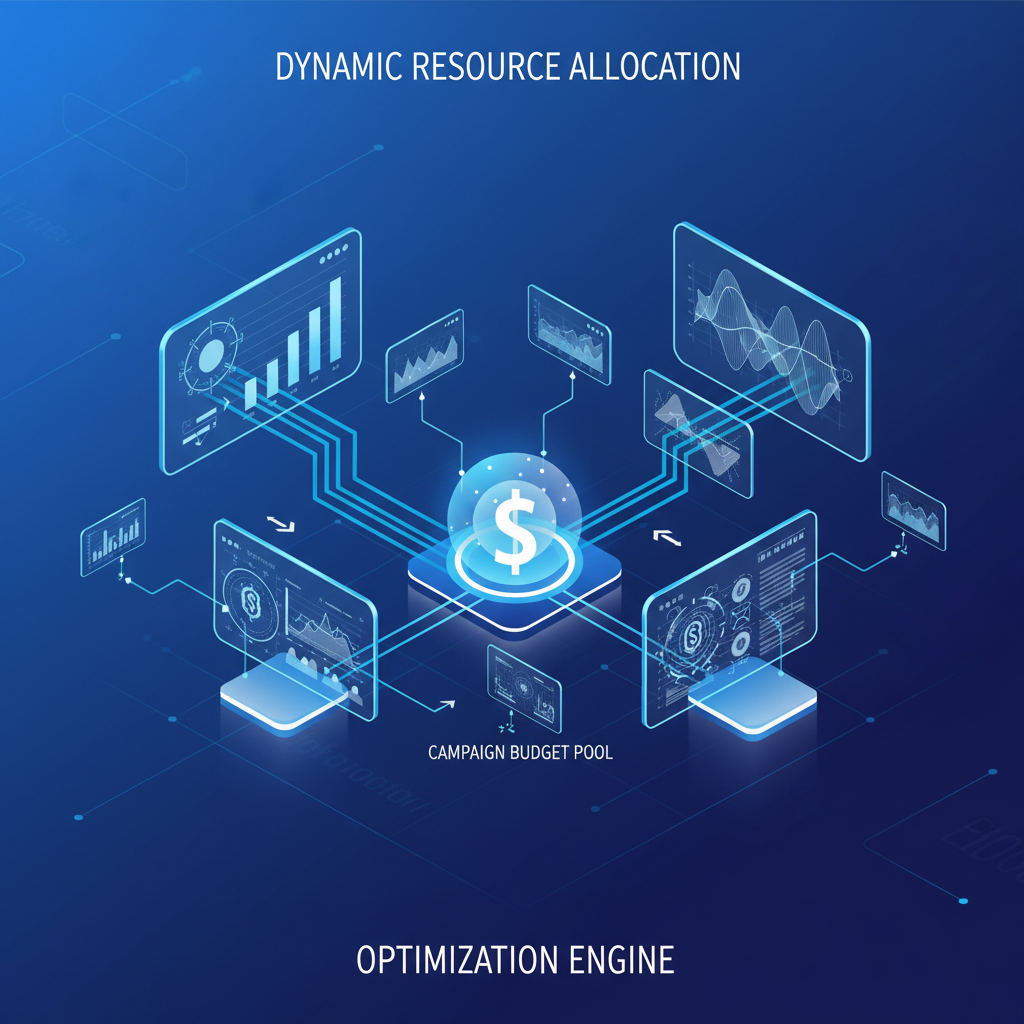
Targeting within the ad set remains broad. Geographic targeting is often stacked to include top English-speaking markets (such as the UK, USA, Canada, and Australia) to maximize the audience pool. This gives the system a full 24-hour cycle across multiple time zones to optimize spend. Placements are generally left automatic, though specific platforms like Threads may be excluded if no account exists.
Creative Testing Framework
A standard testing launch utilizes a manual sales campaign configured to maximize conversions. The ad set should contain approximately three distinct video creatives. These variations allow the system to test different hooks and angles against each other.
When configuring the ads, it is advisable to disable default "enhancements" and "multi-advertiser" settings. Meta frequently adds automatic filters, music, or visual adjustments that can obscure which elements of the creative are actually driving performance. Keeping the upload "raw" ensures the data reflects the asset's true viability.
Analytical Decision Logic: The 72-Hour Rule
Data analysis should occur after a 48 to 72-hour window. Reacting to data earlier than this often leads to premature decisions based on incomplete learning. Analysis relies on two primary metrics: Cost Per Purchase and Return on Ad Spend (ROAS). Calculating the Break-Even ROAS (Selling Price divided by Break-Even Point) is essential for objective decision-making.
 scaling, optimizing, or pausing ad campaigns" loading="lazy">
Based on profitability, three distinct actions can be taken:
- Scale: If the campaign is profitable (e.g., 20-30% margin), increase the budget by 30% and introduce new creative variations.
- Pause: If the campaign has exceeded a loss threshold (e.g., -$100 without sufficient return), pause the product to preserve capital.
- Optimize: If the campaign is breaking even or running a slight loss, retain the campaign but inject new creatives or adjust the pricing/offer strategy to reduce friction.
Practical Workflow
Implementing this strategy involves a disciplined, step-by-step setup process.
- Step 1: Integrate the Facebook & Instagram sales channel on the e-commerce platform and connect the Pixel.
- Step 2: Verify the website domain in Business Manager Brand Safety settings using the meta-tag method.
- Step 3: Create a new Manual Sales Campaign with a Campaign Budget (CBO) set to a $50 daily baseline.
- Step 4: Configure the Ad Set for broad geographic targeting (e.g., Tier 1 countries) and schedule launch for midnight to ensure a full 24-hour spend cycle.
- Step 5: Upload three unique video creatives (20–60 seconds) focusing on hooks and benefits.
- Step 6: Disable all "Advantage+" creative enhancements and site link extensions to maintain control.
- Step 7: Allow the campaign to run uninterrupted for 3 days before applying the scaling or pausing logic.
Common Mistakes
Even with a solid strategy, specific pitfalls can derail performance.
- Micromanaging Spend: Manually forcing budget into specific ads prevents the CBO algorithm from optimizing for the highest ROI.
- Premature Analysis: assessing performance after only 24 hours often results in false negatives; data needs time to stabilize.
- Over-Polished Creative: Using high-production, commercial-style ads often leads to lower engagement compared to authentic, native-style content.
- Ignoring Break-Even Metrics: Running ads without knowing the exact Break-Even ROAS makes it impossible to know if a campaign is truly scalable or bleeding revenue.
- Leaving Enhancements On: allowing the platform to auto-enhance visuals can distort testing results and clutter the ad with unnecessary elements.
Developing a winning creative strategy requires analyzing successful formats across the market. Platforms like AdLibrary.com enable marketers to research high-performing ad concepts and visual hooks, streamlining the hypothesis generation process for new campaigns.
Related Resources
Further Reading
Related Articles

Algorithmic Ad Targeting: How Creative Assets Define Audiences in Modern Campaigns
Learn how updates like Andromeda shift ad targeting from manual settings to creative analysis. Discover how to write hooks that qualify audiences via AI.

Precision Audience Targeting and Creative Iteration for High-Converting Meta Campaigns
Learn advanced Meta ad targeting strategies including custom audiences, lookalikes, and practical workflows for campaign optimization.

The Shift to Creative-First Advertising: Navigating the Era of Automated Targeting
Discover why creative strategy is replacing technical targeting in modern advertising. Learn how to optimize messaging, visual hooks, and brand consistency.

Modern Meta Ads Strategy: The 2026 Playbook for Creative and Consolidation
A guide to Meta advertising in 2026. Learn the three-stage account structure, organic-to-paid workflows, and strategies for increasing AOV.