
Scaling Ad Creatives: Implementing Automation for User-Generated Content Testing
Modern digital advertising demands high volumes of creative testing to identify successful messaging and formats quickly. Automation allows marketers to transform creative insights into publishable User-Generated Content (UGC) assets at speed.

Sections
User-generated content (UGC) is proven to be effective at building consumer trust and fostering instant connections between audiences and brands. However, creating high-quality, authentic UGC at the volume needed for modern ad testing can be both slow and resource-intensive. Implementing content automation transforms this process, enabling brands to efficiently create, test, and deploy persuasive creative assets across multiple advertising platforms.
The Imperative for High-Volume Creative Testing
Effective ad strategy requires rapid iteration and testing across diverse demographics and audience segments. Scaling profitably often necessitates evaluating a high volume of creatives—potentially dozens per week—to isolate elements that drive performance. Automation serves as a mechanism to meet this high demand without incurring massive time or cost expenses associated with traditional production methods.
Integrating Ad Intelligence with Automation
Before deploying automated content generation, marketers must first understand what messaging and formats resonate with their target audience. This begins with thorough ad intelligence, where competitive creatives are analyzed across platforms like Facebook, Instagram, TikTok, and YouTube. Analyzing successful ads helps identify crucial hooks, visual styles, and narrative structures to inform content generation scripts.
Creative Analysis: What to Compare and Why
Creative research platforms provide the necessary filters to organize and compare thousands of ads by platform, media type, country, and performance history. Identifying inspirational ads allows marketers to deconstruct their core components, such as pacing, voiceover style, and offer placement. This process turns competitor success into a structured blueprint for automated script generation and customization.


Translating Insights into Campaign Hypotheses
Once successful creative patterns are identified through intelligence gathering, the next step is translating those insights into testable content variations. Automation facilitates this translation by taking foundational assets (product media, promotional details) and applying tested creative formats observed in the market. This capability allows businesses to match content variations directly with specific offers or product highlights, enabling precise audience targeting.
Strategy Focus: Horizontal and Surf Scaling
Automation supports advanced scaling methods necessary for optimization. Horizontal scaling involves generating enough varied content to drill down into niche audiences or target high-performing lookalike audience (LAA) segments. Surf scaling focuses investment only on proven time windows, pushing successful content when engagement is known to peak, such as specific days or times.
Practical Workflow for Automated UGC Generation
Automation streamlines the entire creative development lifecycle, moving from inspiration to iteration in minutes instead of weeks. This closed-loop system allows continuous testing and adjustment based on real-time audience response data. The workflow below outlines the core steps necessary to generate platform-native creatives efficiently.
- Step 1: Select Inspirational Creative: Utilize creative research tools to identify a high-performing ad or messaging angle to emulate.
- Step 2: Upload Base Assets and Context: Provide the automation system with product information, promotional media files, and branding guidelines.
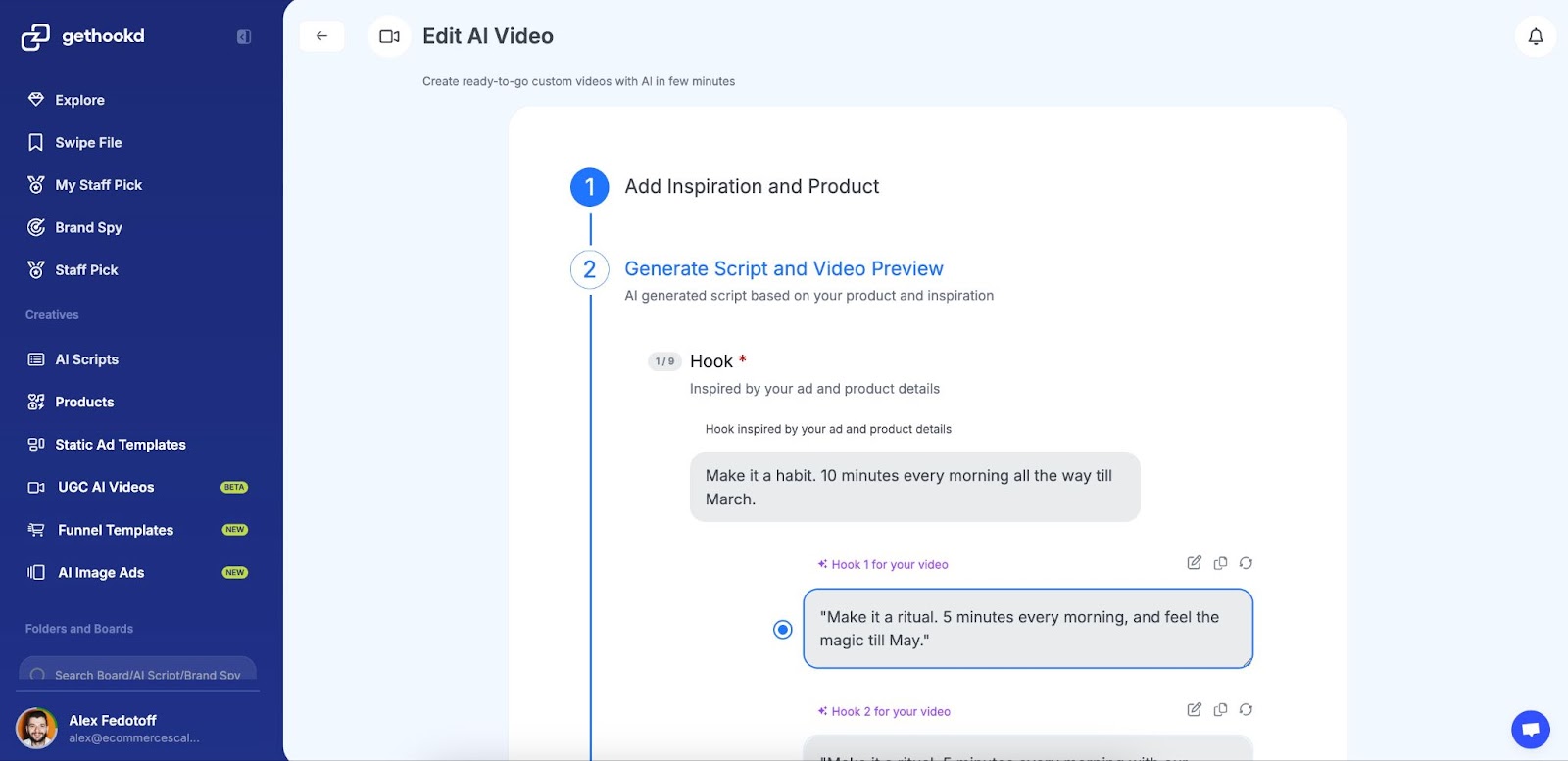
- Step 3: Customize Format and Voice: Adjust the script, video pacing, and selected voice narration to align with the target audience and platform requirements.
- Step 4: Automated Content Generation: The system uses the uploaded assets and defined parameters to construct the initial video or image assets.
- Step 5: Multi-Platform Publication: Publish the generated creatives across required networks (e.g., Meta, TikTok) for immediate testing and data collection.
- Step 6: Data Analysis and Refinement: Use performance data to analyze audience response and adjust parameters for the next iteration cycle.
Avoiding Common Mistakes in Creative Automation
While automation accelerates production, it does not eliminate the need for human strategy and oversight. The effectiveness of any automated tool relies entirely on how it is implemented and managed by the marketing team. Marketers must actively monitor the output to ensure quality and relevance are maintained.
- Mistake: Assuming automation means 'set it and forget it.' Correction: Regularly audit content output for accuracy, tone, and brand relevance.
- Mistake: Sacrificing authenticity for speed of production. Correction: Automated UGC must maintain a personal, engaging feel, avoiding robotic or generic messaging.
- Mistake: Failing to define clear creative parameters initially. Correction: Provide detailed input regarding brand voice, offers, and desired content structure to guide the AI effectively.
- Mistake: Ignoring competitor research before generating content. Correction: Utilize ad intelligence platforms to inform the content angle and style, ensuring relevance in the current advertising landscape.
- Mistake: Insufficient testing volume after setup. Correction: The primary benefit of automation is enabling high-volume testing; aim to leverage this capacity immediately to find winning concepts quickly.
- Mistake: Neglecting compliance checks for AI-generated assets. Correction: Ensure all automated content adheres to platform policies and legal requirements related to disclosure and authenticity.