
The Anatomy of a High-Converting Sales Letter
A comprehensive guide to structuring persuasive business correspondence that drives action while building professional credibility.
Sections
A sales letter serves a distinct dual purpose: it must persuade a specific reader to purchase a product or service while simultaneously enhancing the author’s professional credibility. To achieve this, the document must function as both a persuasive narrative and a structured business advertisement.
The Four Essential Elements
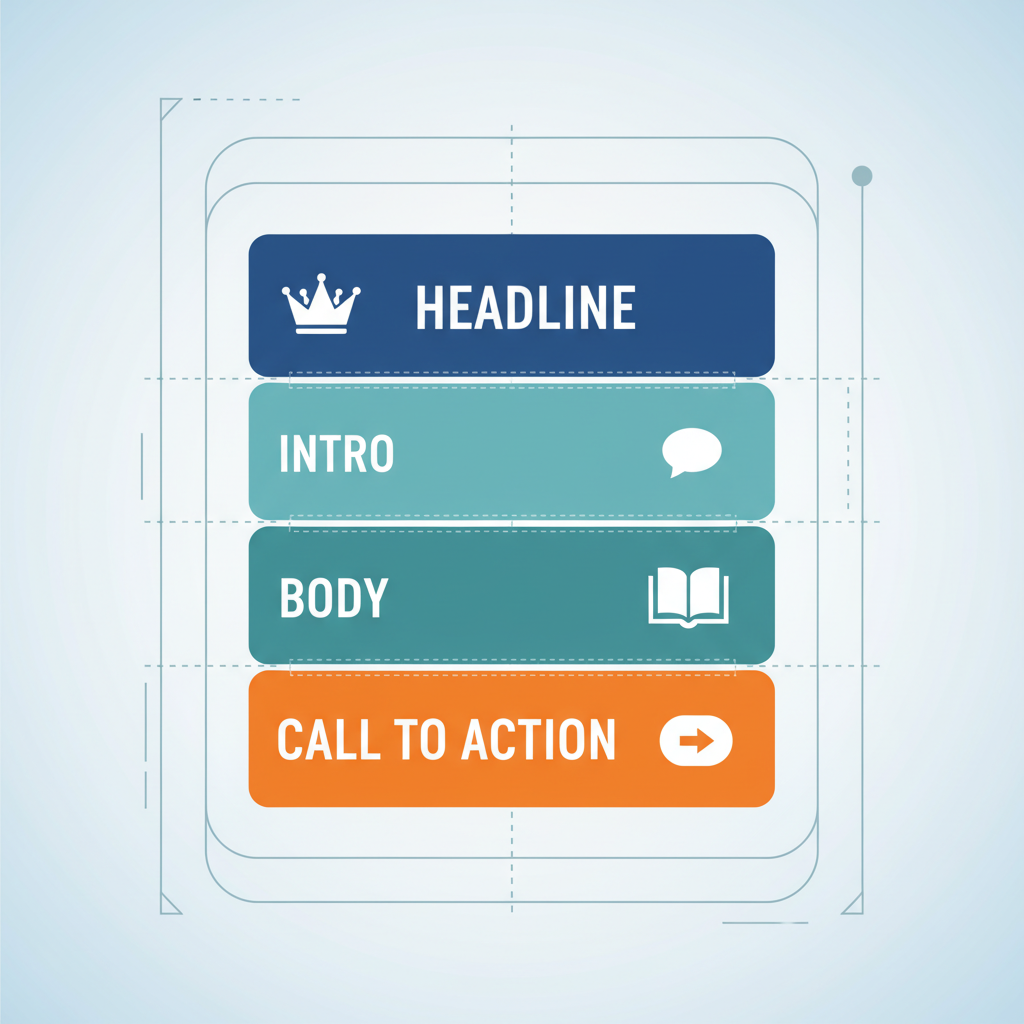
Effective sales letters follow a rigid structural hierarchy designed to guide the reader from initial attention to a final decision. This structure ensures readability and logical flow.
1. The Headline
The headline is the entry point. It must grab the reader's attention immediately, offer a clear benefit, or make a compelling promise. It is typically positioned above the salutation and should remain concise, ideally under thirty words.
A strong headline achieves two goals: it highlights the main selling point—whether that is cost, quality, aesthetics, or popularity—and it utilizes strong action verbs combined with powerful descriptive language.
2. The Introduction
The introductory paragraph serves to expand upon the promise made in the headline. It transitions the reader from the hook into the details of the offer.
This section provides specific product or service information. Crucially, it must also address logistical basics immediately: the cost, potential savings, and access information regarding how quickly the product or service can be delivered.
3. The Body
The body is the core of the letter where credibility is established. This section differentiates the offering from similar brands on the market.
To build trust, the body should include testimonials from satisfied customers. It must also provide comprehensive operational details, including delivery methods, set-up requirements, service contracts, and support options.
4. The Call to Action (CTA)
The final portion directs the reader to respond. It asks for a decision based on the evidence provided. A complete CTA provides clear instructions for the next step, such as directing the reader to an order form, postcard, or phone number.
This section should also express gratitude for the reader's time. A postscript (P.S.) is often included to further the appeal by offering a time-sensitive incentive, such as a discount, warranty, or free set-up.
Building Reputation and Credibility
Persuasion relies heavily on the reader's trust in the author. Establishing this reputation requires a deliberate approach to how the message is crafted and maintained.
- Master the Subject Matter: Deep knowledge of the product or service is non-negotiable.
- Leverage Social Proof: High-profile endorsements from clients or associations should be prominent, potentially placed near the headline.
- Provide Utility: The letter should include tips or useful information that compels the reader to save the document as a reference tool, rather than discarding it.
- Personalize the Approach: Maintain a client database to individualize letters. Even if a sale is not imminent, the letter can serve to build existing relationships by demonstrating genuine interest in the client's wellbeing.
Practical Workflow
To produce a publication-ready sales letter, follow this sequential process.
- Step 1: Research the product thoroughly to identify the primary selling point and key differentiators.
- Step 2: Organize the client database to ensure the letter can be personalized effectively.
- Step 3: Draft the headline first, ensuring it contains a benefit and strong action verbs within thirty words.
- Step 4: Write the body, integrating testimonials and clear logistical details about delivery and support.
- Step 5: Define the incentive and call to action, ensuring all contact methods are accurate.
- Step 6: Revise and edit the document to ensure the tone is professional yet conversational.
Common Mistakes
Avoid these frequent errors that can undermine the effectiveness of a sales letter.
Artificial Tone
Using overly formal or robotic language creates distance. The tone should remain professional but conversational to build a connection.
Missing Incentives
Failing to offer a reason for prompt action reduces response rates. Incentives like discounts or warranties encourage immediate replies.
Neglecting the Postscript
The P.S. is a high-visibility area often ignored by writers. It is a strategic spot to reiterate a time-sensitive offer.
Lack of Utility
If the letter offers nothing beyond a sales pitch, it is easily discarded. Excluding useful tips or reference material reduces the likelihood of the letter being saved.
Generic Messaging
Failing to individualize the letter suggests a lack of investment in the relationship. Generic blasts are less effective than personalized communication.
While the principles of persuasive writing are universal, refining the specific hooks and angles requires data. Using ad intelligence platforms like AdLibrary.com helps researchers analyze high-performing copy and market trends, providing the insights needed to craft letters that resonate with current audience demands.