
How to Scale an E-commerce Brand from €50k to €1M Monthly
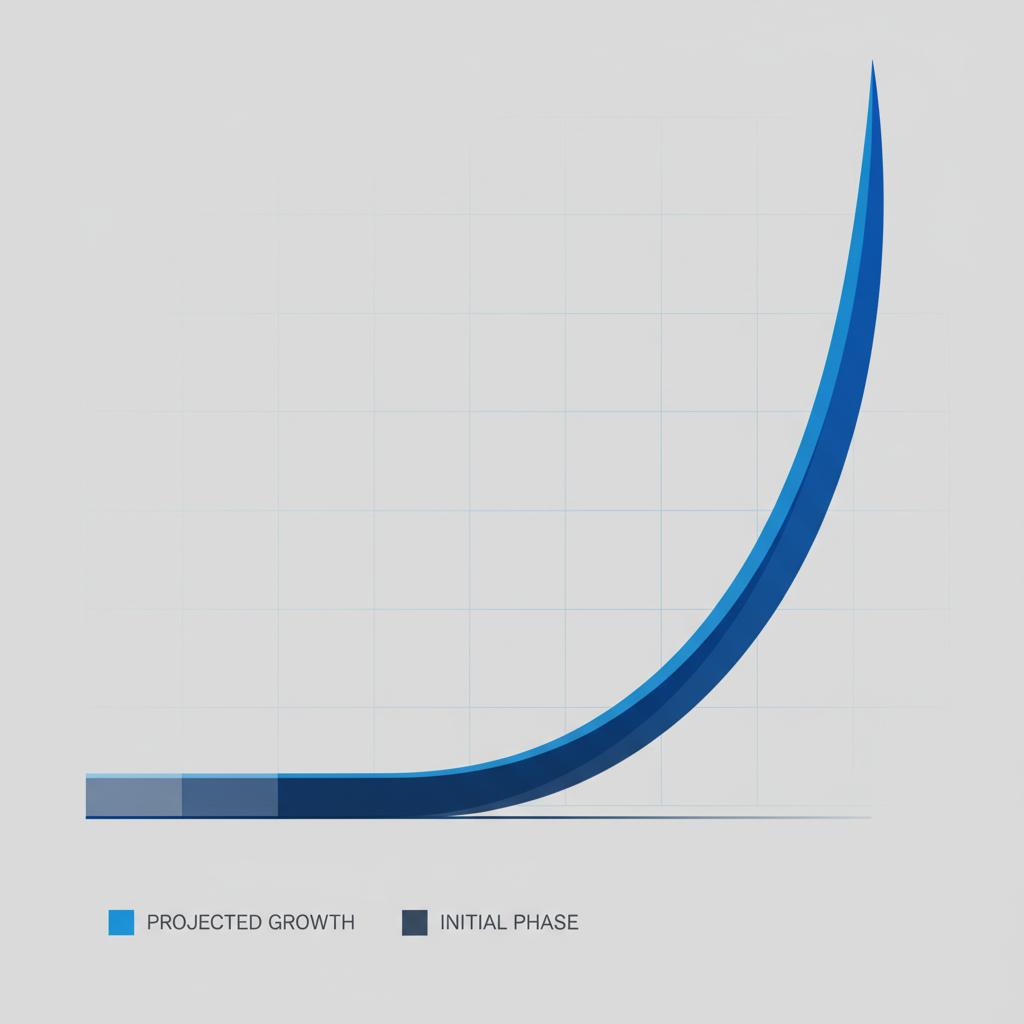
For e-commerce brands, hitting a revenue ceiling is a common challenge, especially when faced with high market competition and seasonal sales dips. This guide outlines a strategic framework to overcome these obstacles and achieve rapid scaling through advanced research, a restructured advertising approach, full-funnel optimization, and a system for producing high-impact direct response creatives.

Sections
The Challenge: Overcoming Stagnation in a Competitive Market
Many e-commerce brands find themselves in a challenging position: they have achieved product-market fit and a consistent baseline revenue but struggle to scale further. This stagnation is often caused by a combination of factors, including intense competition from larger players, seasonal downturns that work against the product's core appeal, and a lack of a scalable customer acquisition funnel. In such a saturated environment, a standard product page and basic ad campaigns are often insufficient to capture market share, leading to a frustrating revenue plateau.
Step 1: Laying the Foundation with Fundamental Research
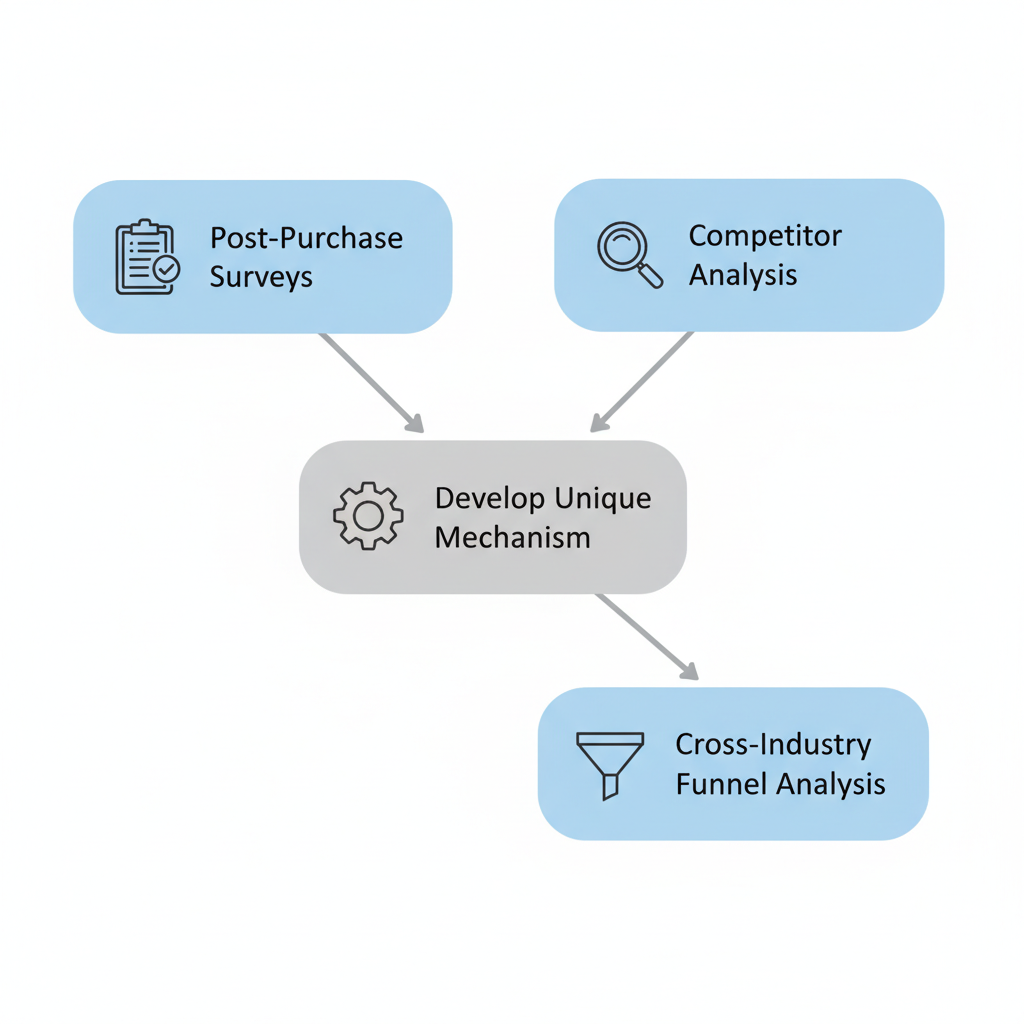
The first step towards breaking a revenue ceiling is to move beyond superficial competitor analysis and conduct deep, fundamental research. This data-driven foundation informs every subsequent strategic decision, from ad creative to funnel structure. It's the most critical and often overlooked phase of a scaling strategy.
Conduct In-Depth Customer and Competitor Analysis
Begin by implementing post-purchase surveys to gather direct feedback from existing customers. This helps uncover why customers buy, what problems they are solving, and what language they use to describe their needs. Simultaneously, perform an extensive competitor analysis, not just of their products, but of their entire marketing funnel, messaging, and ad creatives to identify strategic gaps.
Develop a Unique Mechanism for Your Product
In a market where products are functionally similar, differentiation must come from marketing. A "Unique Mechanism" is a compelling explanation of *why* your product works differently or better to solve the customer's problem, even if the product itself is standard. This becomes the core of your messaging, providing a fresh angle that sets you apart from competitors.
Analyze Cross-Industry Marketing Funnels
Expand your research beyond direct competitors. Identify companies in different industries that use a similar Unique Mechanism to sell their products. Analyze their Video Sales Letters (VSLs) and advertorials to understand how they frame arguments, build trust, and persuade customers. Adapting successful concepts from other markets can provide a significant advantage in your own niche.
Step 2: Restructuring Your Meta Ads for Controlled Scaling
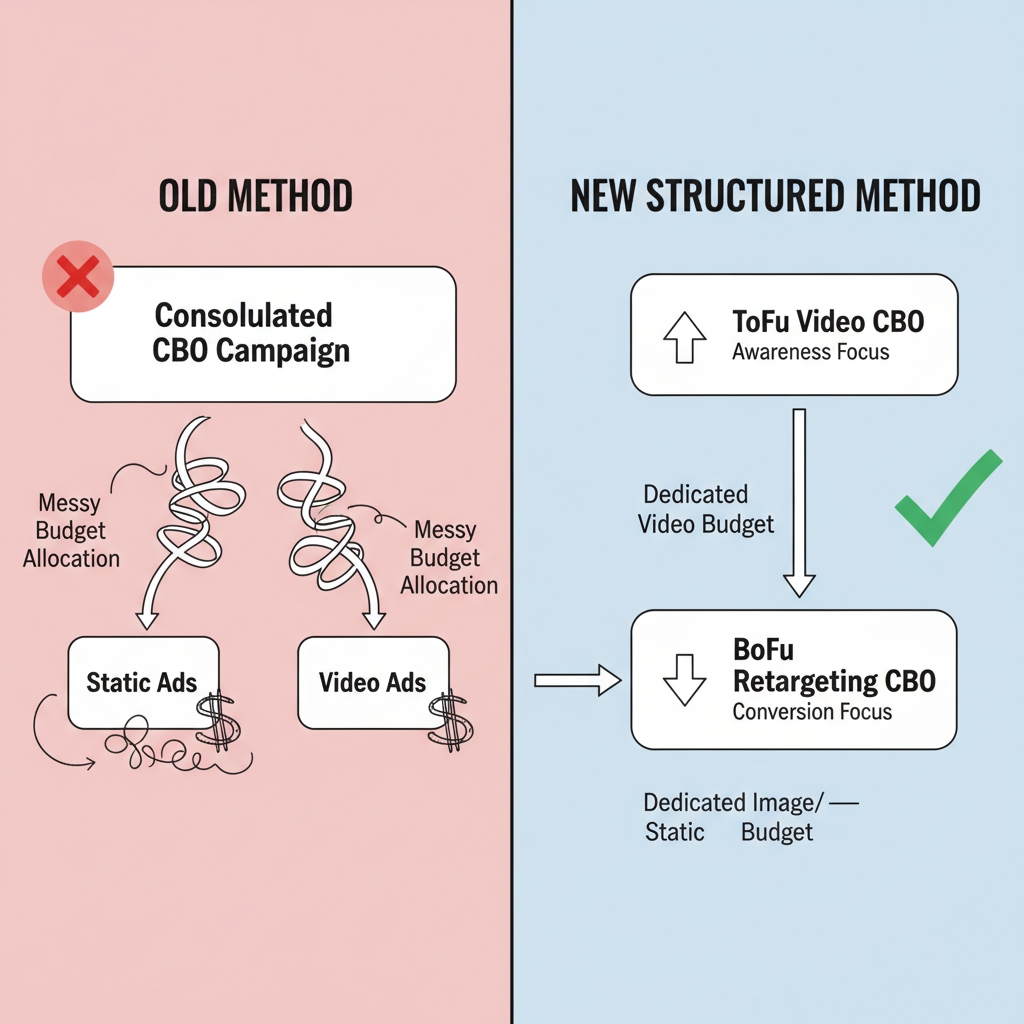
A basic ad account structure that works for initial traction often fails at scale. To manage higher ad spend effectively and maintain performance, a more sophisticated, segmented structure is required. This allows for greater control over budget allocation and prevents performance inconsistencies.
Identifying the Limits of Consolidated Campaign Structures
A common setup involves testing ads and scaling winners in a Campaign Budget Optimization (CBO) or Advantage+ Shopping Campaign (ASC). The primary issue at scale is that Meta's algorithm may allocate the majority of the budget to assets that get cheap clicks, like static image ads, while underfunding more complex video ads that are crucial for scaling to cold audiences. This leads to inconsistent performance and an inability to sustain high spending levels.
Implementing a Segmented Campaign Strategy
To solve this, segment your campaigns based on funnel stage and ad format. A more robust structure might include separate CBO campaigns for Top-of-Funnel (ToFu) video ads and Bottom-of-Funnel (BoFu) static or retargeting ads. This ensures that prospecting efforts receive a dedicated budget. Further segmentation with cost cap scaling campaigns can provide even more control, allowing you to push spend on proven winners while maintaining target acquisition costs.
Step 3: Engineering a High-Conversion Direct Response Funnel
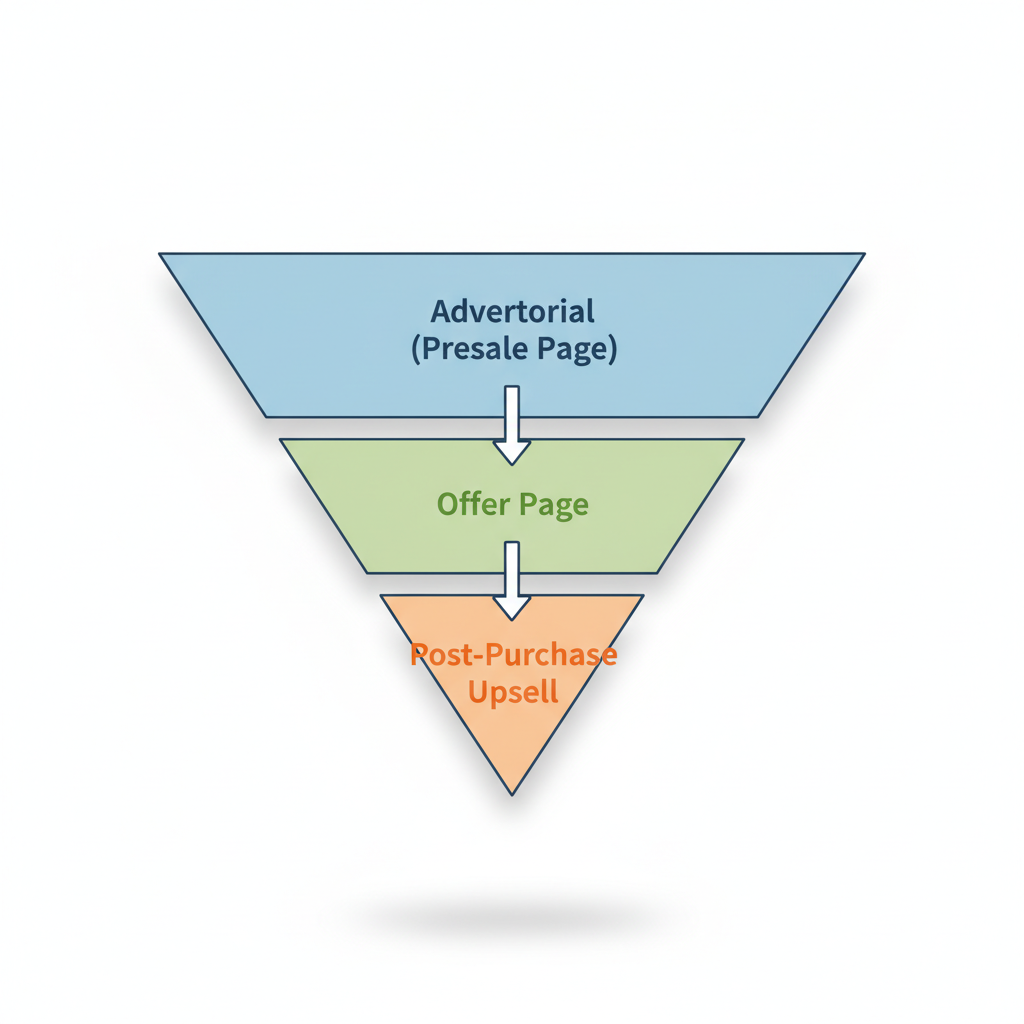
Driving traffic is only half the battle. To convert that traffic profitably at scale, you need a funnel optimized for direct response, designed to educate, persuade, and maximize the value of every visitor.
Build a Presale Experience with Advertorials
Instead of sending cold traffic directly to a product page, use an advertorial as a presale page. An advertorial is a long-form article or listicle that educates the reader about their problem and introduces your product's Unique Mechanism as the solution. This pre-qualifies and pre-frames the visitor, increasing their intent and making them much more likely to convert on the next step.
Replace Product Pages with Focused Offer Pages
For traffic coming from an advertorial, the standard product page can be a distraction. Replace it with a streamlined short-form offer page. This page's sole purpose is to close the sale. It should concisely restate the core benefits, present the offer, and guide the user directly to checkout, minimizing friction.
Boost Average Order Value (AOV) with Post-Purchase Upsells
After a customer completes their initial purchase, their buying momentum is high. This is the perfect moment to present a relevant upsell offer. A Text Sales Letter (TSL) or a short VSL on the post-purchase page can explain the benefits of an additional product, leading to a significant increase in AOV and overall profitability.
Step 4: Systematizing High-Performance Creative Production
At high spending levels, creative fatigue is a constant challenge. A robust system for producing and iterating on high-impact direct response creatives, particularly VSLs, is essential for sustained growth.
Move Beyond Standard VSL Frameworks
A basic ad structure is not enough in a competitive market. A more advanced VSL script is needed to break through the noise. This structure should include:
- Variable Hooks: Test hooks based on different angles (Dream Outcome, Pain Points, Audience callouts).
- Establish Credibility: Use expert badges or personal stories in the lead.
- Introduce the Problem & Mechanism: Explain the *real* problem behind the symptoms and introduce your Unique Mechanism.
- Discredit Alternatives: Address why other solutions fail.
- Provide Proof: Show evidence that your mechanism works.
- Introduce the Product as the Solution: Formally present your product.
- State the Price: Include a "money close" within the ad itself to pre-qualify buyers.
- Future Pacing: Show compelling before-and-after transformations.
- Clear Call to Action: Tell the user exactly what to do next.
Mastering Creative Iteration
The old method of simply testing different 3-second hooks on the same video is less effective after platform algorithm updates. The new mindset is "concept iteration." This involves testing fundamentally different creative angles and big ideas, rather than minor variations. A winning concept provides a new pool of diverse creative assets for the algorithm to work with, leading to more stable performance and longevity.
Related Tools
Frequently Asked Questions
What is a 'Unique Mechanism' in marketing?
A Unique Mechanism is a compelling explanation of why a product works differently or more effectively to solve a customer's problem. It's a marketing angle used to differentiate a product in a competitive market, even when the product itself is not physically unique.
Why is a segmented Meta Ads structure often better for scaling?
A segmented structure, which separates campaigns by funnel stage (e.g., Top-of-Funnel vs. Bottom-of-Funnel), provides greater control over budget allocation. It prevents the algorithm from overspending on cheaper, lower-intent actions and ensures that budget is dedicated to scaling with high-impact video ads to new audiences.
What is the difference between a product page and an offer page in this context?
A standard product page provides comprehensive information for general browsing. An offer page, used after a user has been pre-qualified by an advertorial, is a streamlined page designed solely to close the sale by presenting the offer and guiding the user directly to checkout with minimal distractions.
How does an advertorial improve e-commerce conversion rates?
An advertorial acts as a presale page that educates potential customers about their problem and presents the product as the ideal solution. This process warms up cold traffic, builds trust, and increases purchase intent before the user ever sees the price, leading to higher conversion rates.
Key Terms
- Direct Response Marketing
- A type of marketing designed to elicit an immediate response by encouraging prospects to take a specific action, such as clicking a link, making a purchase, or filling out a form.
- VSL (Video Sales Letter)
- A video designed to act as a sales presentation, guiding a viewer through a structured argument to persuade them to purchase a product or service.
- Advertorial
- An advertisement in the form of editorial content. In e-commerce, it's typically a long-form article or listicle used as a presale page to educate and warm up traffic before presenting an offer.
- Unique Mechanism
- A specific, named process or feature that explains how a product achieves its results, used to create a unique selling proposition in a crowded market.
- AOV (Average Order Value)
- A key performance indicator that measures the average total of every order placed with a business over a defined period. Increasing AOV is a common goal for improving profitability.
- CBO (Campaign Budget Optimization)
- A feature in Meta Ads that automatically manages the campaign budget across ad sets to get the best overall results for the campaign.