
A Guide to Using the Meta Ad Library for Creative Research
Leverage the Meta Ad Library to analyze competitor strategies, identify creative trends, and develop data-informed campaign hypotheses.

Sections
The Meta Ad Library is a powerful, public database of all active advertisements running across Meta's platforms, including Facebook and Instagram. Initially created for political ad transparency, it has become an essential tool for marketers to conduct competitive research, find creative inspiration, and refine their advertising strategies. Understanding how to navigate this resource is key to gaining an edge in a crowded digital landscape.

What is the Meta Ad Library?
The Meta Ad Library is a comprehensive and searchable repository containing all ads currently active on Facebook, Instagram, Messenger, and the Meta Audience Network. It provides a transparent view into the advertising landscape, allowing anyone to see which ads are being run by any advertiser.
For marketers, this transparency transforms the library into a vital competitive intelligence tool. It offers direct insight into competitor messaging, creative approaches, and promotional tactics without cost.
A Framework for Ad Intelligence
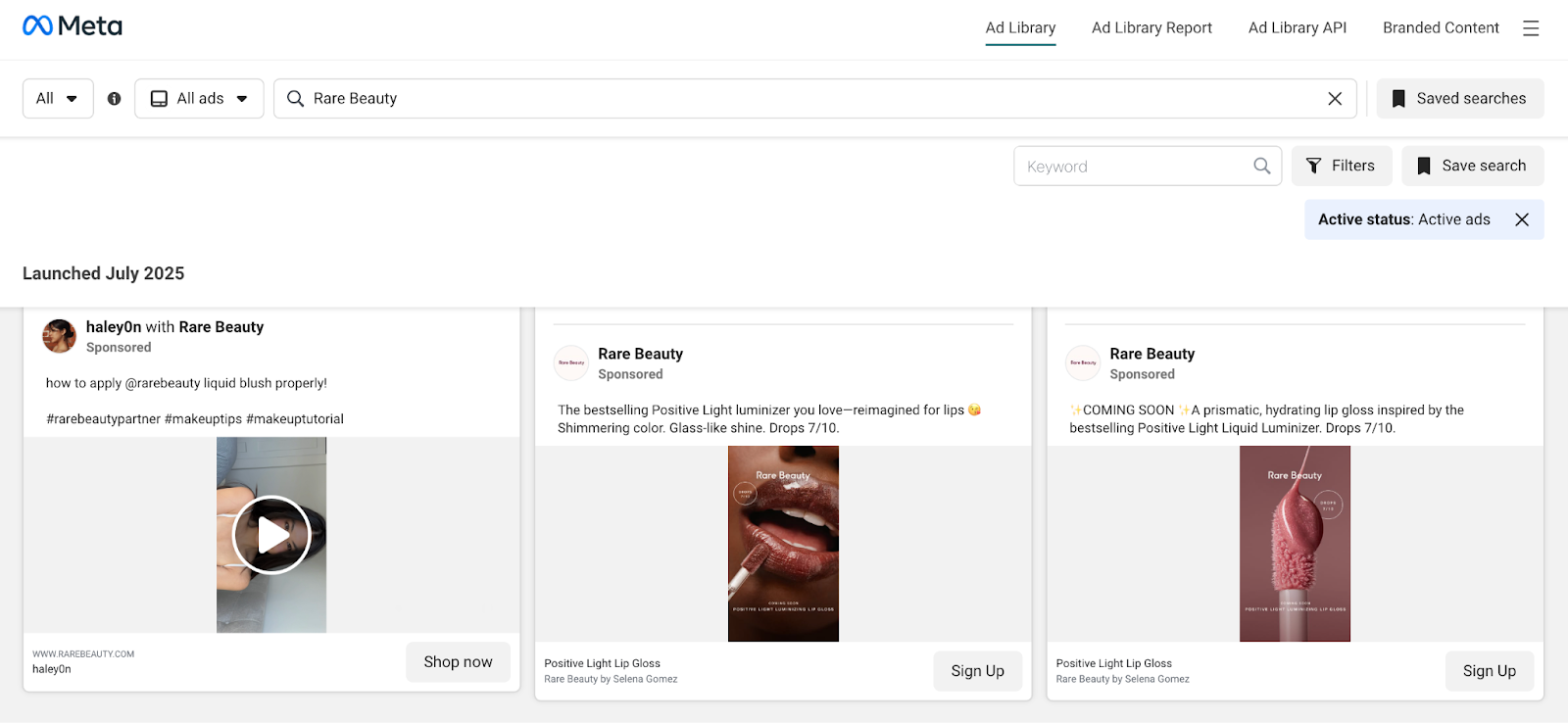
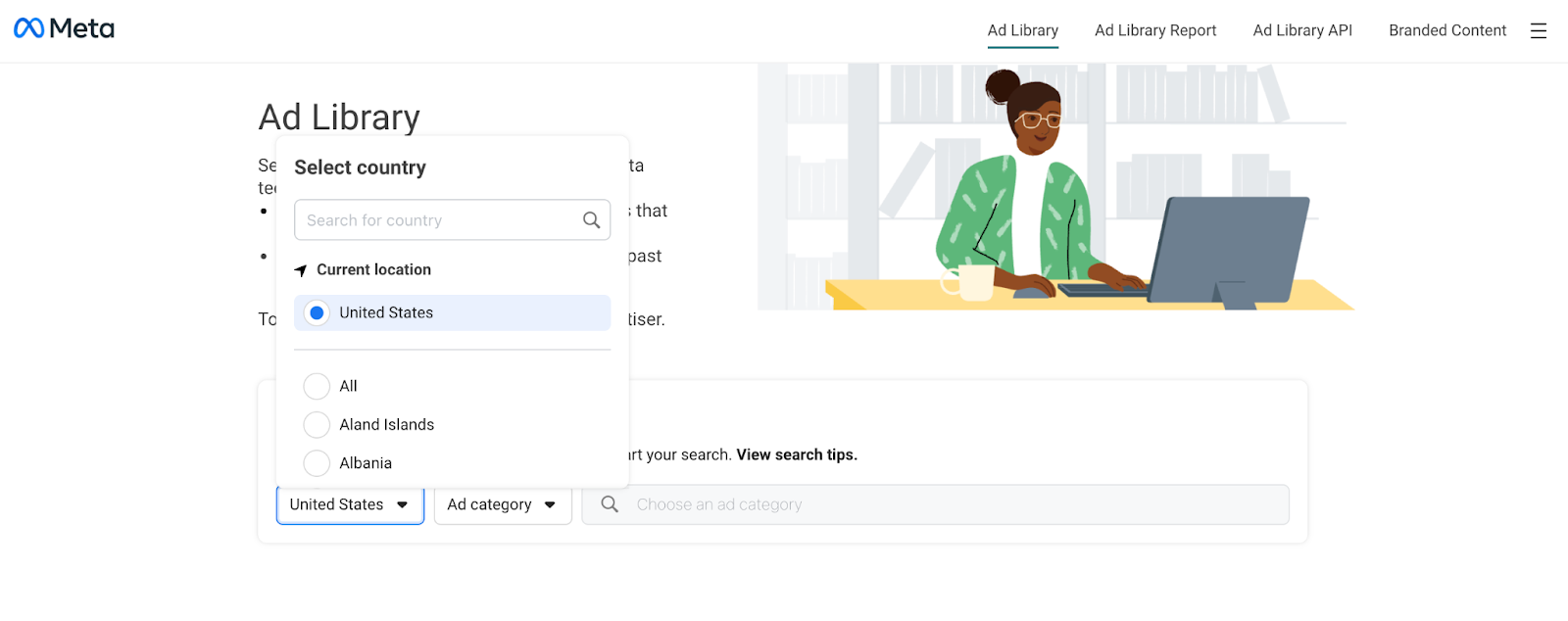
Effective ad research goes beyond simply looking at what competitors are doing. It involves a systematic approach to gathering and interpreting data, which can be broken down into broad market scanning and specific advertiser deep dives.
Use keyword searches related to an industry or product to understand common messaging angles and visual trends. Additionally, analyze how different brands leverage paid partnerships with creators by searching for branded content.
For a more focused analysis, search directly for a specific advertiser's page. This provides a complete view of their active campaigns, allowing for a thorough review of their entire advertising strategy in a specific country or globally.
Key Elements for Creative Analysis
 impressions over a specific period."
data-placeholder="date-filter-example.webp"
loading="lazy"
/>
impressions over a specific period."
data-placeholder="date-filter-example.webp"
loading="lazy"
/>
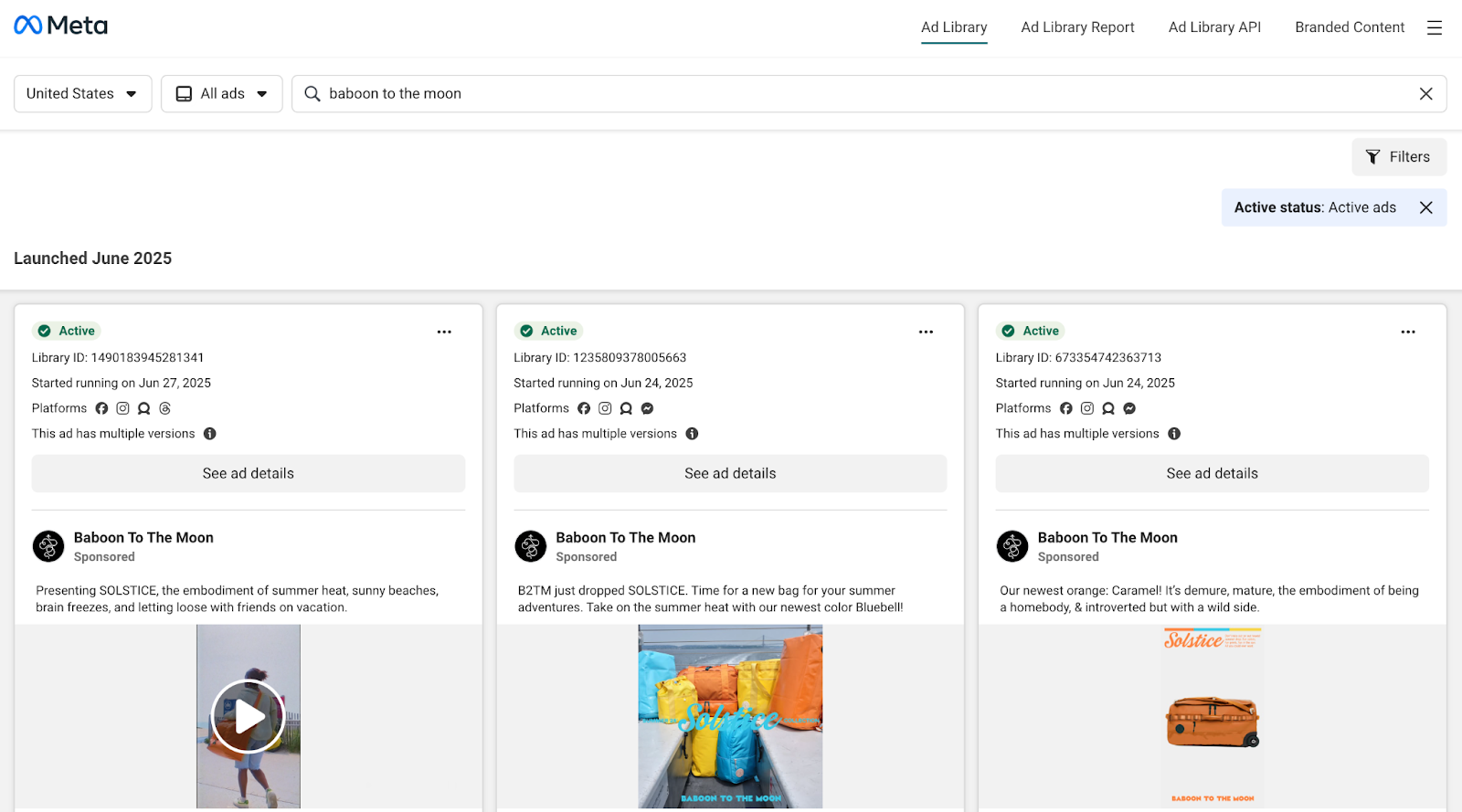
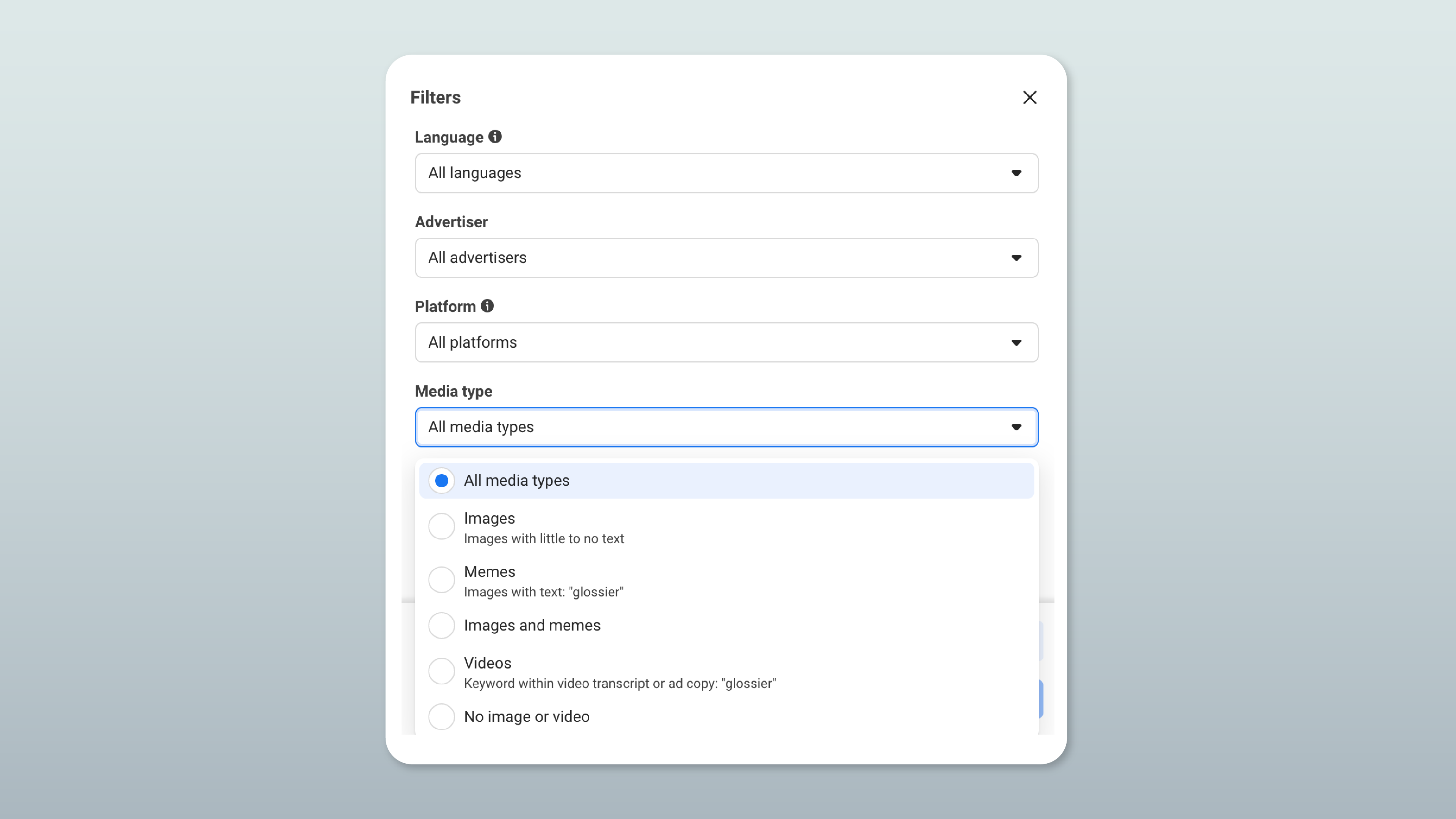
When reviewing ads in the library, it is important to deconstruct them into core components. Analyzing these elements individually helps reveal the underlying strategy and what makes an ad effective.
- Messaging and Copy: Examine the primary hook, the core value proposition, and the call-to-action. Note the tone of voice and any recurring phrases or angles.
- Media Format: Identify the types of media being used, such as static images, videos, or carousels. Observe visual styles, color palettes, and overall branding consistency.
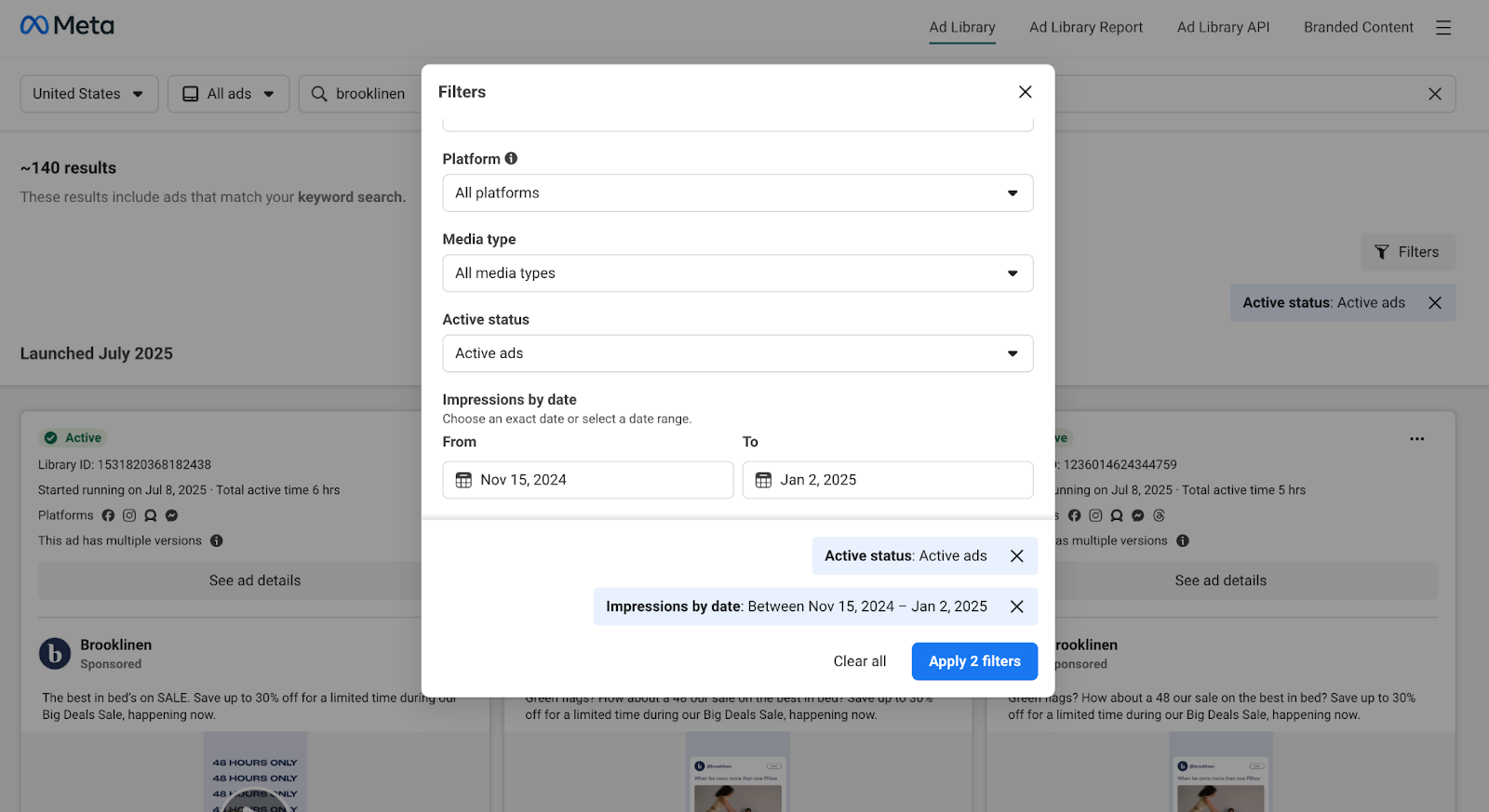
- Ad Longevity: Use the date filters to see how long an ad has been active. Ads with a long runtime often indicate strong performance and resonance with the target audience.
- Platform Placement: Check the icons to see where the ad is being displayed. Note if creative is customized for different platforms like Facebook, Instagram, or Messenger.
From Analysis to Actionable Hypotheses
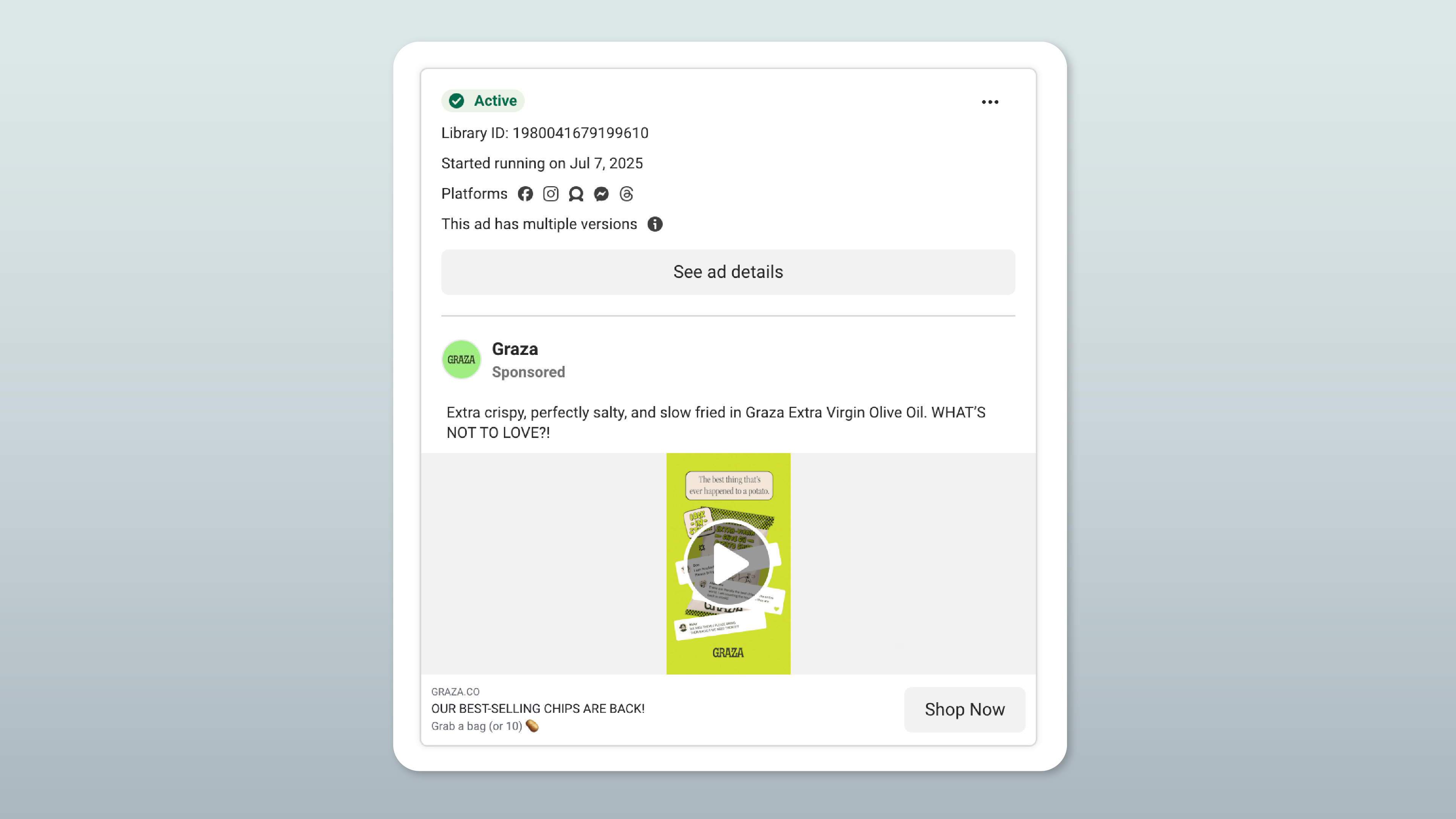
The goal of research is not to copy but to generate informed hypotheses for your own campaigns. By identifying successful patterns, you can develop new ideas to test against your own audiences.
For example, if you observe that multiple competitors are successfully using short, fast-paced video ads featuring customer testimonials, a valid hypothesis could be: “Our audience will respond positively to video ads that feature authentic social proof.”
Deconstruct the core mechanism of a successful ad by stripping away the specific branding. Is it the offer, the format, the emotional appeal, or the messaging angle? This principle can then be adapted with your own brand voice and visuals for testing.
A Practical Workflow for Ad Research
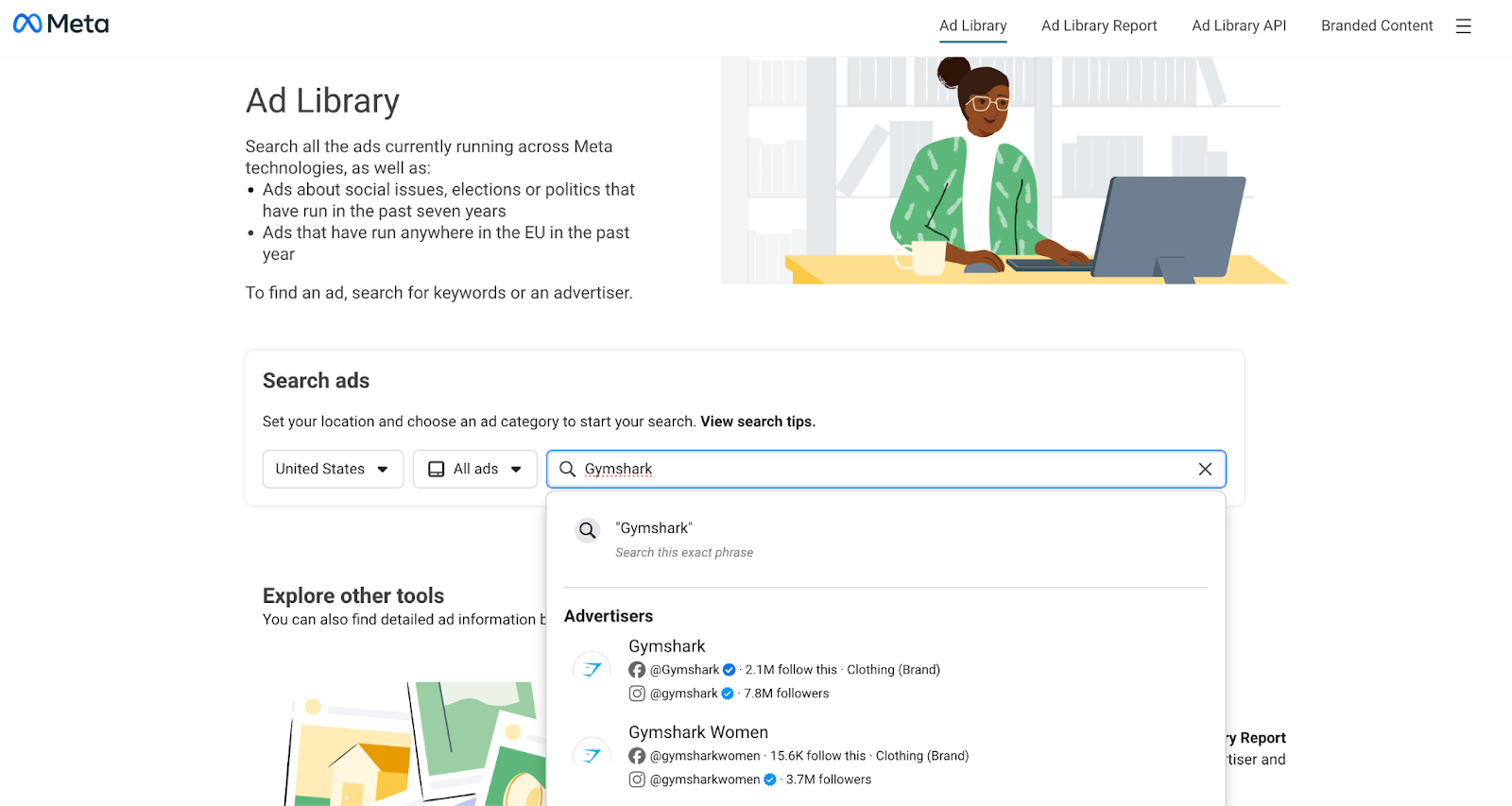
A structured process ensures that your research is efficient and leads to tangible outcomes. Follow these steps to move from broad exploration to specific campaign tests.
- Step 1: Define Your Goal. Determine what you want to learn. Are you researching a new competitor, looking for fresh creative angles, or validating a new product message?
- Step 2: Conduct Broad and Specific Searches. Start with industry keywords to see general trends. Then, search for specific advertisers, including direct competitors and aspirational brands.
- Step 3: Filter and Refine Your View. Use filters for country, platform, and media type to narrow the results to the most relevant examples for your analysis.
- Step 4: Analyze and Document Patterns. Look for recurring themes in messaging, visuals, and offers. Pay close attention to ads that have been running for an extended period.
- Step 5: Formulate Testable Hypotheses. Translate your observations into clear, testable ideas. For instance, “Testing a carousel ad format against our current static image ads will improve engagement.”
Common Mistakes in Competitor Ad Analysis
While the Meta Ad Library is a valuable resource, several common pitfalls can lead to flawed conclusions. Avoiding these mistakes is crucial for conducting effective research.
- Mistake: Directly copying creative. The goal is inspiration, not imitation. Correction: Adapt the underlying strategic principles, not the exact copy and visuals.
- Mistake: Ignoring ad runtime. A new ad has no performance data. Correction: Prioritize analysis of ads that have been active for several weeks or months.
- Mistake: Analyzing in a vacuum. An ad is just one part of a larger strategy. Correction: Visit the ad's landing page to understand the full user journey and offer.
- Mistake: Focusing only on direct competitors. Good ideas can come from any industry. Correction: Analyze aspirational brands known for strong creative to find new inspiration.
- Mistake: Drawing conclusions from a single ad. One ad is not representative of an entire strategy. Correction: Look for consistent patterns across multiple campaigns from the same advertiser.
Frequently Asked Questions About the Meta Ad Library
How do I access the Meta Ad Library?
The library is publicly accessible by navigating to facebook.com/ads/library. You can also access an advertiser's ads directly from their Facebook Page by finding the “Page Transparency” section and clicking “Go to Ad Library.”
Does the ad library show every ad ever run?
The library shows all ads currently running across Meta technologies. It does not include ads from other networks like Google or TikTok. Ads related to social issues, elections, or politics are archived for seven years, even after they become inactive.
How accurate is the Meta Ad Library?
According to Meta, the library is a comprehensive collection of all ads currently active on its platforms. This makes it a reliable real-time resource for understanding the active advertising landscape.
Related Resources
Further Reading
Related Articles

A Guide to Using Meta Ad Library for Competitive Intelligence
Learn how to use the Meta Ad Library to analyze competitor ads, discover creative trends, and access transparency tools across major social platforms.

Meta Ad Library: The Complete Guide to Competitor Research
Learn how to use the Meta Ad Library for competitive intelligence. Discover how to analyze active ads, spot creative trends, and build better campaigns.