
Beyond Rankings: Optimizing Content for AI Search and LLM Visibility
Ranking in Google is no longer the guarantee of visibility it once was. As search evolves into AI-driven responses, brands must adapt to ensure they are cited by systems like Gemini, ChatGPT, and Perplexity.

Sections
Google acknowledges a shift that many digital marketers have already observed: securing a top ranking in classic search results no longer guarantees visibility. As users increasingly rely on AI-driven systems such as ChatGPT, Gemini, Perplexity, and Google AI Overviews, the criteria for digital prominence are changing.

The Shift from Dominance to Eligibility
Traditionally, Search Engine Optimization (SEO) focused on dominating the search engine results page (SERP). In the era of AI search, standard SEO acts merely as an eligibility requirement rather than a winning strategy. Without strong technical SEO, content is excluded entirely; however, ranking alone often results in being ignored by the generative layer.
AI systems function differently than keyword indexes. They do not simply retrieve lists of links; they amplify, summarize, compare, and cite sources based on trust and clarity. If an AI model understands a topic but cannot clearly identify a specific brand's relevance to that topic, the brand remains invisible despite high rankings.
Entities Over Keywords
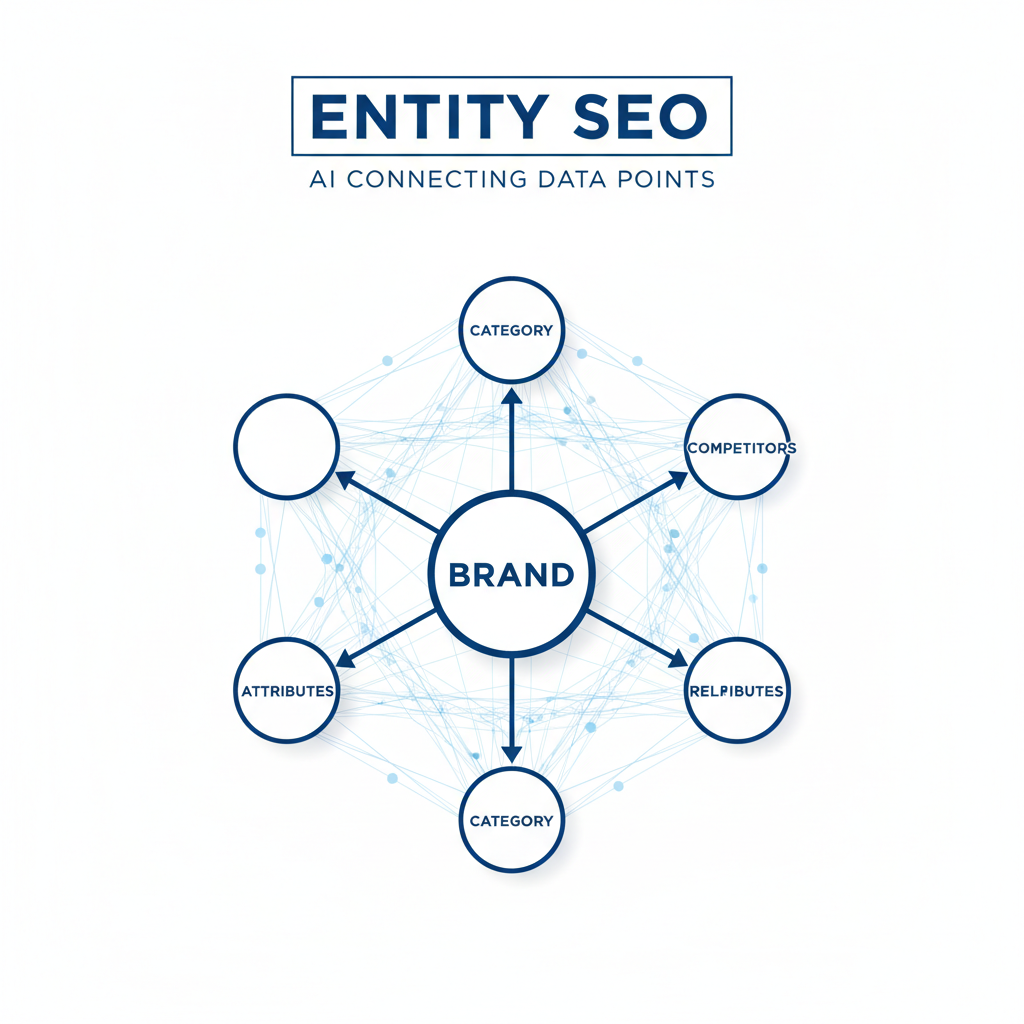
The core mechanism of AI visibility relies on entity recognition rather than keyword density. AI systems analyze content to determine four specific attributes:
- Identity: Who the brand or publisher is.
- Category: The specific market segment the entity occupies.
- Relevance: The contextual reasons for citing the entity.
- Comparison: How the entity stacks up against alternatives.
When these signals are missing or ambiguous, AI systems fill the information gaps with data from competitors who have established clearer entity signals. This leads to a common phenomenon where a page ranks #1 in organic search but fails to appear in AI Overviews or chatbot citations.
Content Structure for Generative Retrieval
AI models favor content that is easily summarizable and attributable. Thin informational pages often fail to survive the summarization process. Instead, these systems prioritize content types that provide explicit, structured value, such as:
- Comparative analyses (X vs. Y).
- Decision-stage buying guides.
- Direct Q&A sections.
- "Best of" lists with clear criteria.
Content designed solely for human readers or outdated algorithms—often characterized by "clever prose" rather than direct answers—is frequently bypassed. To be cited, content must be extractable, answering user queries with precision that an algorithm can parse and repurpose.
Practical Workflow: Optimizing for AI Visibility
Adapting to this landscape requires a strategic shift from pure ranking to entity optimization and trust building.
- Step 1: Solidify Technical SEO. Ensure all pages are crawlable, indexable, and supported by robust internal linking. This remains the foundational requirement for AI eligibility; algorithms cannot cite what they cannot find.
- Step 2: Create AI-Readable Assets. Restructure content to answer questions directly using clear headings and logical formatting. Avoid vague marketing language in favor of explicit statements that tie answers back to the brand.
- Step 3: Establish Entity Signals. Consistently define the brand, category, and competitors across all core pages, guides, and use cases. Repetition of these core attributes helps AI systems categorize the source accurately.
- Step 4: Accumulate Trust Signals. AI systems are conservative and prioritize safety. Secure mentions from authoritative domains and genuine backlinks to signal to the algorithm that the source is reliable enough to repeat and cite.
Common Mistakes in AI Optimization
Failure to adapt often stems from adhering to outdated SEO playbooks. The following errors frequently reduce AI visibility:
- Ranking without definition: Achieving high organic positions without clearly defining the brand's entity leads to exclusion from AI summaries.
- Ambiguous content structure: Using poetic or vague headers prevents AI from extracting clear answers.
- Thin informational content: Publishing shallow posts that lack the depth required for summarization and citation.
- Ignoring external validation: Neglecting off-page trust signals leaves the AI unsure of the source's legitimacy.
- Keyword stuffing vs. Entity building: Focusing on keyword density rather than establishing the brand as the authority within a specific category.
AI search does not replace SEO; it amplifies strong foundations while exposing weak ones. Strategies that stop at ranking are optimizing for the past, while those that prioritize clarity, authority, and entity recognition position themselves for the future of search.
Understanding how competitors define their entities and structure their messaging can provide a blueprint for optimization. Platforms like AdLibrary.com allow researchers to analyze competitive positioning and creative angles, helping to inform the structured content strategies required for modern search visibility.
Related Guides
Further Reading
Related Articles

Strategic Pillars for Digital Marketing in 2026: Search, AI, and Brand
Explore essential marketing pillars for 2026, covering topic-first SEO, AI search optimization, agentic commerce, and brand positioning consistency.

Analyzing Digital Content Formats: A Marketer's Guide to Understanding Online Publication Trends
Learn how to analyze competitor content, from microblogs to corporate sites, to extract marketing insights and build successful campaign hypotheses.