
Why Traditional SEO Is Failing: A Guide to Search Everywhere Optimization
Consumer behavior has fundamentally shifted beyond traditional search engines, with buying decisions now happening across a wide array of digital platforms. This guide explains why legacy SEO tactics are no longer sufficient and introduces a new strategic framework, Search Everywhere Optimization, to help brands connect with customers in the moments that matter.

Sections
The Shifting Landscape: From Searching to Deciding
For years, the primary goal of digital marketing has been to rank on the first page of Google. Businesses have invested heavily in keyword optimization, backlink building, and technical SEO to capture that top spot. However, while Google remains a powerful discovery tool, it is no longer the sole arena where consumer decisions are made. A significant portion of search activity—up to 73% according to some analyses—now occurs on platforms like TikTok, Reddit, Amazon, YouTube, and even within AI chatbots.
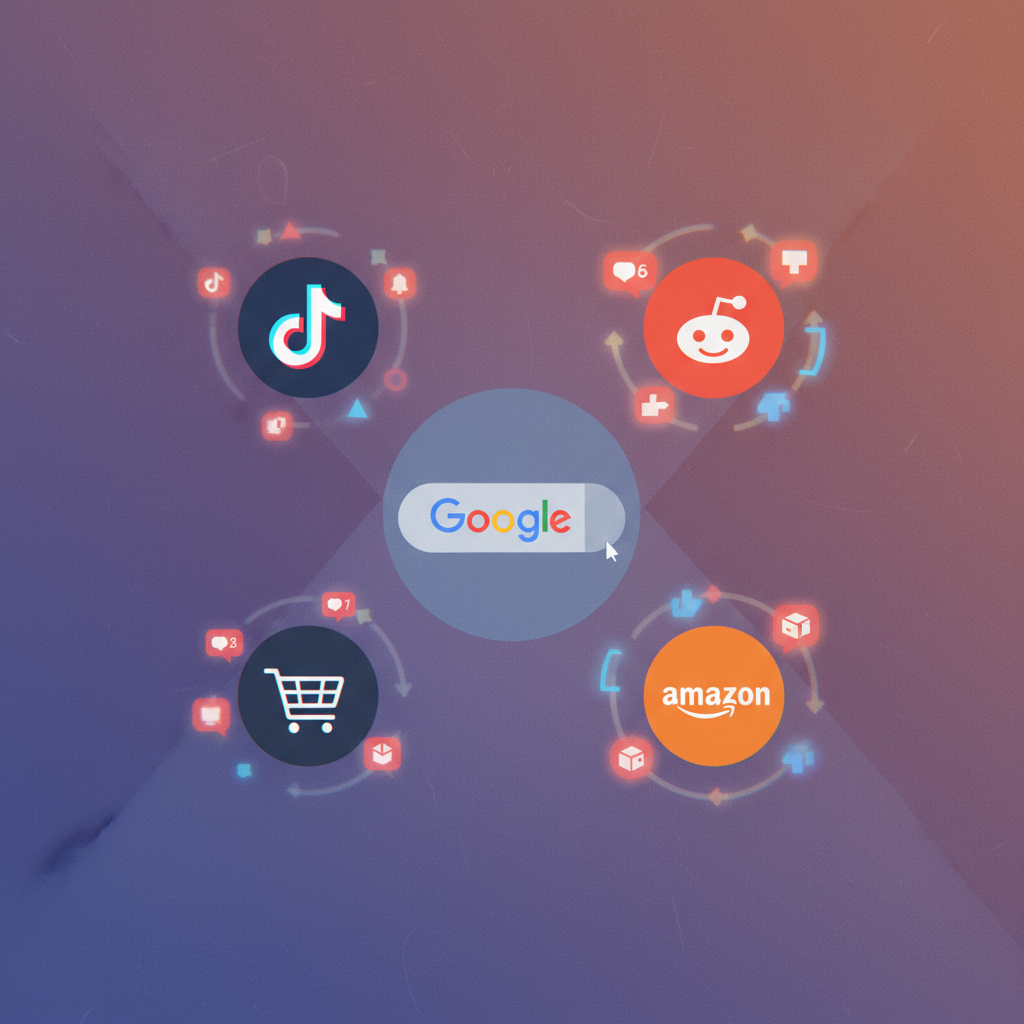
This creates what can be called the 'Google Trap': businesses optimize for visibility in one place while their customers are making validation and purchasing decisions everywhere else. This disconnect can lead to stagnant sales and conversions, even with solid search engine rankings. The modern consumer journey is not a linear funnel but a complex constellation of micro-decisions, each happening on the platform best suited for that specific psychological need.
Understanding the New Consumer Journey
Instead of a single, deliberate search process, consumers now engage in rapid, simultaneous evaluations across multiple touchpoints. Each platform serves a different function in their decision-making process:
- Discovery: Seeing a product on TikTok or Instagram.
- Trust & Validation: Reading authentic user opinions in Reddit threads or Amazon reviews.
- Comparison: Asking an AI assistant like ChatGPT for alternatives or summaries.
- Expertise & Depth: Watching in-depth reviews or tutorials on YouTube.
- Purchase: Completing the transaction on a platform like Amazon or TikTok Shop.
Brands that are not present in these critical decision moments become invisible, regardless of their Google ranking.
Introducing Search Everywhere Optimization (SEO)
Search Everywhere Optimization is a strategic approach that expands the principles of SEO beyond a single search engine. The goal is not just to get found on Google but to get chosen across the entire digital ecosystem where consumers make decisions. It involves designing a brand's content and presence to appear authentically and authoritatively on the platforms that influence choice.

This is not about abandoning traditional SEO but rather integrating it into a broader strategy. It acknowledges that a TikTok comment, a Reddit thread, or an AI-generated answer are the new front lines of consumer influence. The objective shifts from simply ranking for keywords to being a trusted part of the conversation wherever it happens.
Decoding Platform Psychology: A Platform-Specific Approach
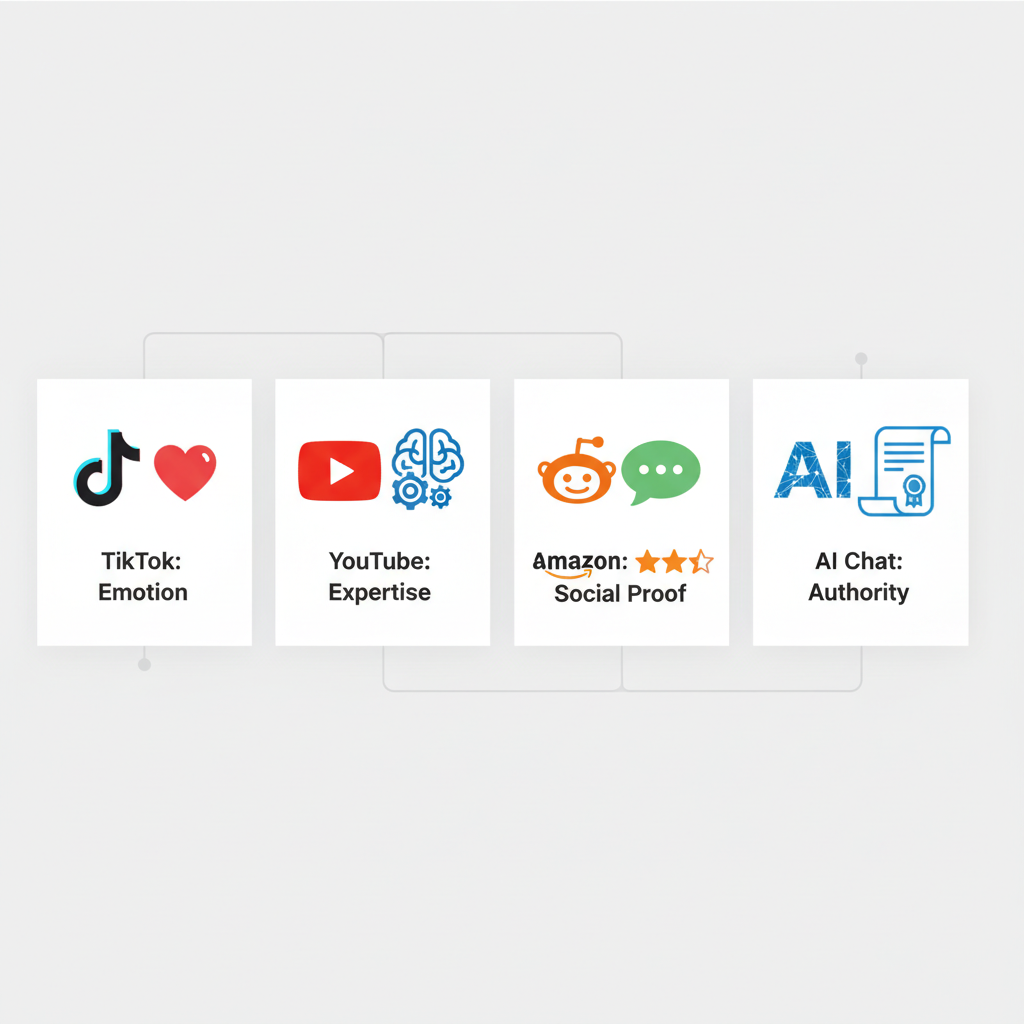
A common mistake in modern marketing is cross-posting the same content everywhere. This approach fails because each platform functions as its own decision engine with a unique user psychology, algorithm, and communication style. To succeed with Search Everywhere Optimization, strategies must be tailored to the specific 'decision code' of each platform.
TikTok: Emotion and Novelty
Decisions on TikTok are driven by immediate, emotional resonance. Content should be visual, engaging, and designed to make users feel rather than think. The platform prioritizes novelty and entertainment over deep analysis.
YouTube: Expertise and Depth
Users turn to YouTube to learn, evaluate, and seek proof. Success here is built on demonstrating authority and expertise. Long-form content that offers depth and builds trust is more effective than short, emotional clips.
Reddit: Authenticity and Unfiltered Opinions
Reddit communities value raw, unfiltered authenticity. Any content that feels like traditional marketing is often met with skepticism. The goal is to be mentioned organically in conversations by providing genuine value or fostering positive user experiences that lead to honest recommendations.
Amazon: Social Proof and Trust
On Amazon, social proof is paramount. Consumers often skip product descriptions and go straight to user reviews. The decision to buy is heavily influenced by the volume and quality of authentic feedback from real customers.
AI Chat (ChatGPT): Clarity and Authority
AI models prioritize clear, factual information from authoritative sources. They build responses by synthesizing data from across the web. To be cited by AI, a brand's information must be structured, semantically clear, and referenced by other trusted entities.
Why Validation Matters More Than Visibility
In a distributed digital landscape, being seen is not enough. The key to influencing decisions is shifting focus from visibility to validation.
- Visibility is what you do. It's having an account, posting content, and showing up in search results.
- Validation is what others say about what you do. It's being mentioned in a Reddit thread, cited by an AI chatbot, reviewed on Amazon, or referenced in another creator's content.

Validation is the currency of trust, especially in the age of AI. AI-powered search engines and recommendation tools don't just present a list of links; they summarize information and provide direct answers. These summaries are built on validation signals. If a brand is not part of this cross-platform network of trust, it risks becoming invisible to AI-driven discovery tools and, by extension, to the end user.
How to Prioritize Your Efforts: The RICE Framework
Adopting Search Everywhere Optimization does not mean you need to be active on every platform. The goal is strategic presence, not omnipresence. The RICE framework is a simple method for prioritizing which 2-3 platforms offer the highest potential return for your business.
Score each potential platform from 1 to 10 on Impact, Confidence, and Ease. Reach is the raw number of daily searches or users.
R: Reach
How many people use this platform to search or make decisions in your category daily? This is the scale of the opportunity.
I: Impact
How significant could success on this platform be for your business goals? High-impact platforms directly influence purchasing decisions.
C: Confidence
Based on your resources and brand identity, how confident are you that you can create content that resonates and succeeds on this platform?
E: Ease
How easy is it for your team to execute the strategy? This considers the operational lift, from content creation to community management.
By analyzing platforms through this lens, you can identify where to focus your resources for maximum effect. Start with one or two high-priority platforms outside of Google, build trust and validation there, and then expand your efforts over time.
Common Mistakes to Avoid
As you shift your strategy, be mindful of these common pitfalls:
- Using a One-Size-Fits-All Strategy: Copying and pasting the same message across different platforms ignores their unique user psychology and algorithms, leading to poor engagement.
- Chasing Visibility Over Validation: Focusing on vanity metrics like views and followers without building a foundation of trust through reviews, mentions, and citations.
- Attempting Omnipresence Too Soon: Spreading resources too thin across too many platforms instead of achieving a meaningful, strategic presence on a select few.
Related Tools
Frequently Asked Questions
What is Search Everywhere Optimization?
Search Everywhere Optimization is a marketing strategy that focuses on making a brand visible and chosen across all digital platforms where consumers make decisions, not just on traditional search engines like Google. It involves tailoring content and presence to platforms like TikTok, Reddit, Amazon, and AI chatbots.
Why is traditional Google SEO no longer enough?
While Google is still important, a majority of consumer search and decision-making activity now happens on other platforms. Relying solely on Google means missing critical moments of validation and purchase that occur in social media comments, product reviews, and community forums.
What is the difference between visibility and validation?
Visibility is about your brand being seen, such as ranking in search results or having a social media profile. Validation is when others endorse or talk about your brand, such as being mentioned in a forum, cited by an AI tool, or positively reviewed by customers. Validation builds trust and has a greater impact on decisions.
Do I need to be active on every single platform?
No, the goal is strategic presence, not omnipresence. Use a framework like RICE (Reach, Impact, Confidence, Ease) to identify and prioritize the 2-3 platforms that are most relevant to your audience and business goals. Focus on excelling there before expanding.
How does AI impact this new approach to SEO?
AI-powered search and recommendation tools synthesize information from across the web to provide direct answers. They rely heavily on validation signals—mentions, citations, reviews—to determine which brands are authoritative and trustworthy. Without these signals, a brand can become invisible to AI-driven discovery.
Key Terms
- Search Everywhere Optimization
- The practice of optimizing a brand's content and presence to be found and chosen across all digital platforms where consumers make decisions, extending beyond traditional search engines.
- Google Trap
- The common pitfall of focusing marketing efforts exclusively on Google rankings while customers are making key purchasing decisions on other platforms like social media, forums, and e-commerce sites.
- Micro-Decisions
- A series of small, often rapid evaluations a consumer makes across multiple platforms during their purchasing journey, such as what to click, who to trust, and what to buy.
- Validation
- The act of a brand being mentioned, cited, reviewed, or recommended by third parties. It serves as a powerful trust signal that influences consumer and AI-driven decisions.
- Visibility
- The state of a brand's content or profile being present and viewable on a platform, such as appearing in search results or having a social media account. It is a prerequisite for, but less impactful than, validation.
- RICE Framework
- A prioritization model used to evaluate platforms based on four criteria: Reach, Impact, Confidence, and Ease. It helps businesses strategically select where to focus their marketing efforts.